

How Cycling Palestine Is Helping Palestinians Explore Their Land
Cycling Palestine is a community initiative that brings Palestinians from across the West Bank together on bicycles to reclaim their land and each other.

Palestinian storyteller Hamza Al‑Aqrabawi once said that if you walk the land, it becomes yours. Because your feet remember the shape of its valleys and your hands learn the weight of its soil. That very saying has travelled quietly through villages and cities, eventually finding its way to a man named Suhaib Samara who used to stitch bullet wounds in a hospital and now spends his Fridays leading people on bicycles through the parts of Palestine that the occupation has tried to seal shut.
-3a7b0032-1648-45db-88e6-b6b093405c50.jpg) A cyclist himself, Suhaib started the initiative Cycling Palestine in 2015, gathering strangers who become neighbours over the course of a day reconnecting with their land. “Palestine is beautiful. Its mountains, its plains, its valleys,” Suhaib shares with SceneTraveller. “You cannot see this beauty while driving. Walking definitely brings you closer to it, but a bicycle lets you go even further.”
A cyclist himself, Suhaib started the initiative Cycling Palestine in 2015, gathering strangers who become neighbours over the course of a day reconnecting with their land. “Palestine is beautiful. Its mountains, its plains, its valleys,” Suhaib shares with SceneTraveller. “You cannot see this beauty while driving. Walking definitely brings you closer to it, but a bicycle lets you go even further.”
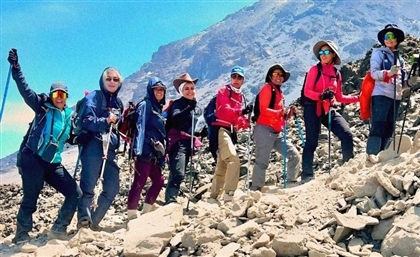
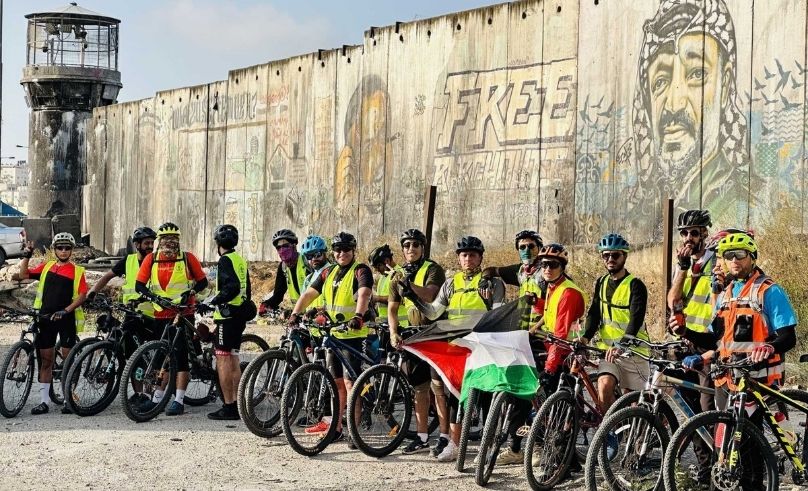
-461f4384-a7f4-45ad-8e3d-88d8321f862c.jpg) The group brings together Palestinians who might otherwise never meet: city‑dwellers from Ramallah, villagers from the northern hills, refugees from camps, Bedouin communities that are constantly subjected to Israeli violations and settler attacks. The bicycle acts as an icebreaker, a quiet invitation to ride side by side, to share a meal at a farmer’s stove, to remember that the occupation has built walls not only between Palestinians and the outside world but between Palestinians themselves. “We worked to break this barrier,” Suhaib says, “and we made one tour that brings all the Palestinian people together.”
The group brings together Palestinians who might otherwise never meet: city‑dwellers from Ramallah, villagers from the northern hills, refugees from camps, Bedouin communities that are constantly subjected to Israeli violations and settler attacks. The bicycle acts as an icebreaker, a quiet invitation to ride side by side, to share a meal at a farmer’s stove, to remember that the occupation has built walls not only between Palestinians and the outside world but between Palestinians themselves. “We worked to break this barrier,” Suhaib says, “and we made one tour that brings all the Palestinian people together.”
-c093f87a-8dfa-4c13-ae1e-8c4b1a4bcc6e.jpg) But before all the tours, Suhaib worked as a nurse. He had trained in paramedics and first aid, worked for twelve years. He was shot twice, once in the leg and once in the chest. “I reached a point where I said enough blood, enough accidents. I had to leave, no matter what it cost.” Back then, he had already seen how the land looked from a bicycle, how the mountains and plains opened themselves to you when you arrived slowly enough. So, in 2015, he left the hospital and began pedalling his way around home.
He started with ten broken bicycles and a friend who stayed up late with him one night. They had no funding, so the bicycles came slowly. A couple at first, bought with whatever money he had, then a few more. Every financial return from the trips went back into the project: a broken bicycle here, a repair kit there, a set of helmets, a set of tools. “That is how we started growing the project until we reached 150 bicycles.”
But before all the tours, Suhaib worked as a nurse. He had trained in paramedics and first aid, worked for twelve years. He was shot twice, once in the leg and once in the chest. “I reached a point where I said enough blood, enough accidents. I had to leave, no matter what it cost.” Back then, he had already seen how the land looked from a bicycle, how the mountains and plains opened themselves to you when you arrived slowly enough. So, in 2015, he left the hospital and began pedalling his way around home.
He started with ten broken bicycles and a friend who stayed up late with him one night. They had no funding, so the bicycles came slowly. A couple at first, bought with whatever money he had, then a few more. Every financial return from the trips went back into the project: a broken bicycle here, a repair kit there, a set of helmets, a set of tools. “That is how we started growing the project until we reached 150 bicycles.”
-fce1e6f9-4270-4d6c-841a-4244f642ce86.jpg) Then COVID hit. It forced them to stop the tours for people, but they did not stop themselves. “We would gather ourselves, go up into the mountains.” When the lockdowns eased, they returned, but the commitments and procedures had piled up, forcing them to sell the bicycles. “We had about thirty left. Then we bought more, collected some, until we reached 210 bicycles. That was all before October 7th.”
When the war came, they had to sell their gear yet again. Cycling Palestine paused for two and a half years, as checkpoints multiplied, military incursions turned villages into closed zones, and settler violence made roads too dangerous to travel. And though the tours stopped, the debts and the rent did not. So they opened a repair shop, a small space where Suhaib now sits surrounded by tools and spare parts.
Finally, they were able to hit the road again. They went to Jenin, a city under continuous Israeli raids for more than a year. People were still scared. The number of cyclists who showed up was not large. They rode through agricultural lands that the government had declared off limits. “Ninety percent of the land outside the cities is not allowed to be reached.”
Then COVID hit. It forced them to stop the tours for people, but they did not stop themselves. “We would gather ourselves, go up into the mountains.” When the lockdowns eased, they returned, but the commitments and procedures had piled up, forcing them to sell the bicycles. “We had about thirty left. Then we bought more, collected some, until we reached 210 bicycles. That was all before October 7th.”
When the war came, they had to sell their gear yet again. Cycling Palestine paused for two and a half years, as checkpoints multiplied, military incursions turned villages into closed zones, and settler violence made roads too dangerous to travel. And though the tours stopped, the debts and the rent did not. So they opened a repair shop, a small space where Suhaib now sits surrounded by tools and spare parts.
Finally, they were able to hit the road again. They went to Jenin, a city under continuous Israeli raids for more than a year. People were still scared. The number of cyclists who showed up was not large. They rode through agricultural lands that the government had declared off limits. “Ninety percent of the land outside the cities is not allowed to be reached.”-b66cdd7c-c50c-4ef9-8b01-b02c6509bfcc.jpg) Later, they went to Tubas, where they walked four kilometres through the thickets of Aqaba, spreading out between the hills and taking photographs of the mountains as the light fell across the land in ways that helped them remember why people still write poems about their country. After that, the bicycles came, rolling through the green plains toward the lands of Sir and Kafir, past the cemetery of Jordanian martyrs, ending at the farm of a man named Adnan Abu Arafat. “We try to eat from the land, from nature, or from the place we are going to,” Suhaib says. “If we are going to a Bedouin community, we try to have laban and cheese, things they produce. If we are going to a farmer, we try to pick tomatoes from him, pick greens from him, and cook at his place.” The people participating in the tour help him work the land. They buy his produce and take it home. “This strengthens belonging to the land.”
Sixty or seventy people spending an hour helping a single farmer plant cucumbers or harvest molokhia will produce in that hour what would take him days. “Even if the volunteer work is for one hour, we produce a huge amount.” This is how you make a land yours. You walk it, you ride it, you eat from it, you help the person who tends it, and then you do it all again the next Friday. “You connect people, you introduce them to yourself, you also introduce them to another person, and everyone benefits.”
Later, they went to Tubas, where they walked four kilometres through the thickets of Aqaba, spreading out between the hills and taking photographs of the mountains as the light fell across the land in ways that helped them remember why people still write poems about their country. After that, the bicycles came, rolling through the green plains toward the lands of Sir and Kafir, past the cemetery of Jordanian martyrs, ending at the farm of a man named Adnan Abu Arafat. “We try to eat from the land, from nature, or from the place we are going to,” Suhaib says. “If we are going to a Bedouin community, we try to have laban and cheese, things they produce. If we are going to a farmer, we try to pick tomatoes from him, pick greens from him, and cook at his place.” The people participating in the tour help him work the land. They buy his produce and take it home. “This strengthens belonging to the land.”
Sixty or seventy people spending an hour helping a single farmer plant cucumbers or harvest molokhia will produce in that hour what would take him days. “Even if the volunteer work is for one hour, we produce a huge amount.” This is how you make a land yours. You walk it, you ride it, you eat from it, you help the person who tends it, and then you do it all again the next Friday. “You connect people, you introduce them to yourself, you also introduce them to another person, and everyone benefits.”
-9dae8bb8-9406-44a0-8499-c67331211e2e.jpg) Thirty thousand people have cycled with Cycling Palestine over the past ten years. Some have been on every single trip. “Not a single tour passes that they do not join.” They have become a small community, bound by memories, by the taste of fried tomatoes, by the knowledge that every place has a tale. “Every time I pass by any place in the West Bank, we have a story, a memory.”
To this day, the war is still happening. The checkpoints are still there. But on a seemingly random Friday morning in Tubas, forty people walked through the thickets and rode across the plains and ate tomatoes from a farmer’s stove, and then they rode home through the same checkpoints, the same soldiers, the same fear. The money they made went back into the bikes. And the bikes went back onto the road.
Thirty thousand people have cycled with Cycling Palestine over the past ten years. Some have been on every single trip. “Not a single tour passes that they do not join.” They have become a small community, bound by memories, by the taste of fried tomatoes, by the knowledge that every place has a tale. “Every time I pass by any place in the West Bank, we have a story, a memory.”
To this day, the war is still happening. The checkpoints are still there. But on a seemingly random Friday morning in Tubas, forty people walked through the thickets and rode across the plains and ate tomatoes from a farmer’s stove, and then they rode home through the same checkpoints, the same soldiers, the same fear. The money they made went back into the bikes. And the bikes went back onto the road.
- Previous Article EgyptAir Will Gradually Resume Flights to the Gulf
- Next Article Slink Back & Recharge at the MENA Region’s Most Soothing Springs