

Who Is Aly Ramy & Why Is He Bikepacking Across Egypt?
Tired of waiting for friends to join him, Ramy set out alone on a 2,000KM journey to photograph Egypt.
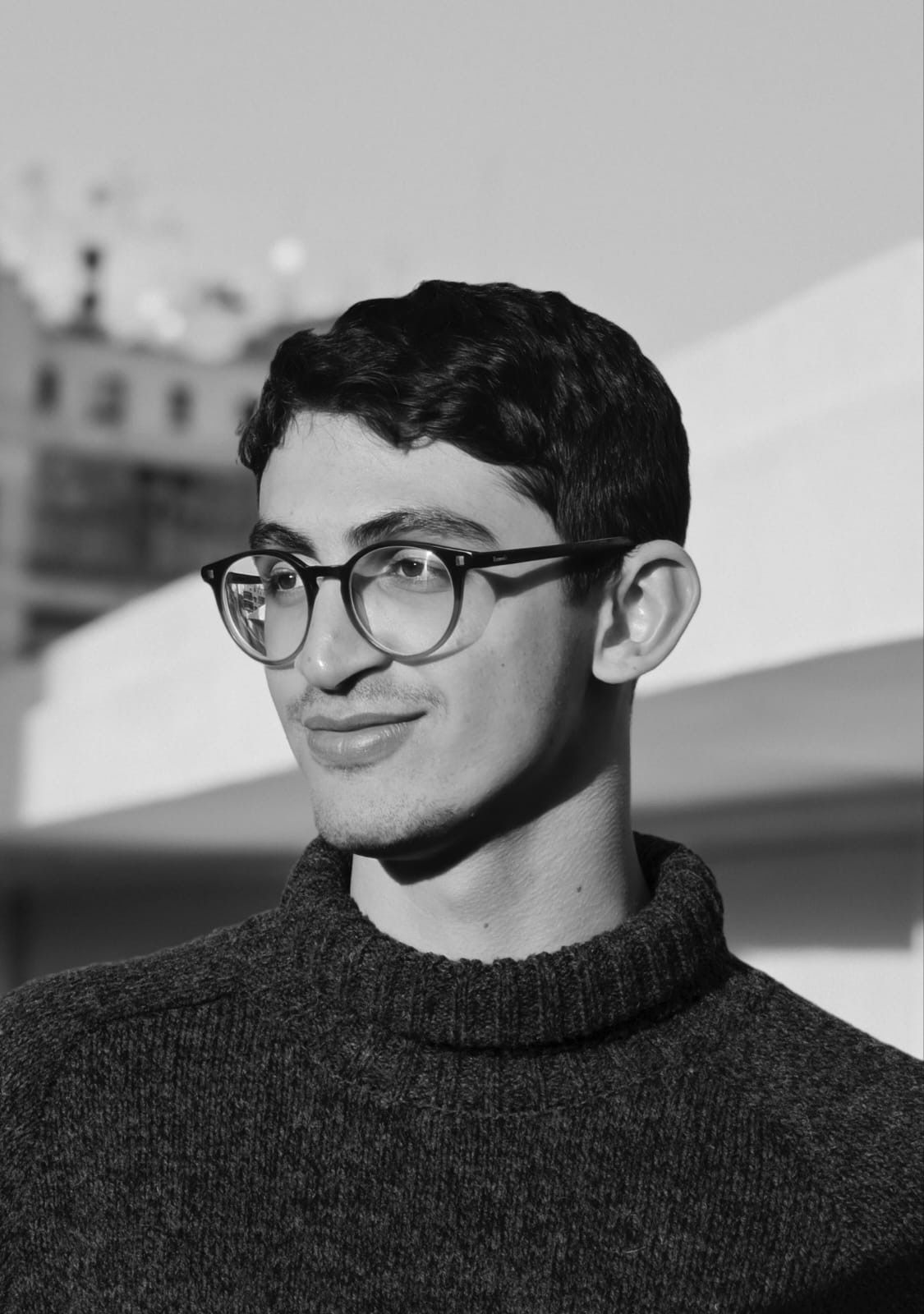
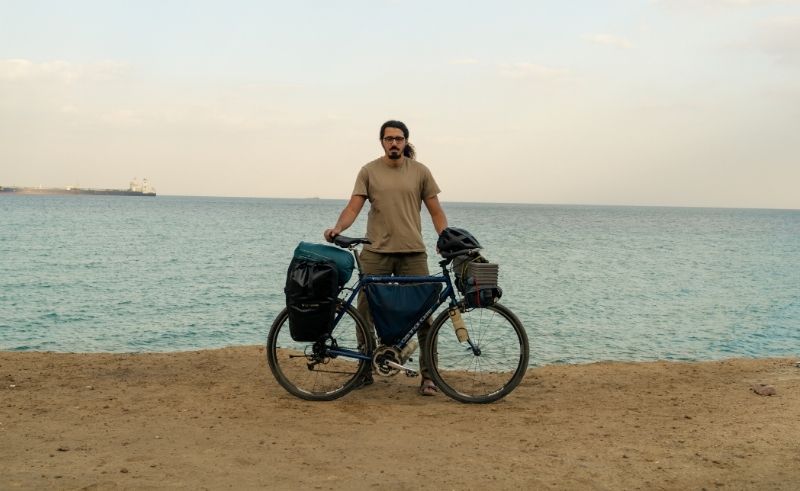
The first thing I noticed about Aly Ramy was his height. He was something of a gentle giant, standing at least 190cm tall. A small detail that, as a cyclist, has translated into a lifetime of minor discomforts—magnified by the fact that he’s been riding across Egypt.
But Ramy has never been deterred by discomfort. When he first set off with his bike and a few bags to live out of, the 27-year-old freelance photographer from Alexandria knew the hardships ahead would only bring him closer to where he needed to be.
-5b4a9a3f-cc4e-4fbd-91c4-94e1879a9c47.jpg) Armed with four cameras and a hundred packets of pour-over coffee, Aly Ramy set off across Egypt—partly to photograph its beauty, partly in search of something quieter, more internal. Convinced that driving was too fast and walking was too slow, he purchased a touring bike and prepared it for a journey that would carry him across lakes, salt marshes, and coastal deserts, sleeping in mosques, gas stations, and strangers’ front yards. With a brief intermission in Cairo at the turn of the new year, Ramy cycled first through the Delta, then down along the Red Sea coast, to where we finally met in Quseir, a hundred kilometres north of Marsa Alam.
Armed with four cameras and a hundred packets of pour-over coffee, Aly Ramy set off across Egypt—partly to photograph its beauty, partly in search of something quieter, more internal. Convinced that driving was too fast and walking was too slow, he purchased a touring bike and prepared it for a journey that would carry him across lakes, salt marshes, and coastal deserts, sleeping in mosques, gas stations, and strangers’ front yards. With a brief intermission in Cairo at the turn of the new year, Ramy cycled first through the Delta, then down along the Red Sea coast, to where we finally met in Quseir, a hundred kilometres north of Marsa Alam.
We had been chatting for weeks before finally meeting. Curious about his journey, I would check in to make sure he had somewhere to sleep. He’d reply with photos of empty highways and voice notes that sounded equal parts exhausted and hopeful.
-88b75f2b-9063-4563-a8e6-aa280d11d333.jpg) It was Ramy’s first time in Quseir, and as we explored its 16th century Ottoman fort and walked through its medieval back alleys, I caught a glimpse of the man behind the mission. It was Day 46 for him, and with most of his journey behind him, including its most difficult days, Ramy was in a reflective mood. Ramadan was soon approaching and he'd promised his mother that he would spend it with her. The day before we met up, he had also broken the lens on his Sony digital camera as well as his bicycle rack. In his tent by the shores of the Red Sea as the sun set, Ramy made us a cup of decaffeinated coffee and a pot of pasta with tuna; over this well-earned meal, we shared a conversation.
Q: Aly, I cycled maybe 15KM with you today and I'm exhausted. How do you do it?
It's not easy, but thank God for everything. To be honest, the first few days of the trip I had absolutely no plan. I would just set a destination and from there I would figure it out, without even knowing where I'd spend the night or when I would eat. I was so busy with photography and videography during the journey that I didn’t really think of much else.
It was Ramy’s first time in Quseir, and as we explored its 16th century Ottoman fort and walked through its medieval back alleys, I caught a glimpse of the man behind the mission. It was Day 46 for him, and with most of his journey behind him, including its most difficult days, Ramy was in a reflective mood. Ramadan was soon approaching and he'd promised his mother that he would spend it with her. The day before we met up, he had also broken the lens on his Sony digital camera as well as his bicycle rack. In his tent by the shores of the Red Sea as the sun set, Ramy made us a cup of decaffeinated coffee and a pot of pasta with tuna; over this well-earned meal, we shared a conversation.
Q: Aly, I cycled maybe 15KM with you today and I'm exhausted. How do you do it?
It's not easy, but thank God for everything. To be honest, the first few days of the trip I had absolutely no plan. I would just set a destination and from there I would figure it out, without even knowing where I'd spend the night or when I would eat. I was so busy with photography and videography during the journey that I didn’t really think of much else. -47313020-a584-43b4-9b70-29d7b678e00a.jpg) Q: You've been on the road since November. When did you first start planning for this trip?
Since May 2025, though I’ve had the idea for the past two years. The problem I had is that I wanted to take good photos on the road. Walking was too slow, and driving was too fast. But then I saw a video about bikepacking, and even though it wasn't in Egypt and we don't really have that culture here, I said: let's do it.
Q: You've been on the road since November. When did you first start planning for this trip?
Since May 2025, though I’ve had the idea for the past two years. The problem I had is that I wanted to take good photos on the road. Walking was too slow, and driving was too fast. But then I saw a video about bikepacking, and even though it wasn't in Egypt and we don't really have that culture here, I said: let's do it.
-c4718c27-1422-4c82-91e3-20c5cf045586.jpg) The bicycle I had was too small, so I gave it to a friend and bought a new touring bicycle. I started saving up and buying all the gear piece by piece, over three years basically. I tried to do small trips with my friends by bicycle, like from Alexandria to Rasheed, and Rasheed to Borg El Burullus, and I did them–but my friends always flaked. All of these trips I did alone.
Q: And was a friend supposed to join you on this trip too?
Yes. Everyone thought it was a really cool idea, but when the time came to actually do it, they suddenly had other obligations, like work. Some of them were also just not ready for the hardship–which is understandable.
Fun fact: I bought a bicycle out of my own money for one of my friends to come with me, but he didn't come. So I sold it.
The bicycle I had was too small, so I gave it to a friend and bought a new touring bicycle. I started saving up and buying all the gear piece by piece, over three years basically. I tried to do small trips with my friends by bicycle, like from Alexandria to Rasheed, and Rasheed to Borg El Burullus, and I did them–but my friends always flaked. All of these trips I did alone.
Q: And was a friend supposed to join you on this trip too?
Yes. Everyone thought it was a really cool idea, but when the time came to actually do it, they suddenly had other obligations, like work. Some of them were also just not ready for the hardship–which is understandable.
Fun fact: I bought a bicycle out of my own money for one of my friends to come with me, but he didn't come. So I sold it. -e73274e1-f3f6-4081-b273-5c90ae533963.jpg) Q: So what pushed you to finally set off on your own?
There’s a spiritual aspect to it. I wanted to take photos and admire the beauty of creation. I wanted to love what's there to love. The concept of tafakkur in Islam, or deep contemplation, led me to really think about where everything comes from. I wanted to show others that all this beauty can't come from nothing.
Q: So what pushed you to finally set off on your own?
There’s a spiritual aspect to it. I wanted to take photos and admire the beauty of creation. I wanted to love what's there to love. The concept of tafakkur in Islam, or deep contemplation, led me to really think about where everything comes from. I wanted to show others that all this beauty can't come from nothing.-f10a5f9e-603b-4ee8-8193-c44f46186ee0.jpg) But I also wanted to escape the city. It's loud, harsh, brutal. Right now, I can't remember the last time I heard the sound of a car horn.
Q: Can you give us an overview of your journey so far?
I set off from Alexandria on November 9th, 2025, cycling first to Rosetta. Afterwards, in a small village called Al Maqsaba by Lake Burullus, I shot the most beautiful sunrise I’ve ever seen in my life. After I finished Burullus I headed to Baltim, then Gamasa, Ras al-Bar, Port Said, and Ismailia. Port Said to Ismailia was the longest cycling ride of the trip, more than 80 kilometres. By then I had been on the road for a month, and I was very budget-conscious, so when I arrived at 2 AM I went from hotel to hotel trying to find the best price. Finally, I reached Cairo on December 11th, 2025.
I took a long break in Cairo, but then, starting starting February 2nd, 2026, I kept trying to leave but either my bicycle broke down or I broke down—my body was still physically exhausted. Another time my friend came to say goodbye and we ended up hiking Wadi Degla together instead. The fifth time was the charm.
From Cairo I cycled to Ain Sokhna, and then to Zaafarana. From there I hitchhiked to Ras Ghareb on a truck carrying plaster, and then hitchhiked to Hurghada on a truck carrying steel. I hadn’t hitchhiked at all in the Delta, but here in the Red Sea the settlements are much further spaced out, and sometimes I had to hitchhike when it got dark, or to make it in time to meet you here in Quseir.
From Hurghada I cycled to Safaga. That was by far the most difficult day. I woke up at 3AM that day and reached Safaga around midnight. My bicycle broke and my camera lens broke, and I was almost giving up by the time I reached the city.
Q: Can you tell us more about that difficult day between Hurghada and Safaga?
I had been sleeping very little in the nights leading up to it, making camp by midnight and waking up around dawn. In Hurghada, the night before, I slept in my tent in the front yard of someone’s house with their permission. Because my sleeping bag is shorter than me, my neck and chest were exposed, and I woke up very cold around 3AM.
I woke up and cycled around Hurghada to explore it a bit. It was very hot and dusty that day that I cycled maybe 10 kilometres and ended up taking no good photos. As I was waiting to pray Asr, I leaned my bicycle on the sidewalk and it fell, and that’s probably when my camera broke. I just collapsed on the sidewalk next to it.
But I also wanted to escape the city. It's loud, harsh, brutal. Right now, I can't remember the last time I heard the sound of a car horn.
Q: Can you give us an overview of your journey so far?
I set off from Alexandria on November 9th, 2025, cycling first to Rosetta. Afterwards, in a small village called Al Maqsaba by Lake Burullus, I shot the most beautiful sunrise I’ve ever seen in my life. After I finished Burullus I headed to Baltim, then Gamasa, Ras al-Bar, Port Said, and Ismailia. Port Said to Ismailia was the longest cycling ride of the trip, more than 80 kilometres. By then I had been on the road for a month, and I was very budget-conscious, so when I arrived at 2 AM I went from hotel to hotel trying to find the best price. Finally, I reached Cairo on December 11th, 2025.
I took a long break in Cairo, but then, starting starting February 2nd, 2026, I kept trying to leave but either my bicycle broke down or I broke down—my body was still physically exhausted. Another time my friend came to say goodbye and we ended up hiking Wadi Degla together instead. The fifth time was the charm.
From Cairo I cycled to Ain Sokhna, and then to Zaafarana. From there I hitchhiked to Ras Ghareb on a truck carrying plaster, and then hitchhiked to Hurghada on a truck carrying steel. I hadn’t hitchhiked at all in the Delta, but here in the Red Sea the settlements are much further spaced out, and sometimes I had to hitchhike when it got dark, or to make it in time to meet you here in Quseir.
From Hurghada I cycled to Safaga. That was by far the most difficult day. I woke up at 3AM that day and reached Safaga around midnight. My bicycle broke and my camera lens broke, and I was almost giving up by the time I reached the city.
Q: Can you tell us more about that difficult day between Hurghada and Safaga?
I had been sleeping very little in the nights leading up to it, making camp by midnight and waking up around dawn. In Hurghada, the night before, I slept in my tent in the front yard of someone’s house with their permission. Because my sleeping bag is shorter than me, my neck and chest were exposed, and I woke up very cold around 3AM.
I woke up and cycled around Hurghada to explore it a bit. It was very hot and dusty that day that I cycled maybe 10 kilometres and ended up taking no good photos. As I was waiting to pray Asr, I leaned my bicycle on the sidewalk and it fell, and that’s probably when my camera broke. I just collapsed on the sidewalk next to it.
-190e30eb-502e-4207-99f6-6262dc0b15da.jpg) When I finally left Hurghada and got to the highway, it was uphill and there was a strong headwind. It was nighttime, my bicycle lights were nearly out of battery, and I had to cover a distance of 60KM. I was giving up mentally, but Alhamdullilah I did not give up.
By the time I reached Safaga, there was a bench at the entrance of the city. I sat on the bench, with my phone in my hand. I blinked, and my phone was on the ground. Apparently I had been asleep for some time.
Q: Did it feel unsafe? Were there other moments that felt unsafe?
On that bench in Safaga, I did start to think that this is unsafe. I was literally falling asleep on the street. But my only enemies, usually, were the dogs. Hordes of dogs. Though I also got into a fight in Port Said…
I had entered this ticketed area, and a security guard came chasing after me an hour later, saying that I had somehow trespassed even though I bought a ticket. He pushed me off my bike and forced me to delete my photos. The whole episode was really upsetting, and the next day I just paused my trip and didn’t take any photos.
But there were also very friendly and generous people throughout the journey. For example, in Al Maqsaba, a person who was essentially a complete stranger, Ostaz Ramzy, housed and fed me for three days and introduced me to his family. The hospitality was unbelievable.
Q: During less hospitable days, how did you get by? For example, how did you wash your clothes? What did you eat?
I got used to the discomfort. I didn't mind it at all, even before the trip—I think it builds character. I would wash my clothes in the sink whenever I stayed in hotels using small packs of laundry detergent. In the Red Sea, I’ve only had to wash my clothes once so far, at a camp I stayed at.
Generally, I just pack three of everything. I packed three t-shirts, same with underwear and socks, and two pairs of pants, including the one I'm wearing. I had two long sleeves but I lost one. I didn’t have the luxury of bringing pajamas, so I just sleep in one of my shirts.
I couldn’t stock up on food either, so I only brought dates with me. They’re a superfood—they give you energy right away, and they’re healthy. Whenever I reached a city, my go-tos were shawerma for protein, and koshary for the carbs. I would use my camp stove mainly just for coffee. The first time I cooked with it, I found out I didn’t have a fork—I had to eat the pasta with my fingers and folded the lid of the tuna can like a taco and used it as a spoon. But usually, after a long day of cycling, the last thing you want to do is cook your own food and have to clean everything up afterwards.
Q: And besides all the preparation you did for the trip, was anyone interested in sponsoring you?
I had three sponsors: The WheelHouse for servicing my bicycle, Silverskin Coffee, who gave me 100 pouches of pour-over coffee as well as financial support, and The Laboratory, who are providing me with film development and scanning services, and lent me their Hasselblad 500C/M camera, which is worth several thousand dollars alone.
I’m really grateful for the sponsors, not just for their help but also because I wanted my trip to reach more viewers through these collaborations. I would have still gone on the trip without any sponsors, but they made the whole thing easier and more fruitful.
For everything else I needed on the trip, I bought it myself using my savings. This includes the bicycle, the handlebars, the rear and front racks, and the two panniers. It was super difficult to find these in Egypt. I also made my own frame bag. It took me more than two weeks because I don't know how to sew. It took me three days to just attach the zipper.
Q: Do you regret any of it?
I don't have regrets, but if I were to do it again, I would try to do less and move faster. I spent a lot of time in the Delta, and I feel like being on the road for a long time, even if you're resting and sleeping in hotels, drains you. Living out of a few things in a few bags takes a toll on you.
When I finally left Hurghada and got to the highway, it was uphill and there was a strong headwind. It was nighttime, my bicycle lights were nearly out of battery, and I had to cover a distance of 60KM. I was giving up mentally, but Alhamdullilah I did not give up.
By the time I reached Safaga, there was a bench at the entrance of the city. I sat on the bench, with my phone in my hand. I blinked, and my phone was on the ground. Apparently I had been asleep for some time.
Q: Did it feel unsafe? Were there other moments that felt unsafe?
On that bench in Safaga, I did start to think that this is unsafe. I was literally falling asleep on the street. But my only enemies, usually, were the dogs. Hordes of dogs. Though I also got into a fight in Port Said…
I had entered this ticketed area, and a security guard came chasing after me an hour later, saying that I had somehow trespassed even though I bought a ticket. He pushed me off my bike and forced me to delete my photos. The whole episode was really upsetting, and the next day I just paused my trip and didn’t take any photos.
But there were also very friendly and generous people throughout the journey. For example, in Al Maqsaba, a person who was essentially a complete stranger, Ostaz Ramzy, housed and fed me for three days and introduced me to his family. The hospitality was unbelievable.
Q: During less hospitable days, how did you get by? For example, how did you wash your clothes? What did you eat?
I got used to the discomfort. I didn't mind it at all, even before the trip—I think it builds character. I would wash my clothes in the sink whenever I stayed in hotels using small packs of laundry detergent. In the Red Sea, I’ve only had to wash my clothes once so far, at a camp I stayed at.
Generally, I just pack three of everything. I packed three t-shirts, same with underwear and socks, and two pairs of pants, including the one I'm wearing. I had two long sleeves but I lost one. I didn’t have the luxury of bringing pajamas, so I just sleep in one of my shirts.
I couldn’t stock up on food either, so I only brought dates with me. They’re a superfood—they give you energy right away, and they’re healthy. Whenever I reached a city, my go-tos were shawerma for protein, and koshary for the carbs. I would use my camp stove mainly just for coffee. The first time I cooked with it, I found out I didn’t have a fork—I had to eat the pasta with my fingers and folded the lid of the tuna can like a taco and used it as a spoon. But usually, after a long day of cycling, the last thing you want to do is cook your own food and have to clean everything up afterwards.
Q: And besides all the preparation you did for the trip, was anyone interested in sponsoring you?
I had three sponsors: The WheelHouse for servicing my bicycle, Silverskin Coffee, who gave me 100 pouches of pour-over coffee as well as financial support, and The Laboratory, who are providing me with film development and scanning services, and lent me their Hasselblad 500C/M camera, which is worth several thousand dollars alone.
I’m really grateful for the sponsors, not just for their help but also because I wanted my trip to reach more viewers through these collaborations. I would have still gone on the trip without any sponsors, but they made the whole thing easier and more fruitful.
For everything else I needed on the trip, I bought it myself using my savings. This includes the bicycle, the handlebars, the rear and front racks, and the two panniers. It was super difficult to find these in Egypt. I also made my own frame bag. It took me more than two weeks because I don't know how to sew. It took me three days to just attach the zipper.
Q: Do you regret any of it?
I don't have regrets, but if I were to do it again, I would try to do less and move faster. I spent a lot of time in the Delta, and I feel like being on the road for a long time, even if you're resting and sleeping in hotels, drains you. Living out of a few things in a few bags takes a toll on you.
-42139c39-cef8-471a-86dd-0011b6ff8e63.jpg) I’d also try to have less obligations. Taking pictures and editing social media reels all while trying to film the trip itself and make a documentary out of it—which is what I’m also doing—is a lot. If I'm trying to catch a sunset, I have to set up this camera to do this, the other camera to do that, set up my phone for social media, and shoot with my film camera. In the future, I’d like to have the peace of mind to do just one thing, and do it right.
I’d also definitely try again to bring a friend. This trip would be not just double the fun but quadruple the fun if you bring along a friend—someone to share memories with.
So what’s next?
I want to go to Sinai, but it's not crucial. With Ramadan coming in, the broken bike and camera, I have a really tight timeline and a long distance to cover. I could continue after Eid but the weather will be a lot warmer. Or I could continue while fasting, but I had promised my mom I would spend Ramadan with her.
I’d also try to have less obligations. Taking pictures and editing social media reels all while trying to film the trip itself and make a documentary out of it—which is what I’m also doing—is a lot. If I'm trying to catch a sunset, I have to set up this camera to do this, the other camera to do that, set up my phone for social media, and shoot with my film camera. In the future, I’d like to have the peace of mind to do just one thing, and do it right.
I’d also definitely try again to bring a friend. This trip would be not just double the fun but quadruple the fun if you bring along a friend—someone to share memories with.
So what’s next?
I want to go to Sinai, but it's not crucial. With Ramadan coming in, the broken bike and camera, I have a really tight timeline and a long distance to cover. I could continue after Eid but the weather will be a lot warmer. Or I could continue while fasting, but I had promised my mom I would spend Ramadan with her.
-4f90d24a-8c4a-4080-ba50-04fd98561258.jpg) Once the whole trip is over, my goal is to screen the documentary I'm making around Egypt to local photography and filmmaking audiences. I’m also planning to create a printed photo zine, and hopefully put together a photo exhibition. Actually, I’m looking for someone to help me with these tasks, so consider this an open call (laughs).
Once the whole trip is over, my goal is to screen the documentary I'm making around Egypt to local photography and filmmaking audiences. I’m also planning to create a printed photo zine, and hopefully put together a photo exhibition. Actually, I’m looking for someone to help me with these tasks, so consider this an open call (laughs).
- Previous Article A Sacred Stone Escape Rises in Egypt’s Sinai Mountains
- Next Article Morocco's Lavish Bahia Palace Upholds Forgotten Narratives