


Luxor's Legendary Al Moudira Just Got a Wilder Sister in Fayoum
From the visionaries behind Luxor’s Al Moudira Hotel, this 12-suite sister stay is smaller, more intimate, and just as charming.

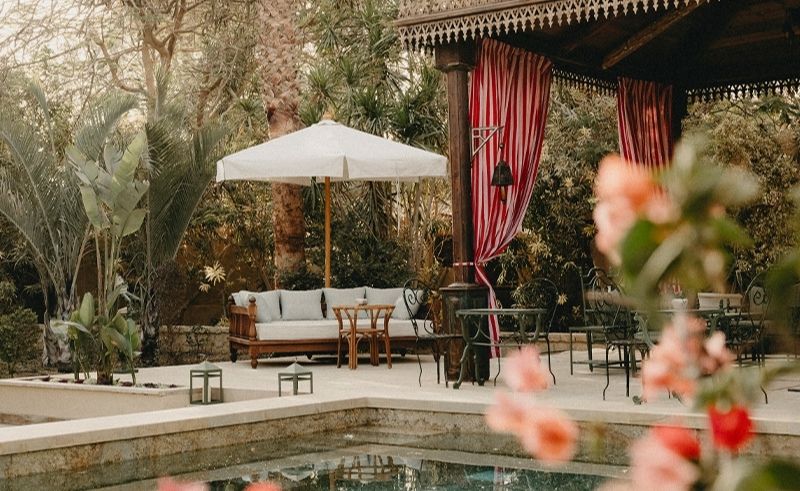
Fayoum, the most accessible of Egypt’s main oases, is a pastoral wonderland doused in impressionist colour. Unlike Siwa, situated in the far reaches of Egypt’s western desert, Fayoum has long been a getaway for Cairenes wishing to swap car horns for the hypnotic click-clack of donkey hooves, even if just for a weekend. In recent decades, artsy boutiques and guesthouses have sprouted to accommodate the bohemian crowd which the oasis has attracted, the likes of potters, poets, and painters—many of whom never left. But among these artsy stays, a new queen might soon be crowned: Villa Fayoum.
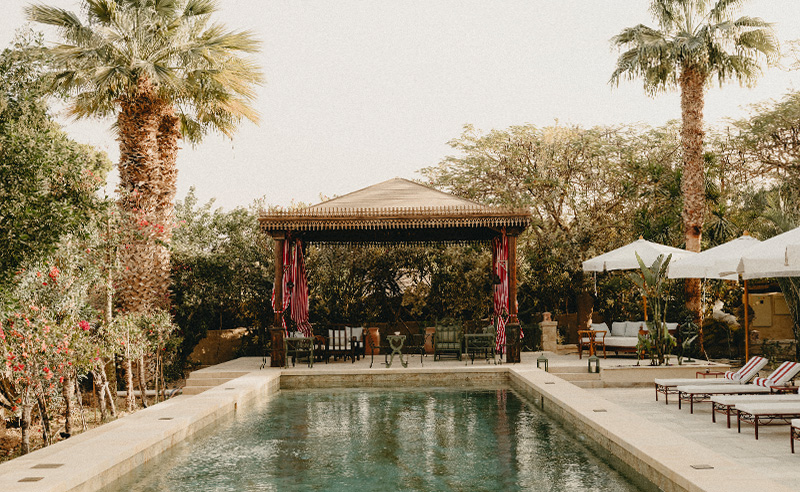 Behind Villa Fayoum are Zeina Aboukheir and Florian Amereller. These names should sound familiar: Aboukheir is the visionary who, in 2002, opened Al Moudira Hotel in Luxor—a tranquil palace you might find in lists of the best stays in the world—and Amereller is the lawyer-turned-hotelier who bought Moudira in 2022 and turned something quite perfect into something even better. Villa Fayoum, smaller and more intimate but no less charming than its older sister, brings Moudira’s magic to Tunis, a village only two hours away from Cairo on the shores of Fayoum’s expansive Lake Qarun.
 While Luxor is unparalleled for its historical sites, the village of Tunis is a quieter location with a beating heart made of clay. Pottery from Fayoum, which stretches back to ancient times, is renowned the world over, and it’s the village of Tunis that keeps that tradition alive today. Its country streets are home to Mohamed Abla’s Fayoum Art Center and Evelyne Porret’s Fayoum Pottery School, as well as boutiques and galleries that collectors from around the world come to comb.
Villa Fayoum is borne of this artistic heritage: formerly an artists’ residence, the site has been transformed by Aboukheir and Amereller into a stay where everywhere you look are one-of-a-kind creations bearing the imprints of their makers.
While Luxor is unparalleled for its historical sites, the village of Tunis is a quieter location with a beating heart made of clay. Pottery from Fayoum, which stretches back to ancient times, is renowned the world over, and it’s the village of Tunis that keeps that tradition alive today. Its country streets are home to Mohamed Abla’s Fayoum Art Center and Evelyne Porret’s Fayoum Pottery School, as well as boutiques and galleries that collectors from around the world come to comb.
Villa Fayoum is borne of this artistic heritage: formerly an artists’ residence, the site has been transformed by Aboukheir and Amereller into a stay where everywhere you look are one-of-a-kind creations bearing the imprints of their makers.
"When I first stepped into the villa, it felt as though the walls were whispering stories of the joy that lived here before." Dina Abou Alia, the architect behind Villa Fayoum, shares with SceneTraveller. "I saw traces of the children who had coloured the walls, and I felt the vibrant spirit of the owner. My heart told me not to wash that history away, but to let it breathe."
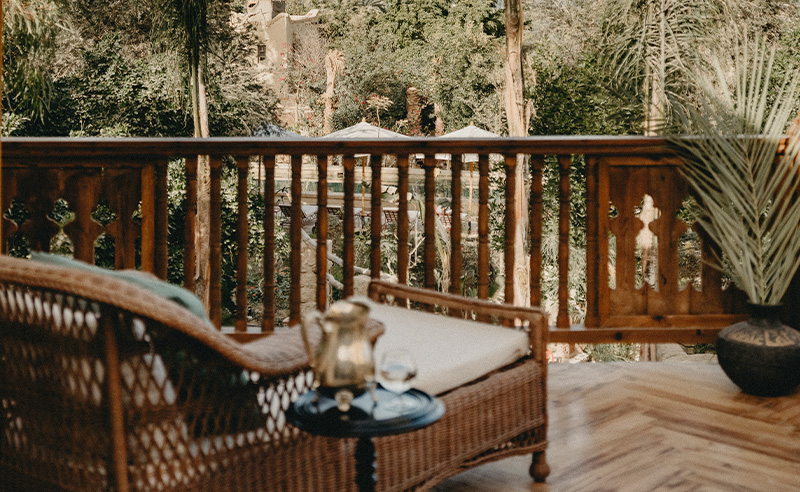
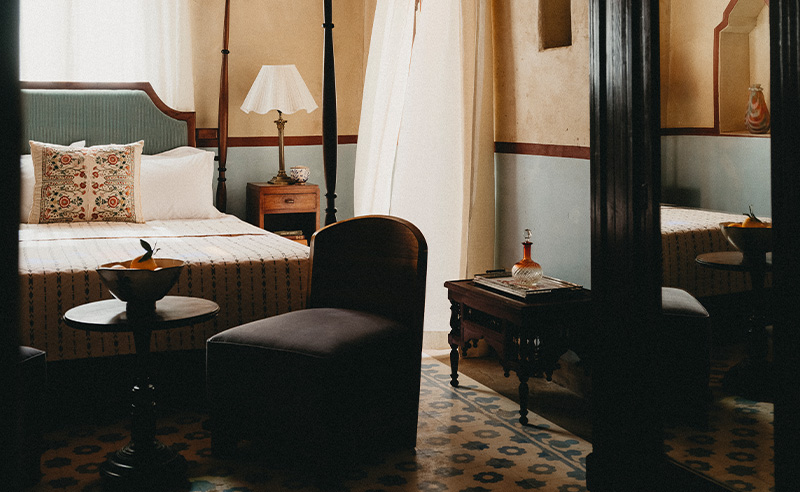
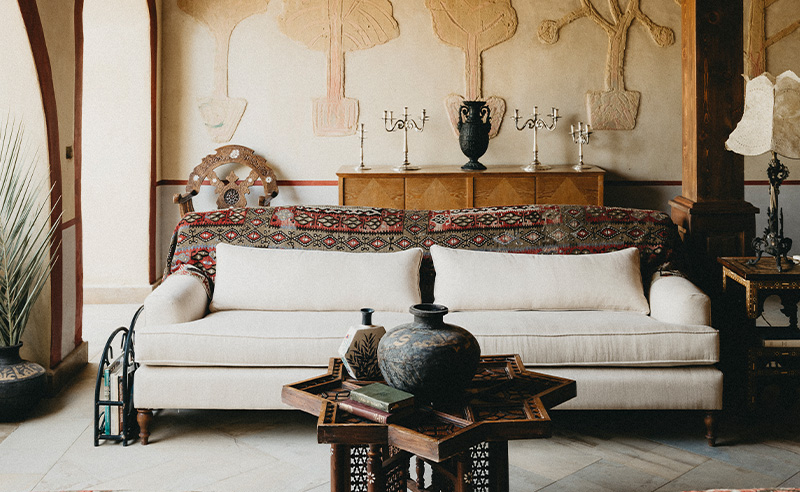
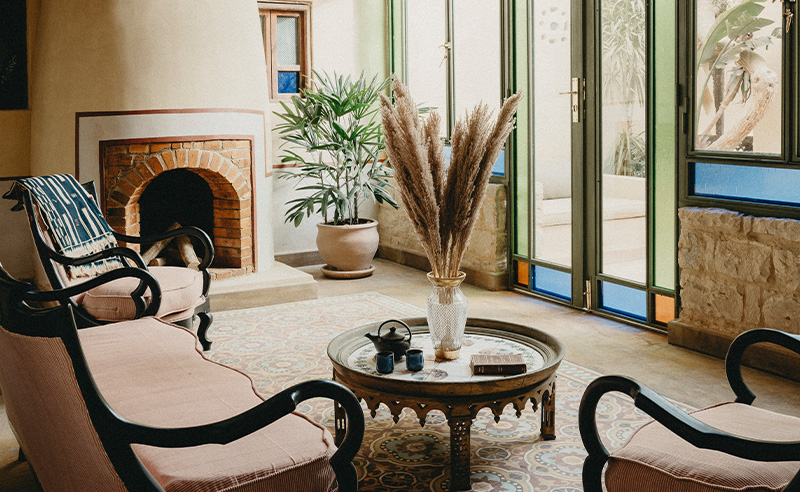 The fireplace of the winter garden lights up a dazzling Syrian Ottoman chimney; the chandeliers echo the names of generations of Egyptian antique dealers, and the rugs and chairs infuse patterns from as far afield as Istanbul, Indonesia, and Austria. On the Victorian beds and the chaises longues by the palm-fringed pool are the work of Malaika, whose handcrafted linens and towels help empower women artisans. Villa Fayoum’s 12 suites, like the common areas, are a silent symphony of texture: brass and wrought iron, glazed tiles and stained glass, velvety suede and embroidered silk, and living, breathing wood. Villa Fayoum understands this key lesson from its potter’s heritage: touch, that primordial language, is master of the senses.
 Inside the kitchen, a similar story of artistry unfolds. With pantries stocked by local farmers and a menu that changes with the seasons, Villa Fayoum’s chefs are trained by Chef Gioconda Scott, who, in 2025, opened The Moudira Farm Kitchen (which later made its way onto the New York Times’ T Magazine). Born and raised in Andalusia, Scott’s menus are inspired by rich earth—which an oasis like Fayoum has plenty of.
 Beyond its walls, Aboukheir and Amereller have made sure guests of Villa Fayoum have special access to the Fayoum Pottery School. Spending the morning at the potter’s wheel, letting your hands shape the cool clay into vases or cups or yet-unnamed vessels, you’ll get a sense of why such a tradition has survived thousands of years in this oasis. In the afternoons, between Coptic, Roman, and Greek ruins and a Middle Kingdom temple of the crocodile god Sobek, you can explore what else has happened here in those thousands of years.
 "Villa Fayoum may be just a short trip from Cairo, but it feels like a world away in energy," Philomena Schurer Merckoll, Co-Founder of Egypt Beyond, tells SceneTraveller.
 Like the history and artistic heritage on which it sits, Villa Fayoum is still in the process of discovering itself, having only just opened. Already, however, as it wins over the gaggle of devotees which Moudira has earned over the past two and a half decades, it is the kind of place one imagines returning to again and again to find everything just as they left it, and see it all again differently.
- Previous Article A Caravanserai in Damascus Reopens as Khan Wahoud Boutique Hotel
- Next Article Morocco's Lavish Bahia Palace Upholds Forgotten Narratives
Related Articles
Trending This Month
-

-

-

-
 Oct 02, 2026