

You Can Actually Stay at This Desert Fortress in Morocco
At Kasbah D’If Resort, you’ll find thirty-seven rooms, marble showers, and terraces overlooking nothing but rock and sky.

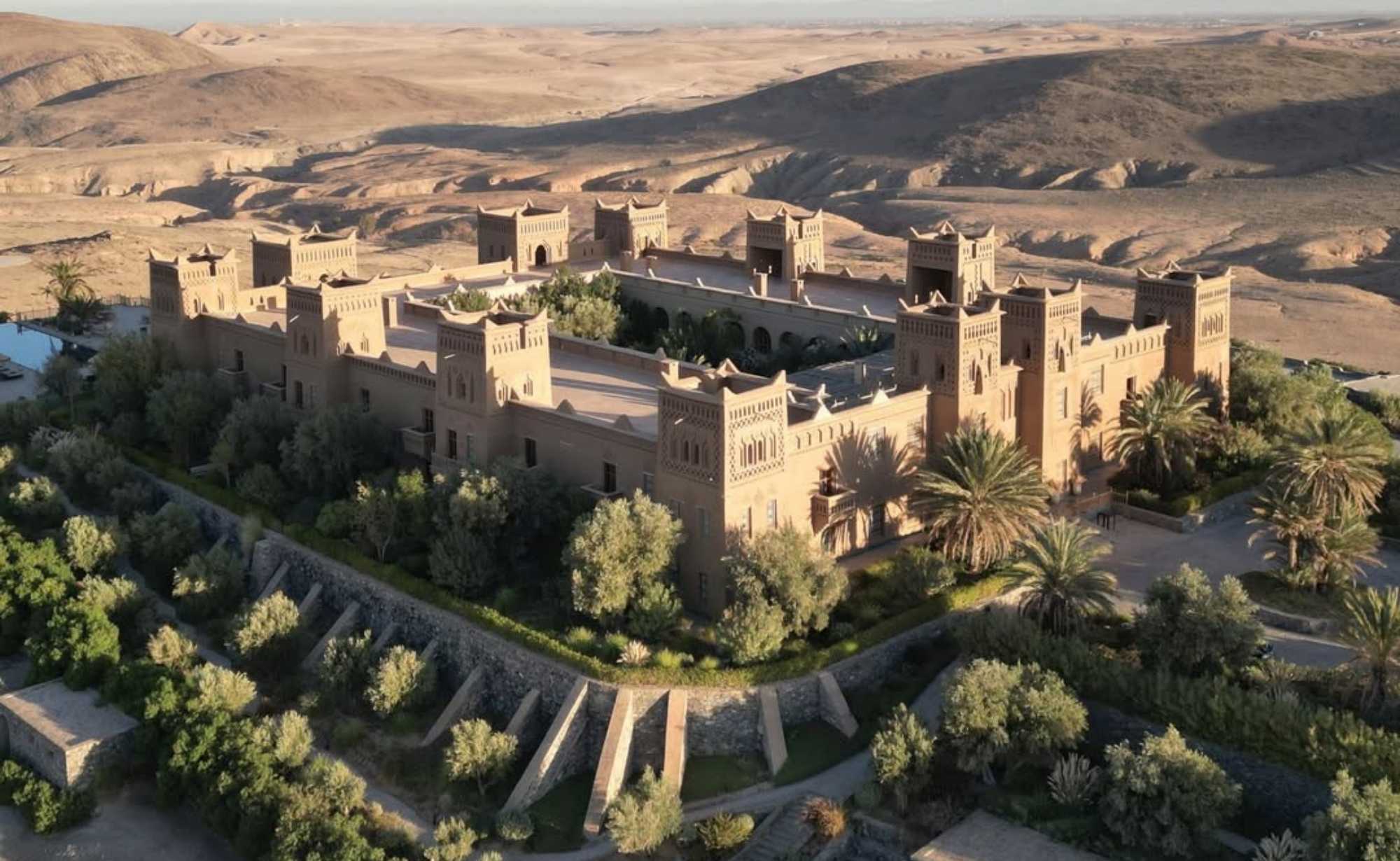
The road to the Kasbah D’If Resort unwinds south of Marrakech, past petrol stations and plastic chairs, and men selling olives from the backs of pickups. Once the asphalt thins, the landscape opens into that particular emptiness of the desert’s edge—rock and dust and the occasional stubborn tuft of green. And there, on a rise, is Kasbah D’If: a fortress the colour of the earth it sits on.
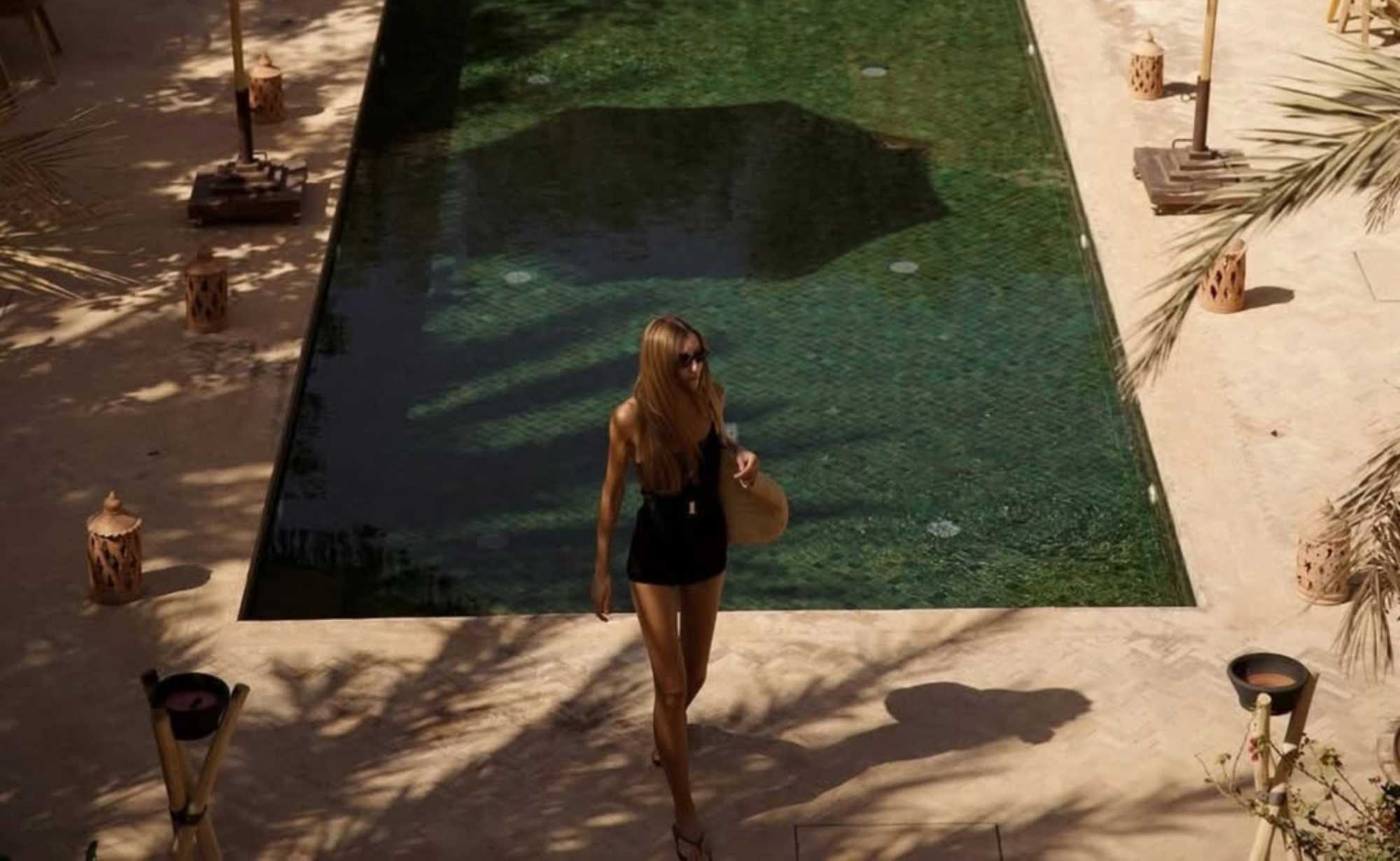
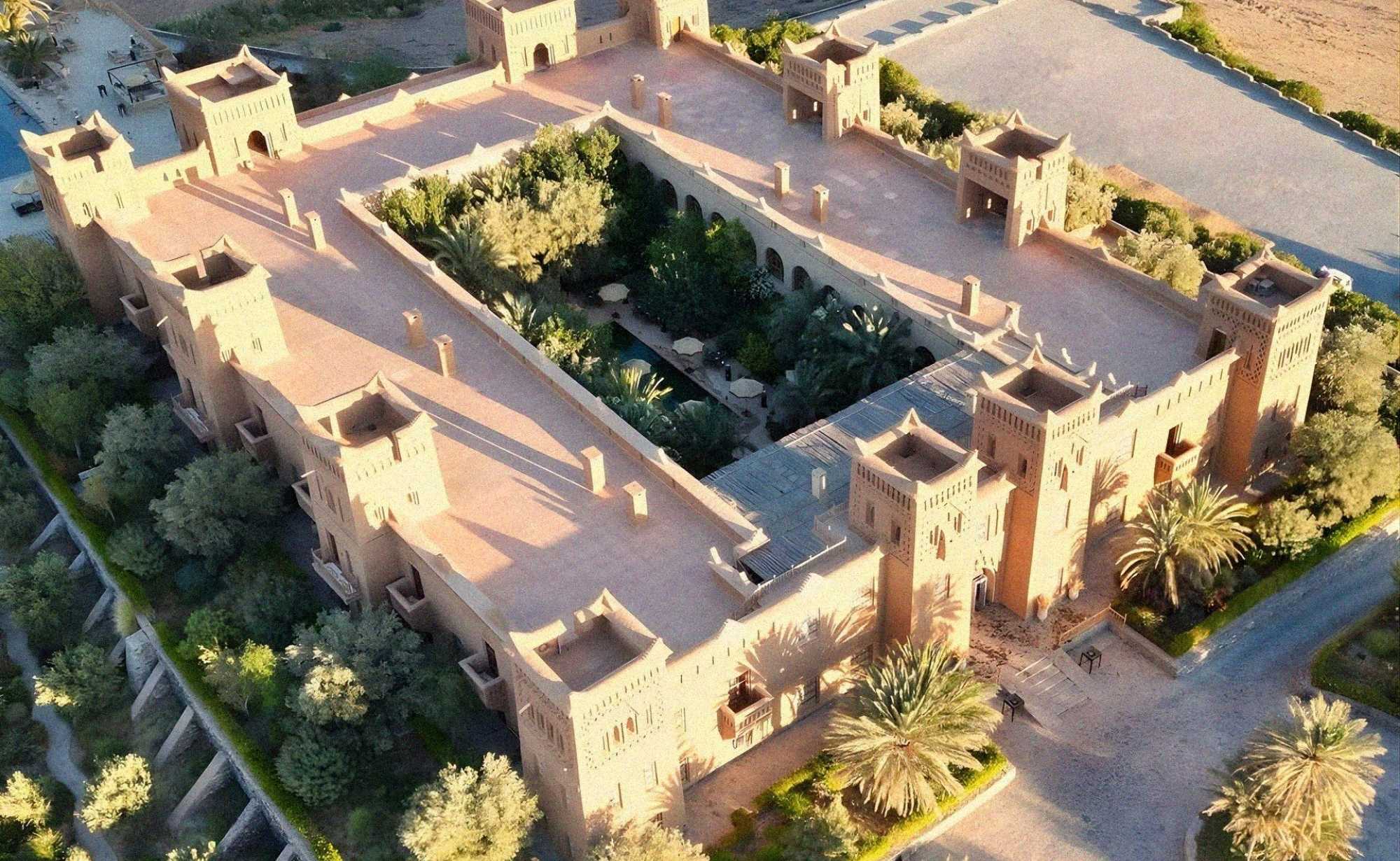 The resort’s heavy door opens onto a courtyard with a long strip of water down the middle, still as glass, reflecting the sky in a way that makes you check which way is up. On the patio, palm fronds scratch against each other in a breeze you can’t feel. You will have breakfast here tomorrow, and the day after, and the day after that, because once you start having breakfast in a place like this you won’t want to do it anywhere else. The bread will be warm. The honey will be from somewhere close enough that you could walk there if you had the time. The tea will arrive in a silver pot and you will pour it badly and nobody will care.
 Afterwards, a man in a djellaba will explain that the Kasbah was abandoned for years before they found it. The restoration involved stonecutters from Fes, carpenters from Essaouira, and weavers from the Atlas who argued about how to fix things. Every beam in the ceiling was hand-shaped. Every tile laid by someone who learned from someone who learned from someone. You’ll nod and try to look like you understand what that means. Later, in your room, running your hand along a windowsill carved smooth by hands that have been dust for decades, you will understand it better.
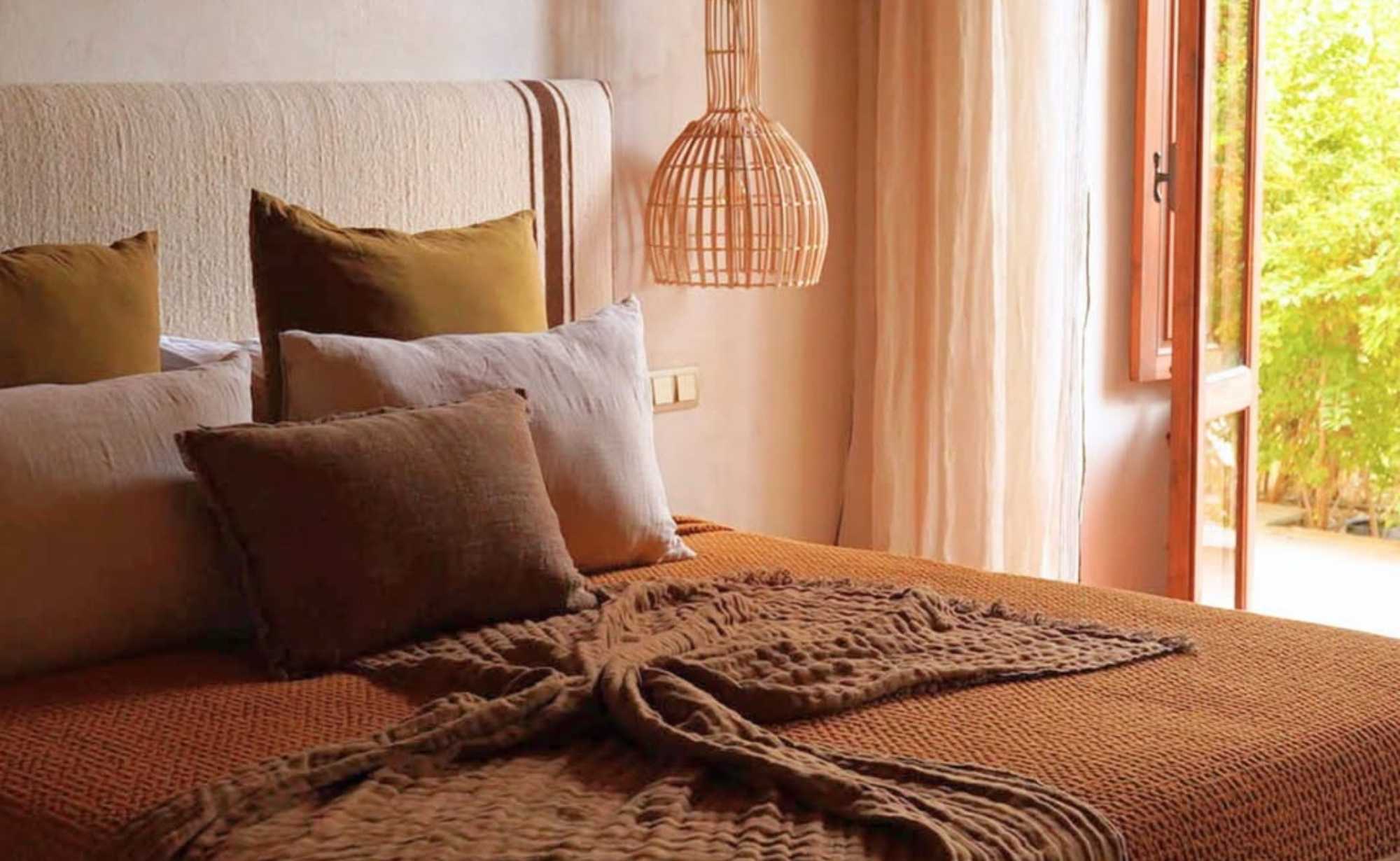
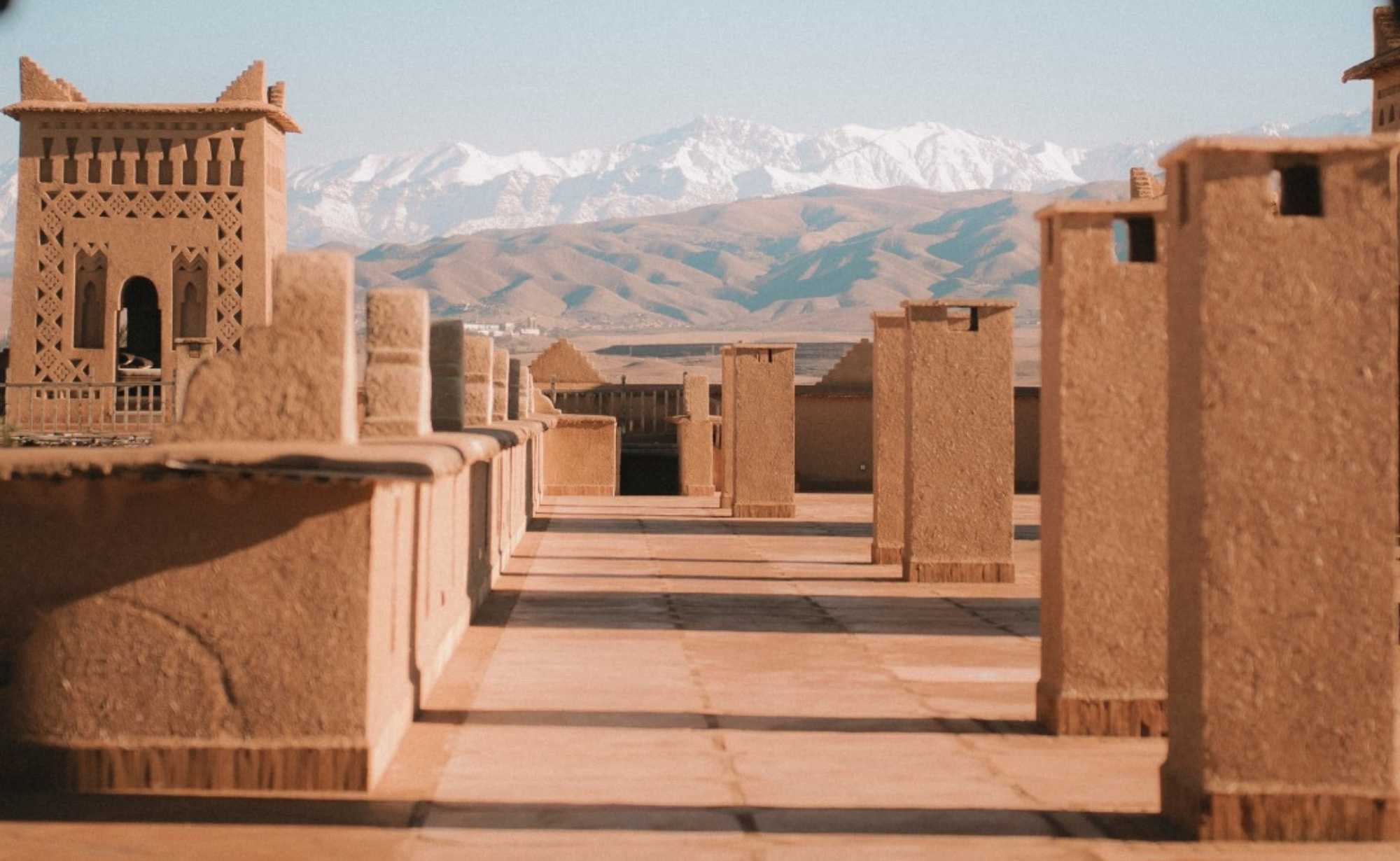 Across the property, you’ll find thirty-seven rooms, each with a bed so deep you’ll need to climb into it, and a bathroom lined in marble from the Atlas with a shower carved into the stone itself. Some feature terraces that looks out over nothing but rock and sky and the suggestion of mountains in the distance.
  Dinner is a question of navigation. The Pergola serves tajines under a canopy of woven reeds, the steam rising in that particular way that makes you close your eyes before you even taste anything. The Pavillon d’Eté is up a flight of stairs, open to the air, with a view of the mountains that changes colour as the sun goes down—pink, then orange, then a deep bruised purple that doesn’t look real. Al Massaa is the fancier one: zellige tiles, lanterns, a menu that does things with local ingredients that you wouldn’t think to do yourself.
 But the bar, after dinner, is something else entirely. The British Berbere Bar sounds like a concept that shouldn’t work; colonial-era English lounge meets Moroccan café. Leather armchairs and low light. A shelf of amber bottles that catch the glow. A bartender that makes something with saffron and whiskey that you’ll order without knowing what it will taste like.
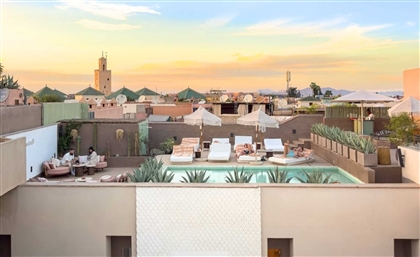
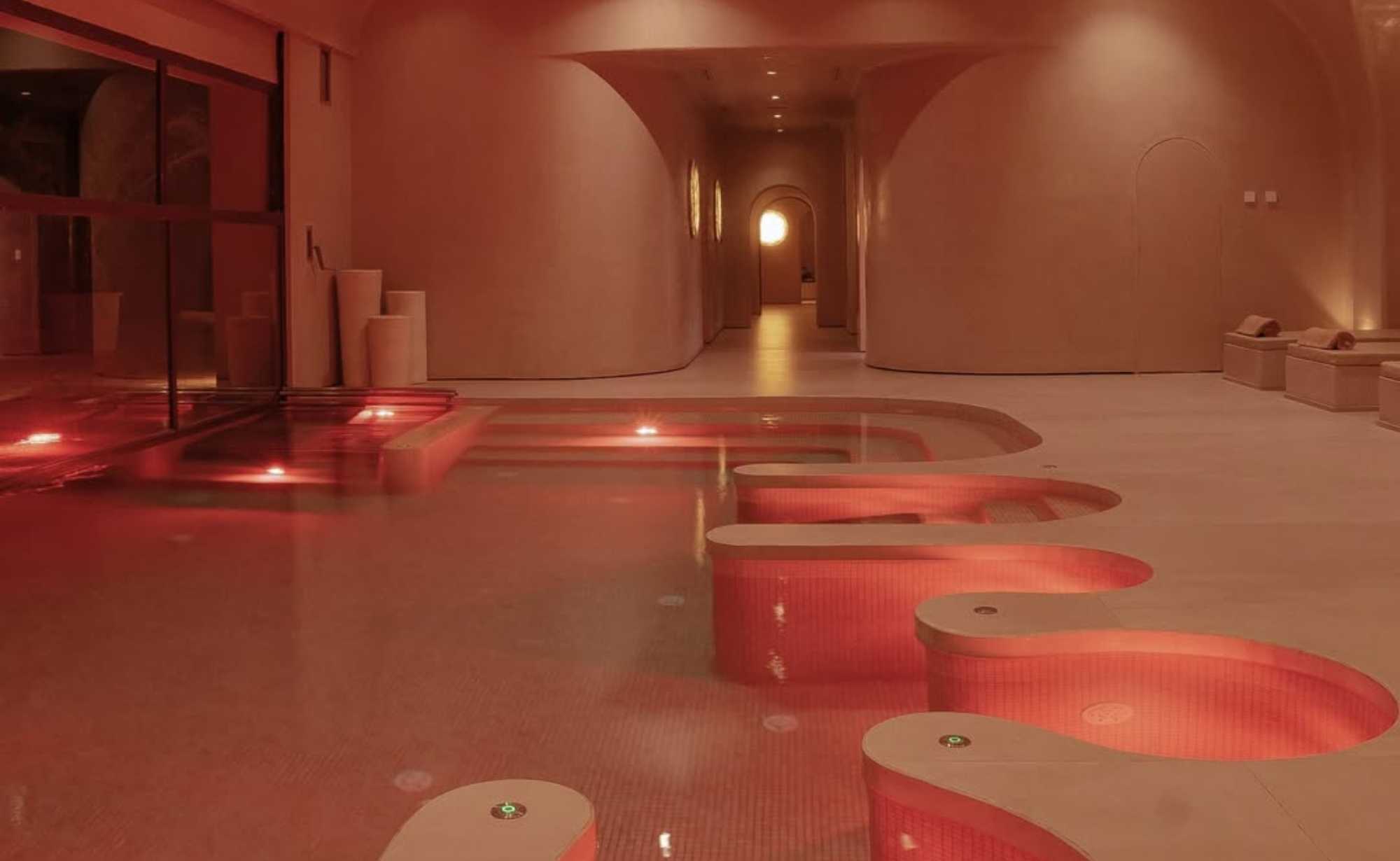
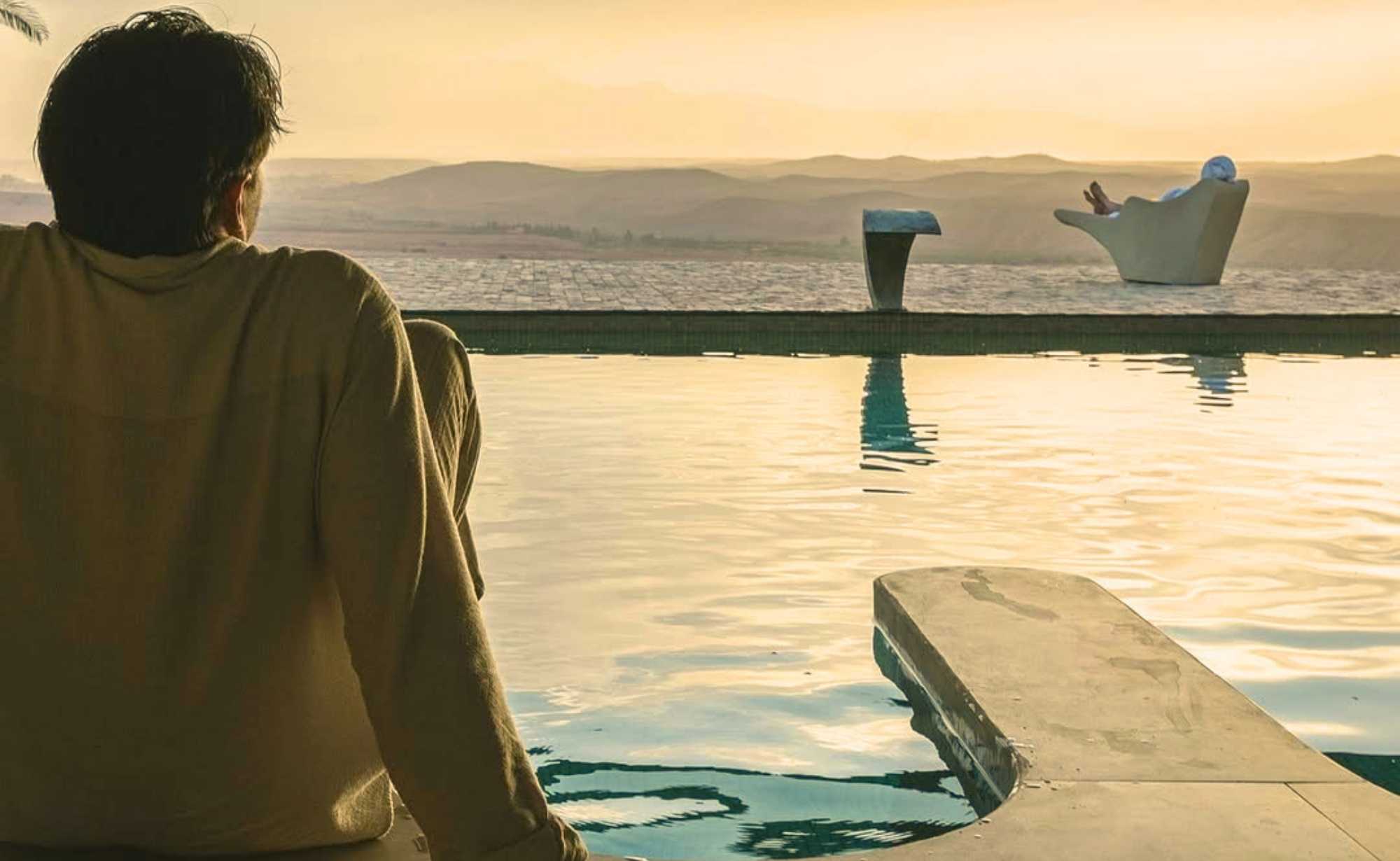 There is a poolside bar too, for afternoons when the heat presses down and a cold drink by the water is the only sensible option. The pool itself is the kind of blue that makes you want to stare at it for an hour, before heading to the spa, carved straight into the rock. You’ll descend a staircase and the walls will become the hill itself, rough and cool to the touch. The hammam will be traditional—steam, black soap, an exfoliation that leaves your skin feeling like it has been replaced—and the massage that follows will use oils that smell like the garden outside, which is to say: like rosemary and orange blossom and something earthier you can’t name.
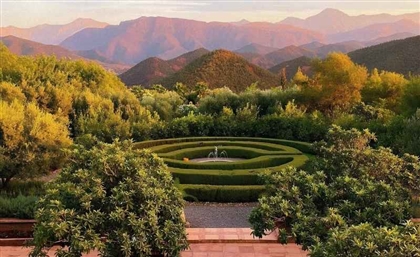
In the morning, you’ll walk down to the garden. They grow things there—tomatoes, herbs, olives—and you can wander between the rows, picking a leaf to crush between your fingers, watching a bee do its work. A man will be pruning something with the patience of someone who has done this his whole life and will do it until he can’t.
There is a poolside bar too, for afternoons when the heat presses down and a cold drink by the water is the only sensible option. The pool itself is the kind of blue that makes you want to stare at it for an hour, before heading to the spa, carved straight into the rock. You’ll descend a staircase and the walls will become the hill itself, rough and cool to the touch. The hammam will be traditional—steam, black soap, an exfoliation that leaves your skin feeling like it has been replaced—and the massage that follows will use oils that smell like the garden outside, which is to say: like rosemary and orange blossom and something earthier you can’t name.
In the morning, you’ll walk down to the garden. They grow things there—tomatoes, herbs, olives—and you can wander between the rows, picking a leaf to crush between your fingers, watching a bee do its work. A man will be pruning something with the patience of someone who has done this his whole life and will do it until he can’t.
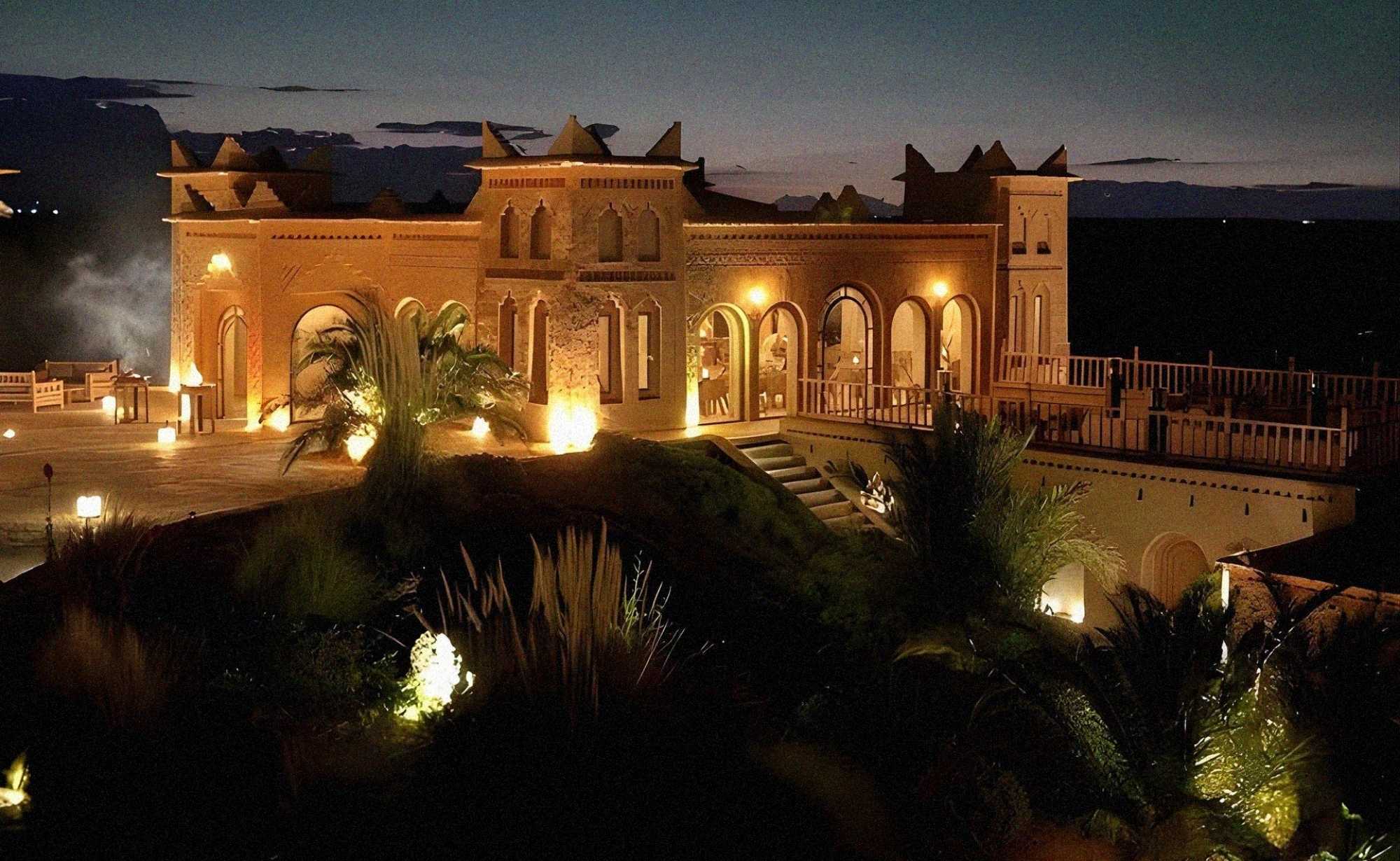 Leaving will be harder than it should be. You’ll pack slowly, sit on the terrace one last time, drink the last of the bottled water. The man at the front desk will ask if you enjoyed your stay and you’ll say yes, which is true, and also insufficient. Outside, the road will await. You’ll drive past the Kasbah, look in the rearview mirror, and see it shrink into the landscape until it becomes just another rock on a hill, the colour of the earth it sits on, waiting for whoever comes next.