

Mohamed El Masry Cycled Across Deserts to Reach Makkah on His Bike
From a small village in the Delta to the holy city of Makkah, Mohamed El Masry cycled 1,670 km through deserts, heat, and exhaustion relying on faith, courage, and sheer determination.
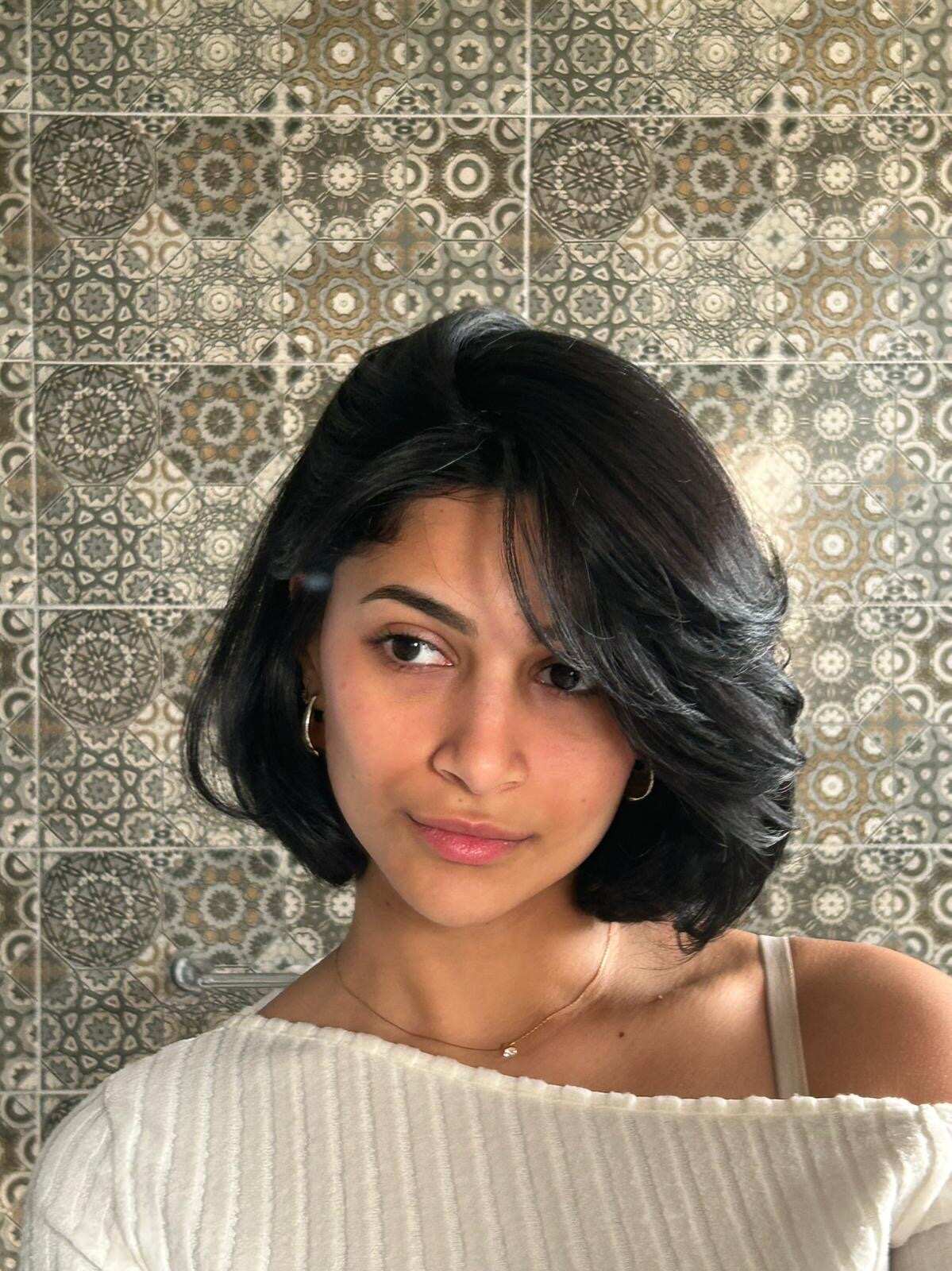
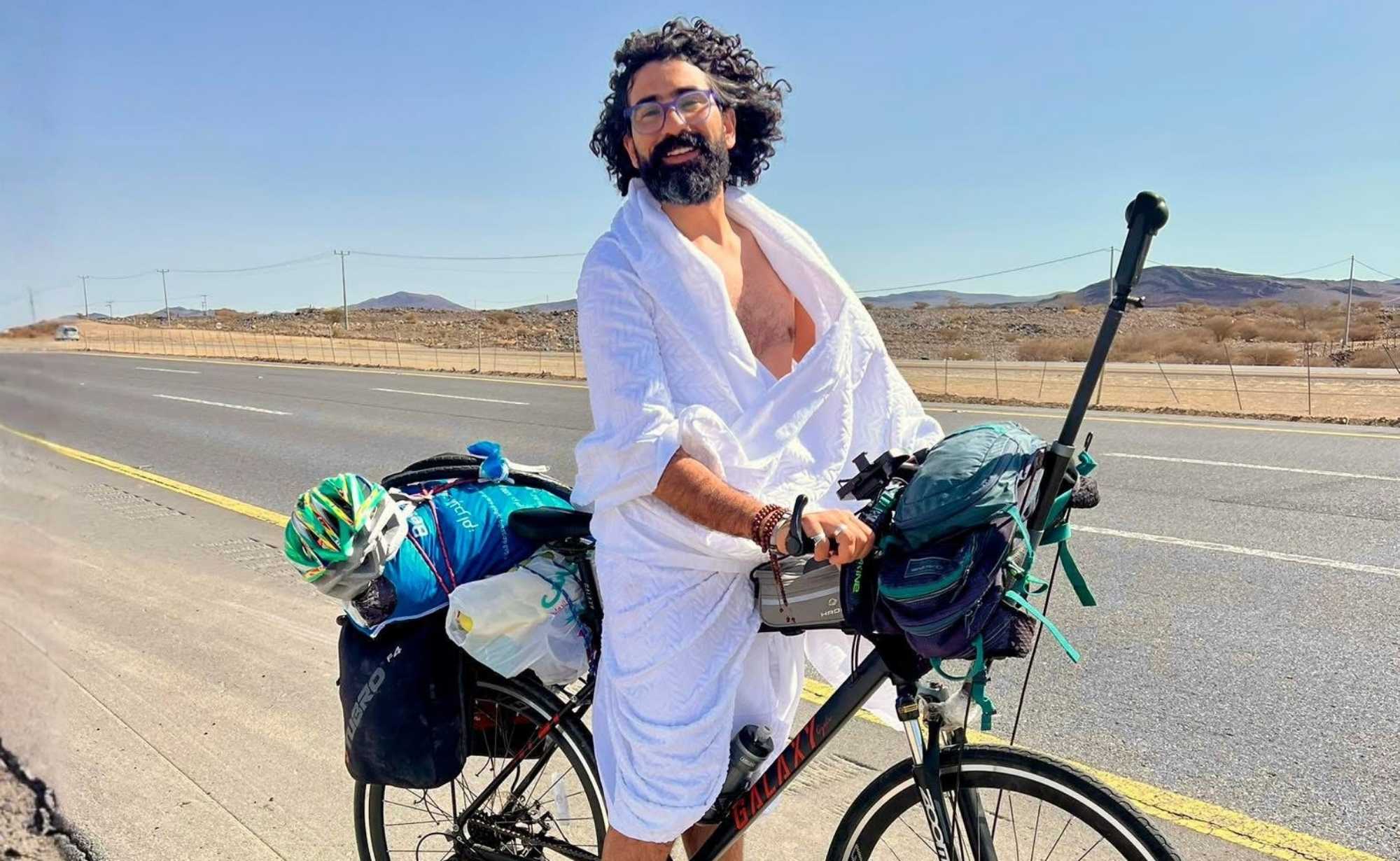
My bike is a part of me. It helped me see my country, meet people, and chase dreams I never thought I could reach, including the Holy City,” Mohamed El Masry starts as he gets comfortable talking about his thirty-one day journey from his hometown in Egypt's Gharbia to Makkah on a bike.
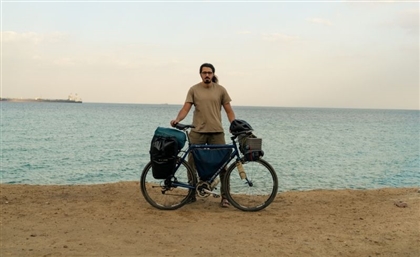
Born to a carpenter in the quiet streets of Gharbia, El Masry grew up helping transport materials on his bike. A very simple method of transportation that became such a steady companion throughout the years that he named his bike 'Aziza,' Arabic for "beloved." Day after day, he rode across Gharbia, hauling goods from one end to the other, until one morning, a small thought sparked a realisation: his modest bike could take him far beyond his village. “I decided to go to one of the bigger cities, Basyoun, which was seven kilometres away. I was 16 at the time, and I remember feeling so accomplished that I just wanted to do it again and again."
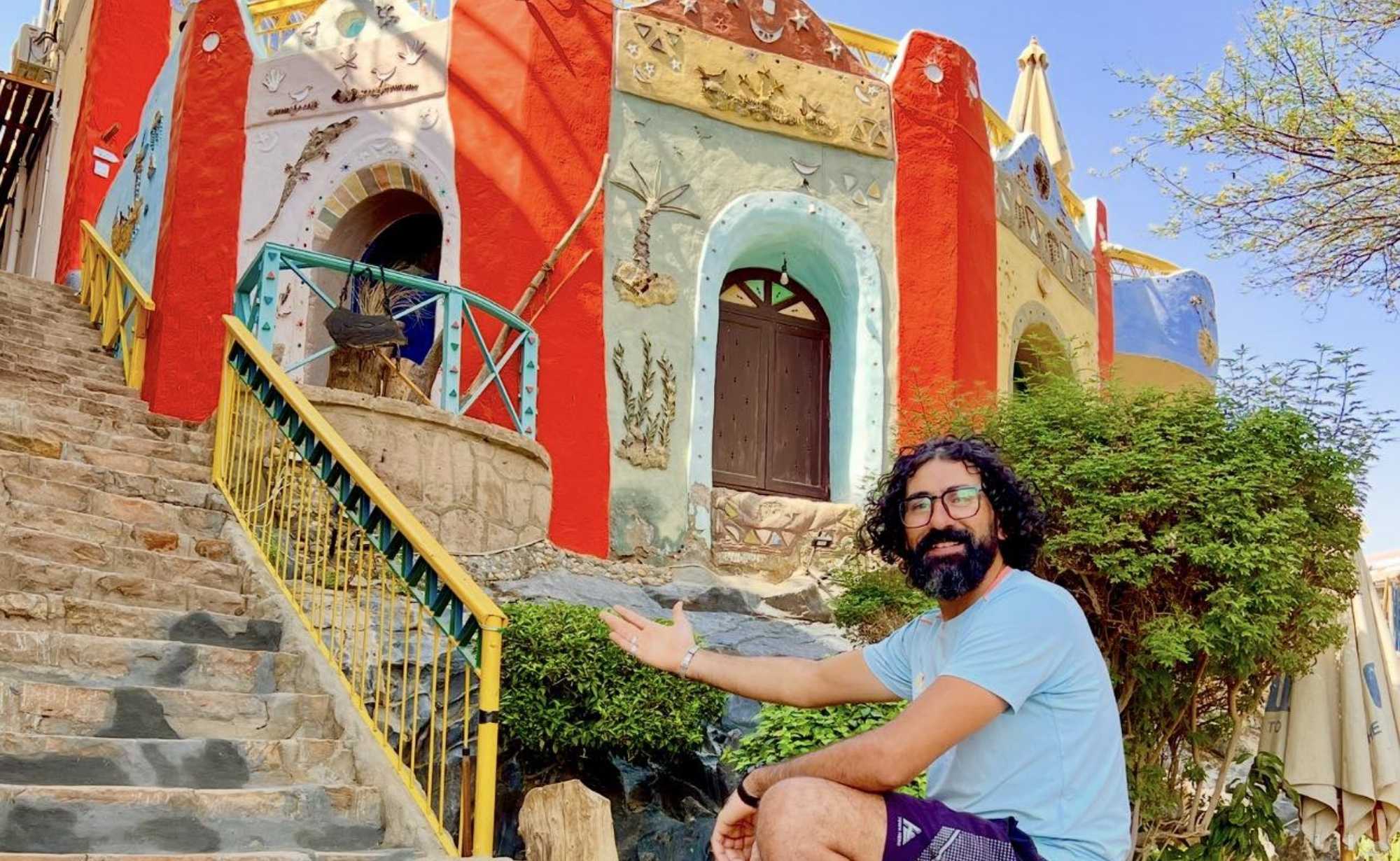 El Masry has been touring Egypt by bike ever since. He participated in cycling events in Tanta and Cairo, travelled west towards the Oasis of Siwa, felt the Mediterranean breeze between Alexandria and Port Said, pedalled to the southern tips of Aswan, and lost himself in the vast dunes of Sinai. He started documenting his trips on Instagram to share his journey and views, “I saw parts of my country I had never noticed before. The deserts, the mountains, the small villages. It was all so beautiful, I had to share it,” he explains. And as it turns out, people were interested in joining him on his journey, even if only virtually.
But crossing all 27 governorates off his bucket list (twice) wasn’t his only dream. As a devout Muslim, El Masry had always wanted to go to Makkah and perform pilgrimage, but ever the realist, couldn’t help but acknowledge the bureaucratic and financial difficulties of this voyage. He slept on the dream for a while, until, on one of his many trips, he bumped into a Saudi man who, after understanding what El Masry does, made him a surprising proposition: he could help arrange Hajj for him, but on one condition—he had to make the journey by bike.
El Masry’s answer? An ecstatic, “I will come crawling if necessary!”
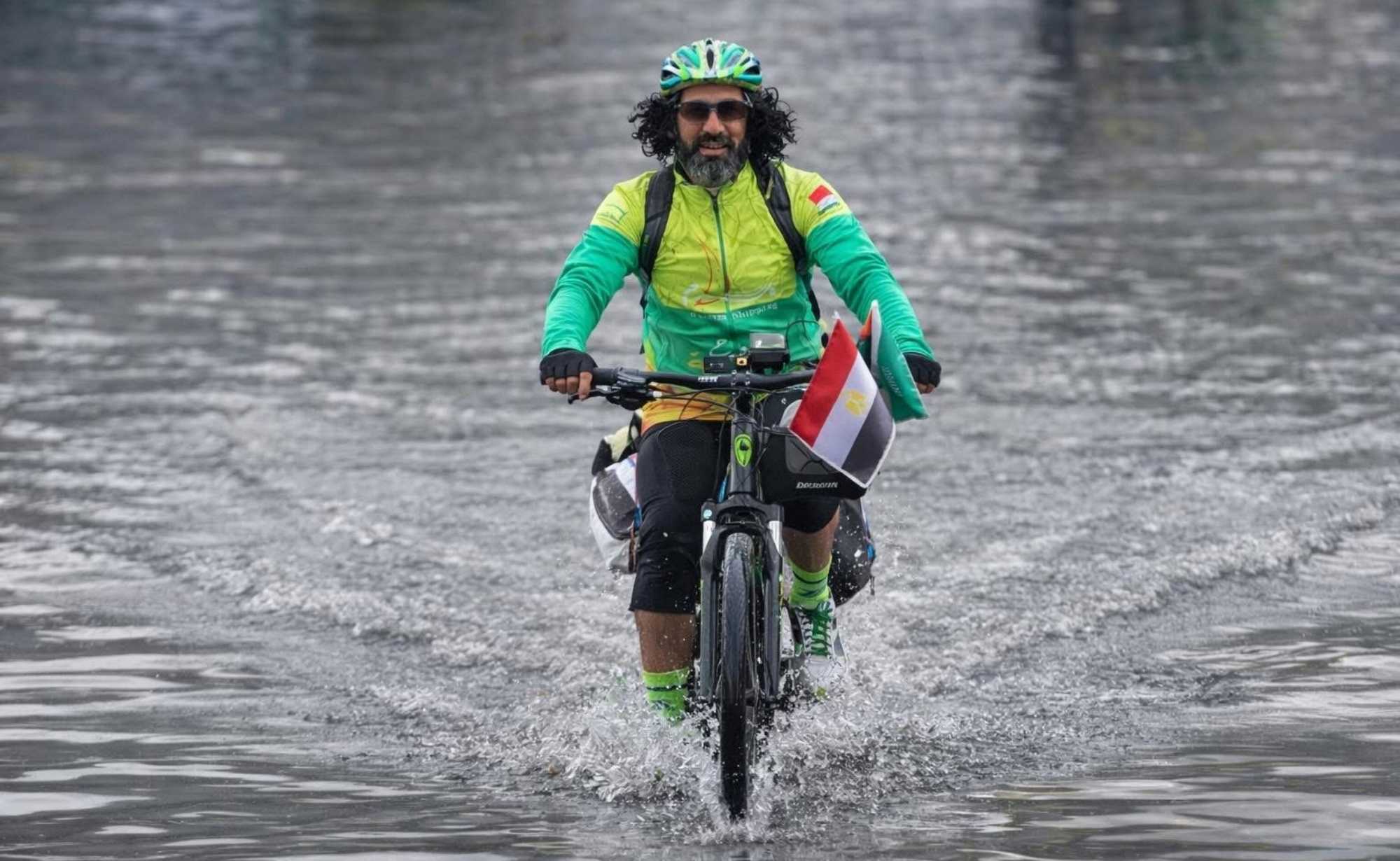 You’d think that a trip as ambitious as this 1,670 kilometre journey would be preceded by weeks, if not months, of planning. But that’s not how El Masry conducts his business, “I actually took to the road way before my visa had arrived. It came on the fifth day, by that time, I was already in Hurghada.” All he did was buy a camera, pack necessary medicine, spare parts, a toolkit for his bike, winter and summer clothes, a tent and sleeping bag, as well as the reflections of all his previous travels. For sustenance, he relied on the generosity of lorry drivers drifting past, and they, fortunately, did not disappoint him.
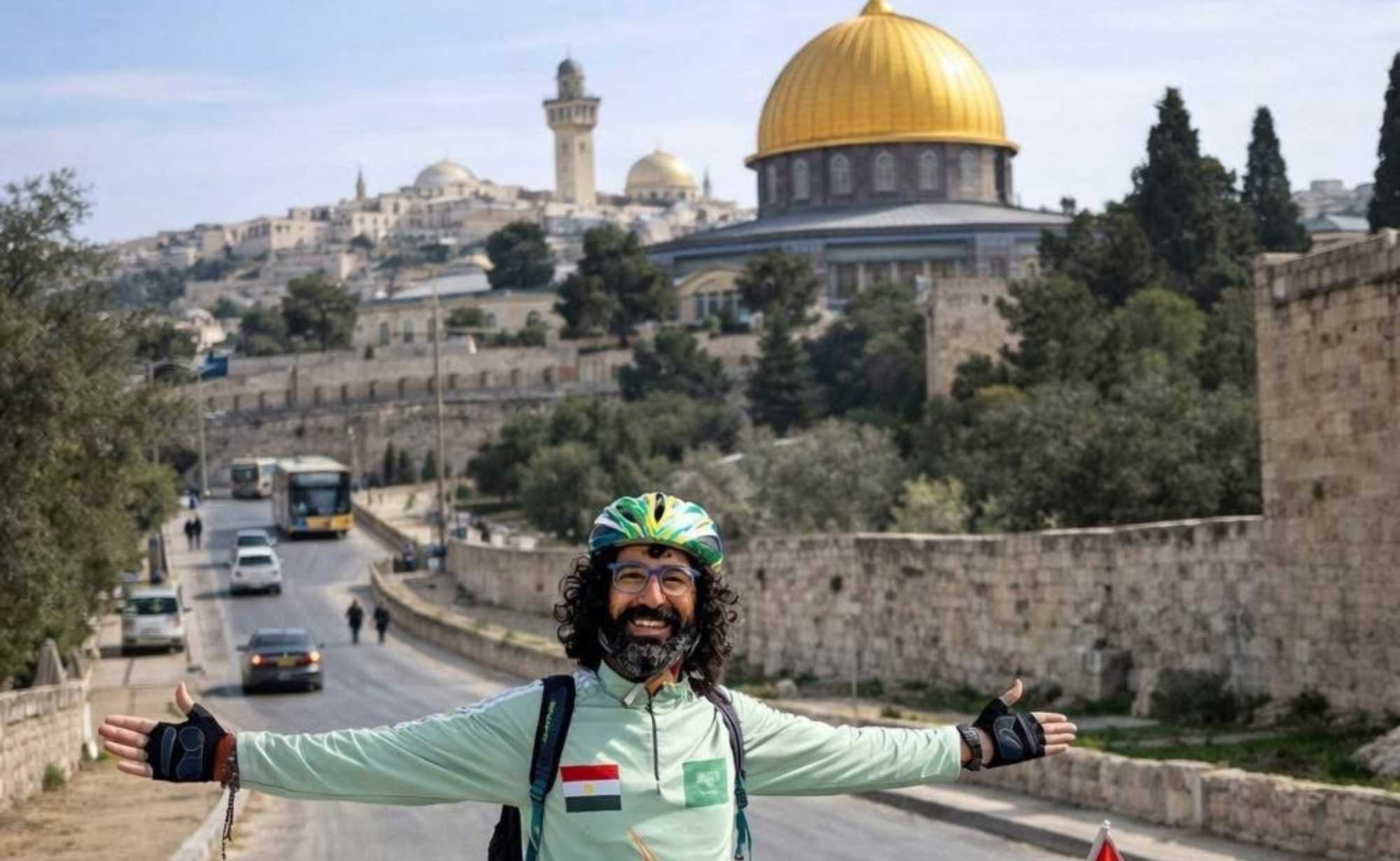 And though luck was on his side for most of it, through the dark tunnels of Sinai and the unforgiving crossings of Jordan’s autostrads, there were still hysterical moments that pushed him to his mental limits. Because when you’ve been pedalling under the scorching Arabian sun in 50-degree heat (which is considered “normal,” I must remind you), you will ultimately get dehydrated, and we all know that water—or lack thereof—decides how long you endure.
“Nothing could have prepared me for the road between Khaybar and Medina,” El Masry looks back on his toughest moments. “In Saudi Arabia, it’s known as one of the hardest desert roads,” for the lack of services, petrol stations, and any sign of life that goes on for kilometres on end. But also for its history, as a site of a bloody siege, a poisoning attempt, and an expulsion that emptied the oasis of its ancient population. While he found it difficult to recall what it was like moving between those two cities due to the toll it took on his body and mind, he gave snippets: complete darkness with occasional headlights that disoriented him more than they helped out, and an eerie feeling he just couldn’t shake off. “I kept biking hysterically. All I did was keep reminding myself of the goal, seeing the Kaaba. But as the sand started filling my eyes, I stopped pushing and started sobbing and thinking, ‘I can’t do it anymore.’”
It was at that moment that El Masry put all his faith in God and started visualising the Kaaba. He got back on his bike, riding until he found a deserted petrol station where he sought refuge. “I can’t remember anything after my arrival at the station. I just suddenly woke up to a man who looked confused as he handed me water and food.” And then, El Masry was off again.
Spotting the tips of soaring minarets and feeling the air change with a newfound sense of serenity, El Masry knew he was cycling closer and closer to his goal. His heart couldn’t help but relax despite it working overtime just to keep him going. Finally, after a month on the road, he was there, right in front of the Kaaba. “This was the moment where I felt that everything I went through in my life had a meaning,” he says. “When I saw the Kaaba for the first time, I forgot the road, the heat, the fear, I forgot everything. I sat on the ground and cried for a long time.”
And though luck was on his side for most of it, through the dark tunnels of Sinai and the unforgiving crossings of Jordan’s autostrads, there were still hysterical moments that pushed him to his mental limits. Because when you’ve been pedalling under the scorching Arabian sun in 50-degree heat (which is considered “normal,” I must remind you), you will ultimately get dehydrated, and we all know that water—or lack thereof—decides how long you endure.
“Nothing could have prepared me for the road between Khaybar and Medina,” El Masry looks back on his toughest moments. “In Saudi Arabia, it’s known as one of the hardest desert roads,” for the lack of services, petrol stations, and any sign of life that goes on for kilometres on end. But also for its history, as a site of a bloody siege, a poisoning attempt, and an expulsion that emptied the oasis of its ancient population. While he found it difficult to recall what it was like moving between those two cities due to the toll it took on his body and mind, he gave snippets: complete darkness with occasional headlights that disoriented him more than they helped out, and an eerie feeling he just couldn’t shake off. “I kept biking hysterically. All I did was keep reminding myself of the goal, seeing the Kaaba. But as the sand started filling my eyes, I stopped pushing and started sobbing and thinking, ‘I can’t do it anymore.’”
It was at that moment that El Masry put all his faith in God and started visualising the Kaaba. He got back on his bike, riding until he found a deserted petrol station where he sought refuge. “I can’t remember anything after my arrival at the station. I just suddenly woke up to a man who looked confused as he handed me water and food.” And then, El Masry was off again.
Spotting the tips of soaring minarets and feeling the air change with a newfound sense of serenity, El Masry knew he was cycling closer and closer to his goal. His heart couldn’t help but relax despite it working overtime just to keep him going. Finally, after a month on the road, he was there, right in front of the Kaaba. “This was the moment where I felt that everything I went through in my life had a meaning,” he says. “When I saw the Kaaba for the first time, I forgot the road, the heat, the fear, I forgot everything. I sat on the ground and cried for a long time.”
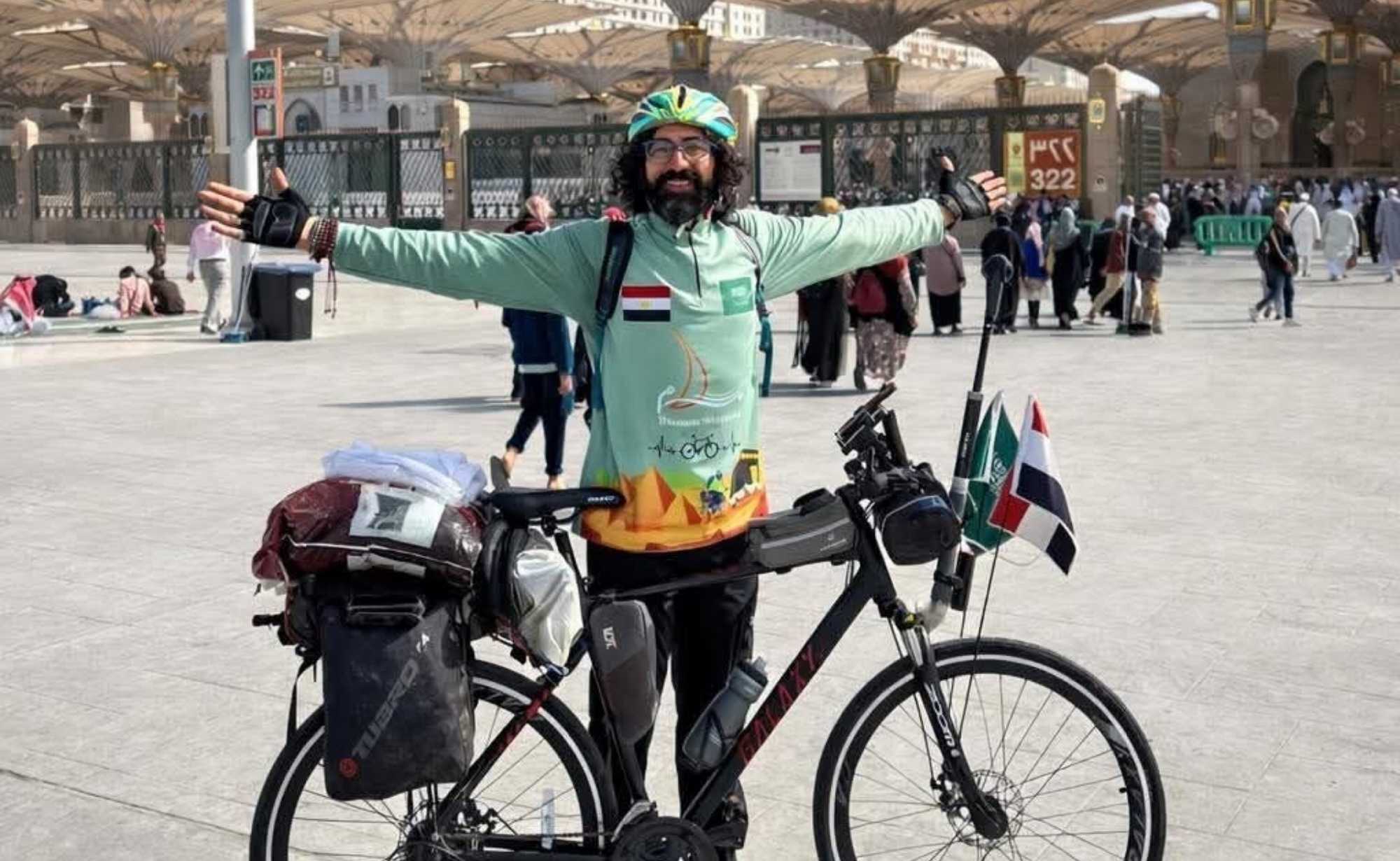 El Masry performed the rituals of Hajj with extreme difficulty, his body already completely exhausted from the thirty-one days that led up to this, “but inside—mentally and spiritually—I was very calm.” It seemed El Masry had finally achieved his goal. But he wasn’t close to being done. In fact, his experience was so spiritually enlightening that, once it was all over, he decided to do it again. Then again. He reigned over these roads, the ones that took him from a modest village near the Delta to the holiest of holy places, a total of three times. The first endeavor took 75 days, countless administrative phone calls, and discoveries of roads he will “never think to travel through again.” While the second and third times took 31 days. The reason behind the madness? A sort of perfectionism, of wanting to do it right, of having sponsors that made his trip just a bit easier, and of wanting to fully submit himself to the grace of God.
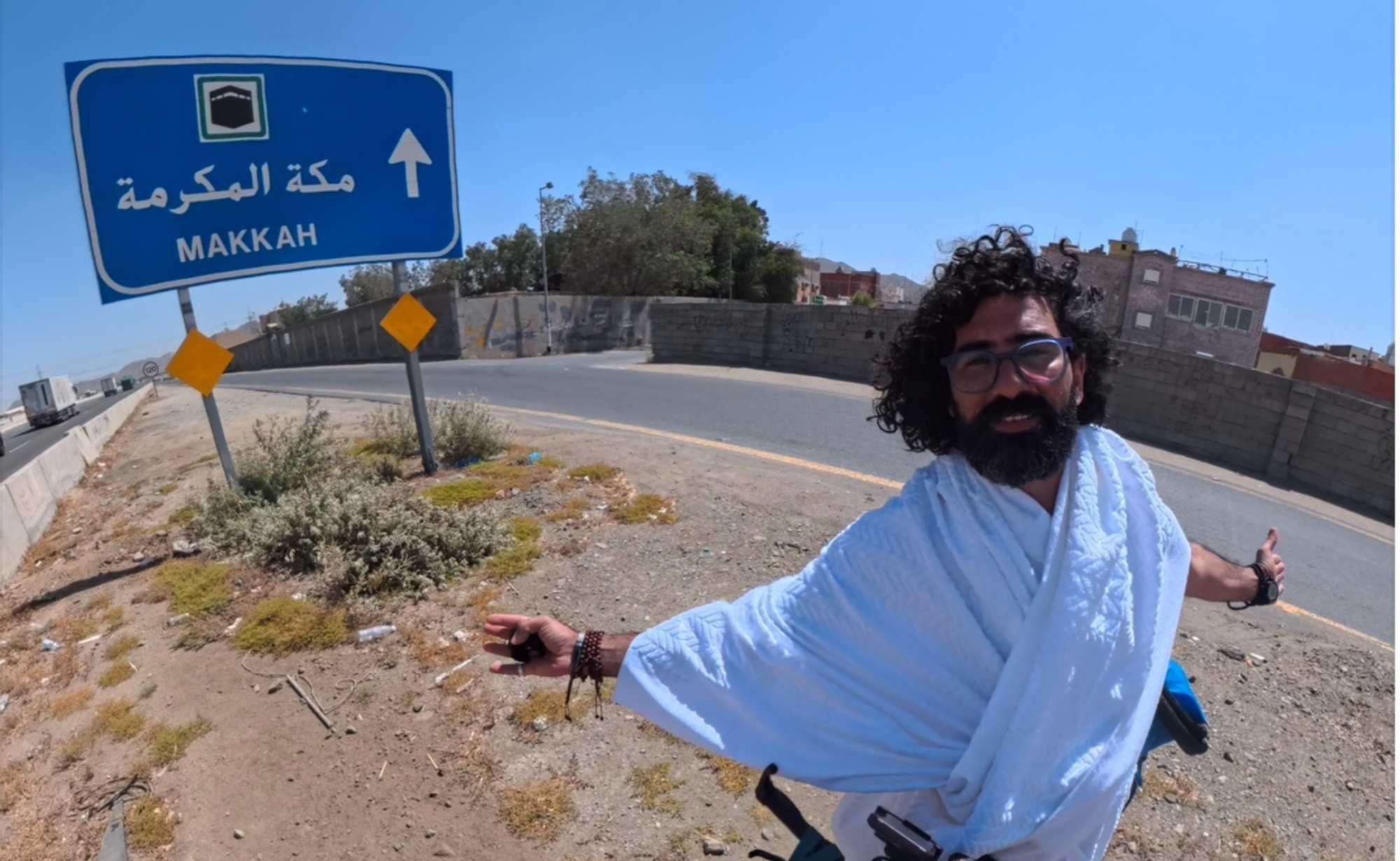 Today, Mohamed El Masry has cycled across the Egyptian landscape twice, undertaken Umrah and Hajj on a shoestring budget three times, pedalled for days while fasting in unforgiving desert terrains, and slept wherever he could—on the roadside, in petrol stations, mosques, and even in strangers’ homes. Along the way, he built a community on social media, sharing glimpses of his journeys and inspiring followers. Through sheer determination, faith, and love for his country, he founded a cycling team, ‘Hanshoof Baladna Ala El Agala’ (We’ll See Our Country on Bike), turning his passion for two wheels into a movement; one he eventually brought home by opening a bike shop, El Masry Bikes.
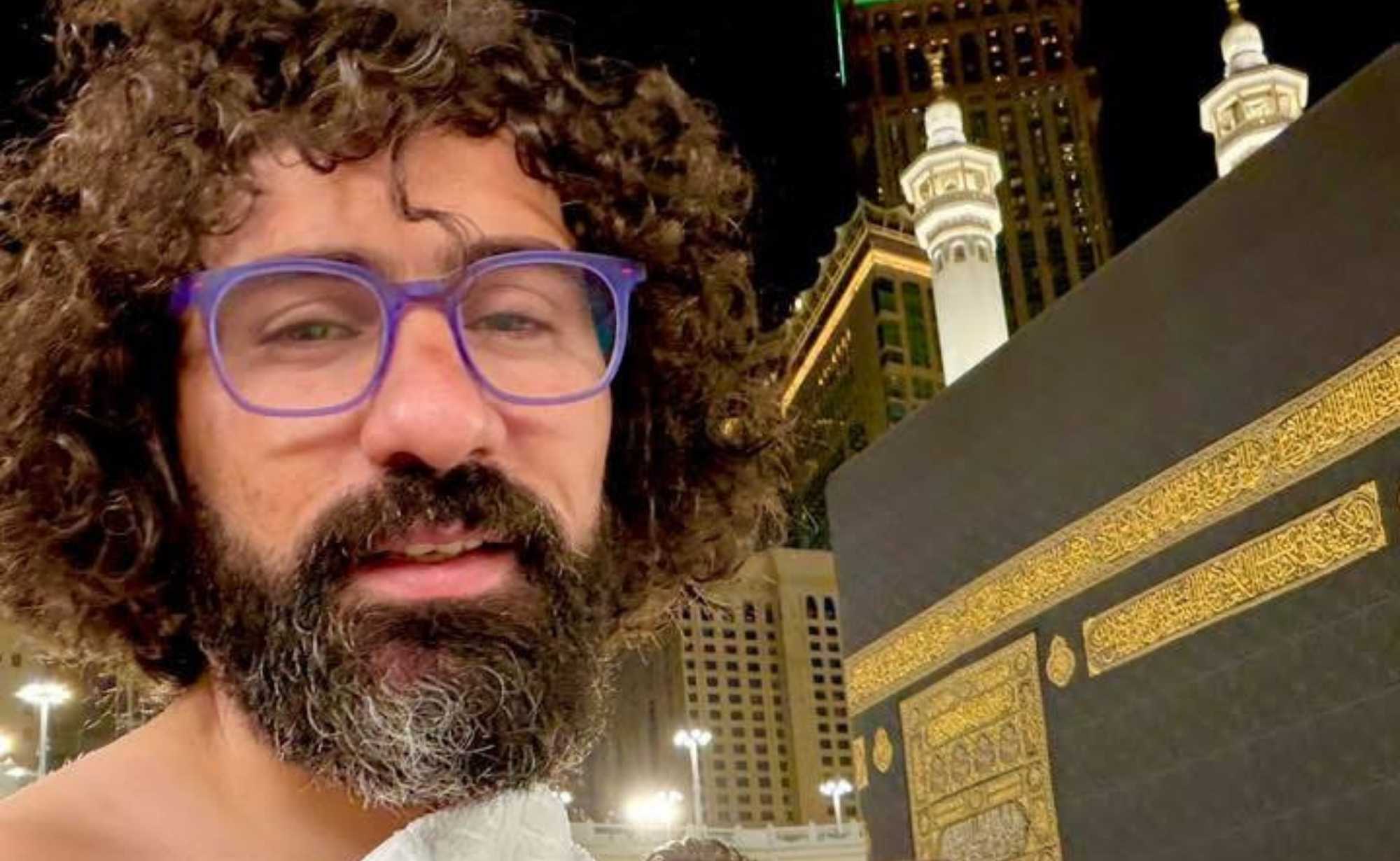 Through every ride, every desert night, every moment of doubt, Mohamed proved that you don’t need money or connections—only persistence, determination, and faith. He began with nothing but a bicycle and a dream, and has faced more obstacles than most since. And though fear still comes before every ride, video, or talk, he keeps moving forward anyway—because if he had waited for the fear to disappear, he would never have gone anywhere at all.
“We will challenge the challenges until they declare that we are a challenge to them.”
Through every ride, every desert night, every moment of doubt, Mohamed proved that you don’t need money or connections—only persistence, determination, and faith. He began with nothing but a bicycle and a dream, and has faced more obstacles than most since. And though fear still comes before every ride, video, or talk, he keeps moving forward anyway—because if he had waited for the fear to disappear, he would never have gone anywhere at all.
“We will challenge the challenges until they declare that we are a challenge to them.”