


The Arab World’s Most Beautifully Cinematic Train Stations
Train stations across the Arab world treat departure as an occasion worth a soaring arch, a chandelier, and a floor tiled with care.

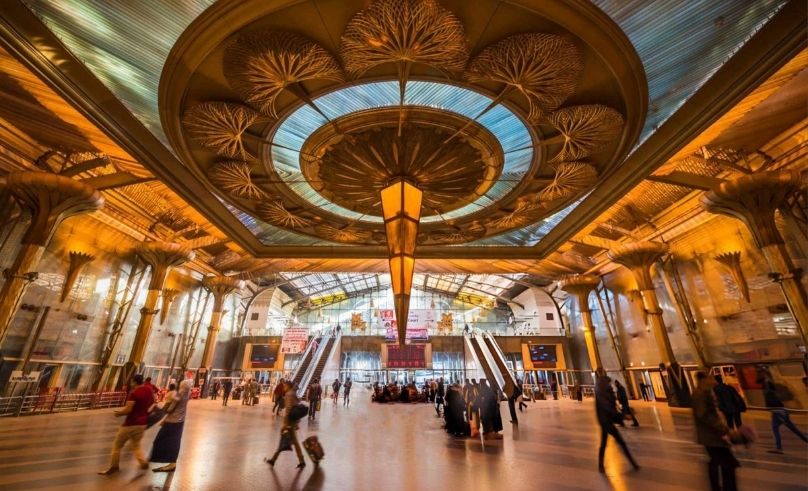
A railway station is a building that knows it will be left. Passengers pass through; the structure stays. And yet the great stations of the Arab world were built as if permanence was the whole point—as if the architects understood that the people who designed them would be forgotten long before the arches were. Stained glass filtering light across tiled floors. Vaults so high they generate their own weather. Canopies that turn the act of waiting into something close to prayer. These are not buildings that defer to the journeys they serve. They insist on being looked at first.
Al Hijaz Train Station | Damascus, Syria
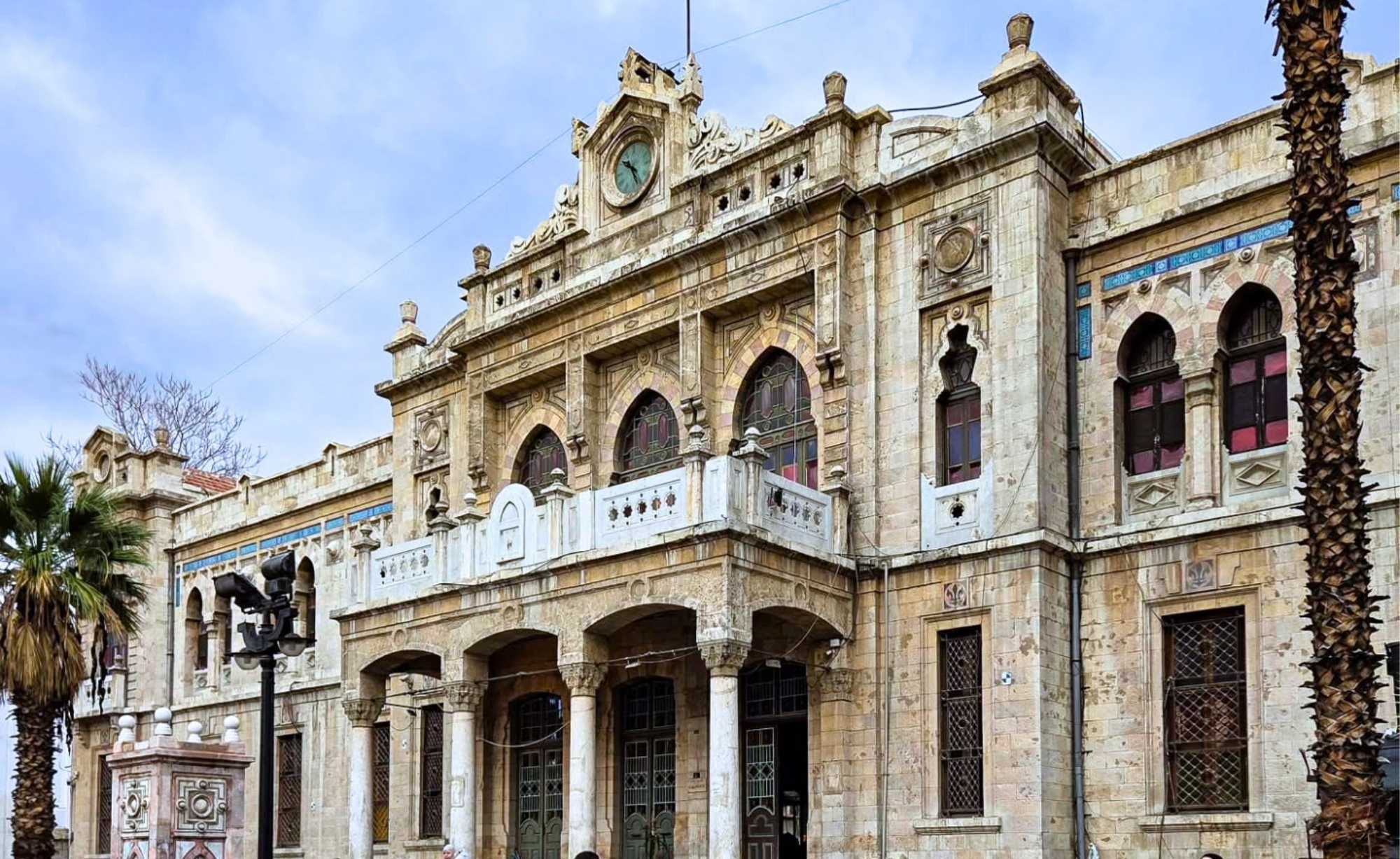 Built under the Ottoman Empire as part of the ambitious Hejaz Railway project—with the line first operational in 1907—Al Hijaz Railway Station remains one of Damascus' most striking landmarks. The passenger building itself was designed by Spanish architect Fernando De Aranda and completed in 1913, combining ornate Ottoman and European architectural styles, complete with stained glass windows, decorative stonework, and soaring archways. Though trains rarely depart from here today, the station still stands as a monument to an era when railways promised to connect Damascus to Madinah through the desert.
Alexandria Railway Station | Alexandria, Egypt
Built under the Ottoman Empire as part of the ambitious Hejaz Railway project—with the line first operational in 1907—Al Hijaz Railway Station remains one of Damascus' most striking landmarks. The passenger building itself was designed by Spanish architect Fernando De Aranda and completed in 1913, combining ornate Ottoman and European architectural styles, complete with stained glass windows, decorative stonework, and soaring archways. Though trains rarely depart from here today, the station still stands as a monument to an era when railways promised to connect Damascus to Madinah through the desert.
Alexandria Railway Station | Alexandria, Egypt
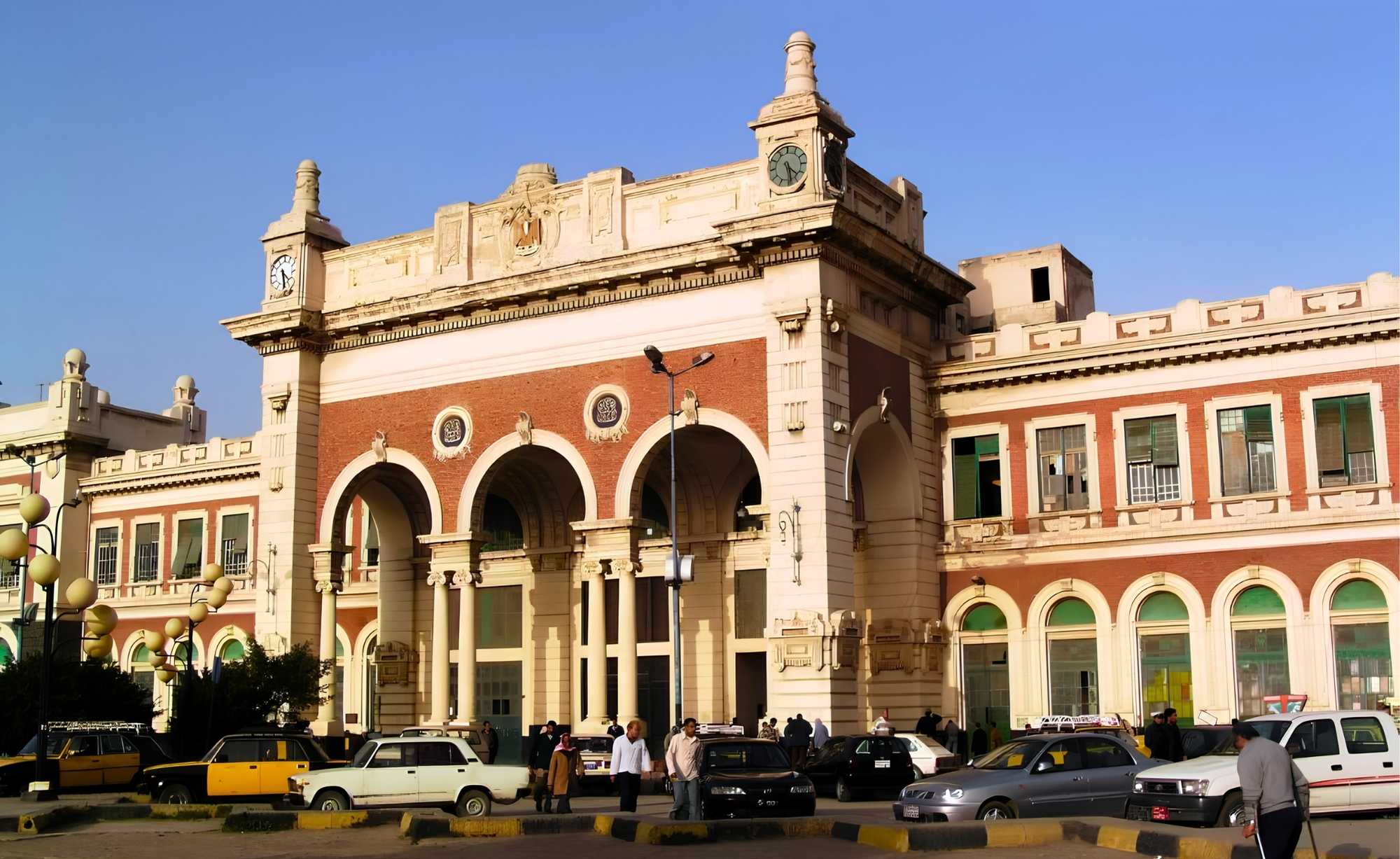 Alexandria's main railway station, commonly known as Misr Station, is one of the oldest in Africa and the Middle East and is still fully operational today. The first line linking Alexandria and Cairo was established in the mid-19th century, placing the station at the heart of Egypt's earliest experiments with modern rail travel.
The current structure dates largely to a major reconstruction completed in 1927, when the station was redesigned with European influence under the reign of King Fouad I. Even today, its layout still reflects the ambitions of a rapidly modernising port city: high ceilings, long platform halls, and a steady flow of passengers moving between the Mediterranean coast and the rest of Egypt.
Haramain High-Speed Railway | Madinah, Saudi Arabia
Alexandria's main railway station, commonly known as Misr Station, is one of the oldest in Africa and the Middle East and is still fully operational today. The first line linking Alexandria and Cairo was established in the mid-19th century, placing the station at the heart of Egypt's earliest experiments with modern rail travel.
The current structure dates largely to a major reconstruction completed in 1927, when the station was redesigned with European influence under the reign of King Fouad I. Even today, its layout still reflects the ambitions of a rapidly modernising port city: high ceilings, long platform halls, and a steady flow of passengers moving between the Mediterranean coast and the rest of Egypt.
Haramain High-Speed Railway | Madinah, Saudi Arabia
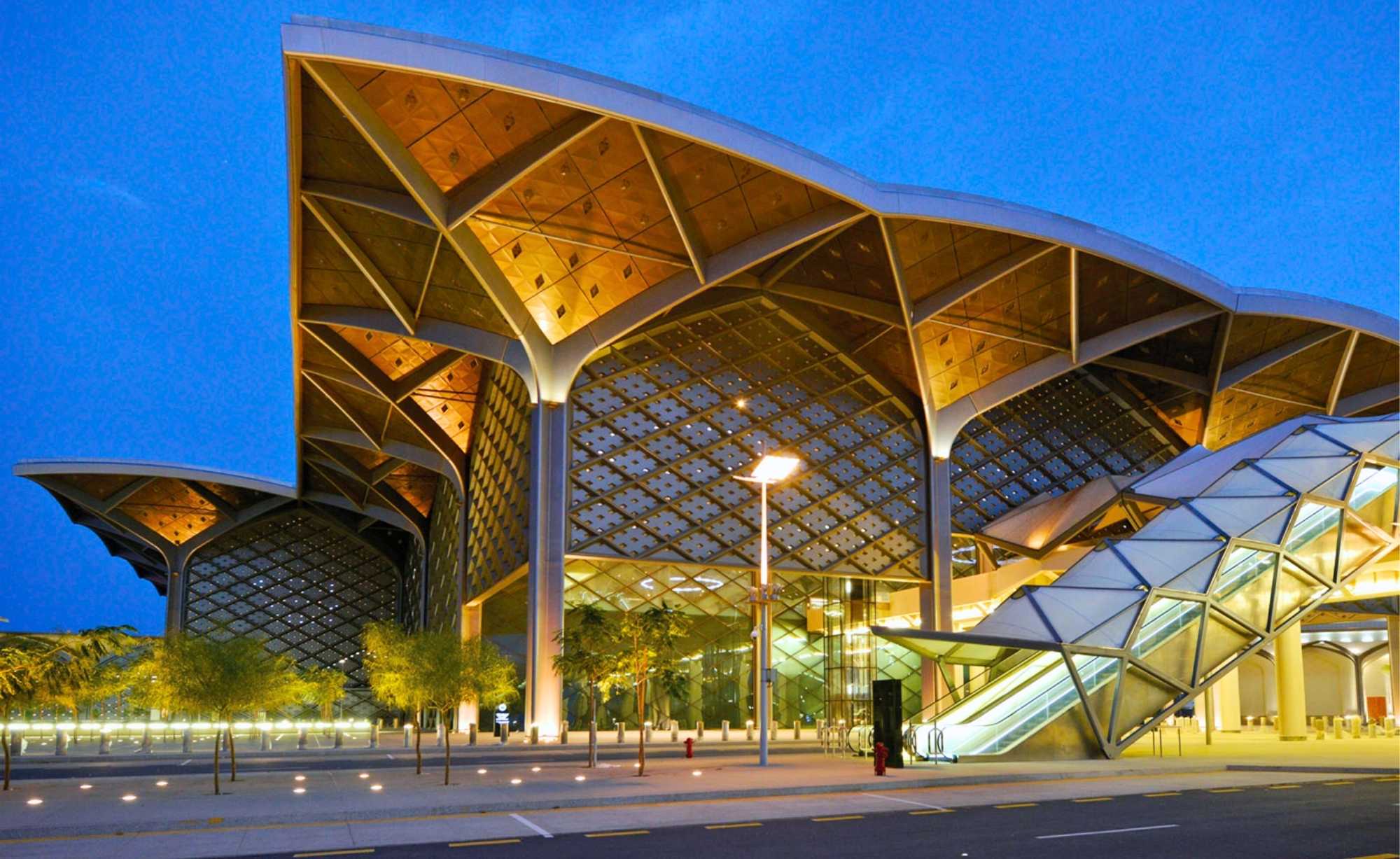 The Haramain High-Speed Railway connects Makkah and Madinah along Saudi Arabia's western coast, passing through Jeddah and King Abdullah Economic City — five stations in total, all designed by Foster + Partners as a family of buildings sharing the same structural language: vast forests of steel columns branching into arched vaults, each station oriented to the path of the sun and color-coded to its city.
The Madinah station is the most celebrated of the five. Its vaults are a deep, saturated green drawn from the dome of the Prophet's Mosque nearby, and the roof is punctured by light tubes that pour daylight down to the concourse during the day and read like a field of stars at night. The scale is monumental without feeling brutal — the arches repeat in every direction like a colonnade that never ends, softened by shadow and the quality of the light filtering through. It is the kind of space that makes you stop moving for a moment.
Marrakech Railway Station | Marrakech, Morocco
The Haramain High-Speed Railway connects Makkah and Madinah along Saudi Arabia's western coast, passing through Jeddah and King Abdullah Economic City — five stations in total, all designed by Foster + Partners as a family of buildings sharing the same structural language: vast forests of steel columns branching into arched vaults, each station oriented to the path of the sun and color-coded to its city.
The Madinah station is the most celebrated of the five. Its vaults are a deep, saturated green drawn from the dome of the Prophet's Mosque nearby, and the roof is punctured by light tubes that pour daylight down to the concourse during the day and read like a field of stars at night. The scale is monumental without feeling brutal — the arches repeat in every direction like a colonnade that never ends, softened by shadow and the quality of the light filtering through. It is the kind of space that makes you stop moving for a moment.
Marrakech Railway Station | Marrakech, Morocco
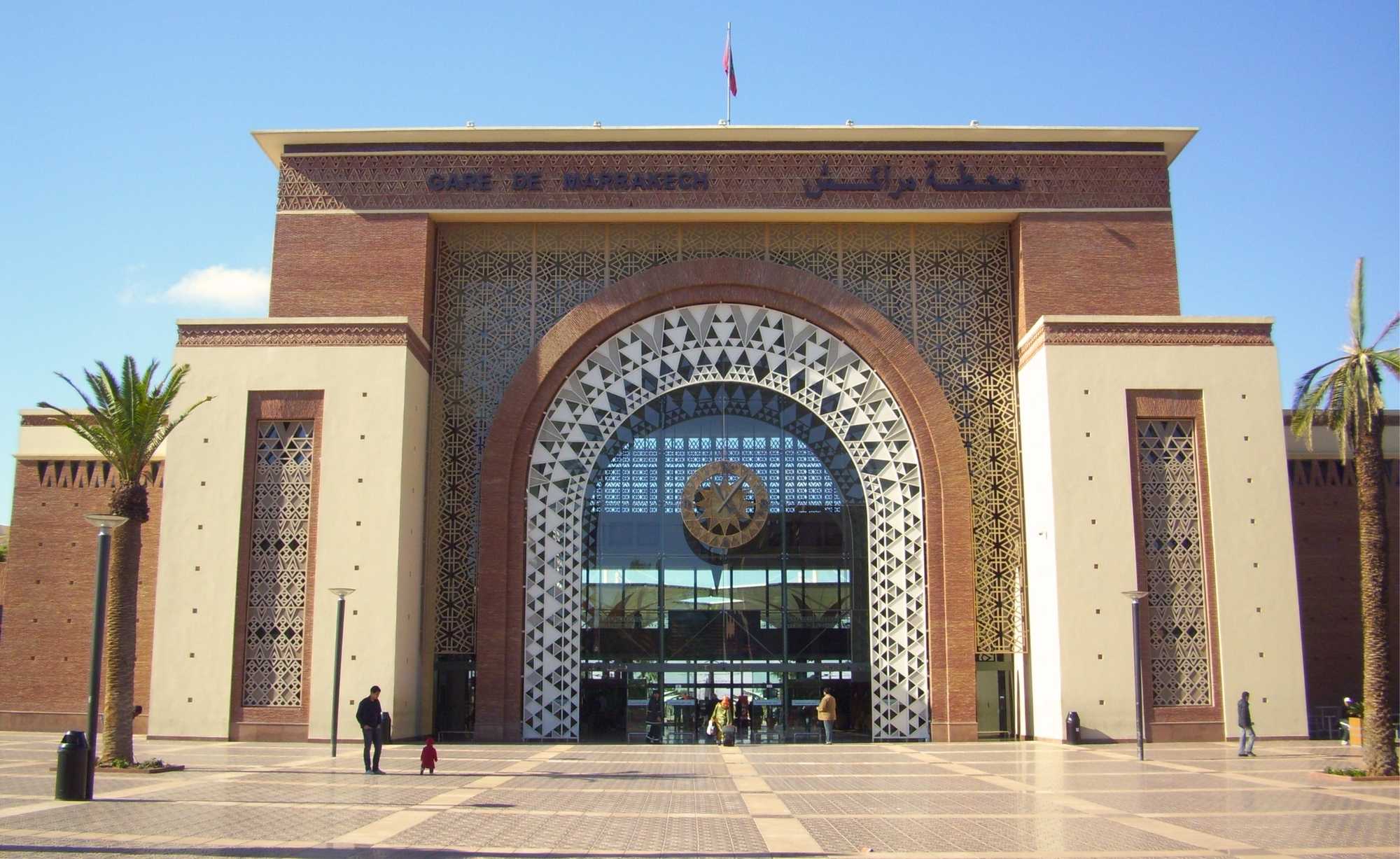 Marrakech Railway Station offers a more contemporary interpretation of railway grandeur. Opened in 2008, the station merges traditional Moroccan craftsmanship with sweeping modern architecture; intricate geometric detailing, horseshoe arches, and vast sunlit interiors included. Rather than feeling frozen in time, the station reflects Morocco's ongoing relationship with spectacle, design, and movement.
Cairo Ramses Station | Cairo, Egypt
Marrakech Railway Station offers a more contemporary interpretation of railway grandeur. Opened in 2008, the station merges traditional Moroccan craftsmanship with sweeping modern architecture; intricate geometric detailing, horseshoe arches, and vast sunlit interiors included. Rather than feeling frozen in time, the station reflects Morocco's ongoing relationship with spectacle, design, and movement.
Cairo Ramses Station | Cairo, Egypt
-2f99a889-e872-4ad3-b9df-0829f34823f5.jpg) Cairo Ramses Station is less a transit point and more a daily collision of histories. The current building dates to 1892, erected on the site of an even earlier 19th-century terminal that marked Egypt's entry into the age of modern rail travel, and was significantly upgraded in 1955.
Today, it remains Cairo's busiest railway hub, connecting the capital to Alexandria, Upper Egypt, and beyond. Inside, the scale is uncompromising: long halls, high ceilings, and a constant churn of passengers moving between provinces, cities, and lives. It is not preserved in time — it is still fully in motion, carrying Egypt's rail story forward one departure at a time.
Tangier High-Speed Train Station | Tanger, Morocco
Cairo Ramses Station is less a transit point and more a daily collision of histories. The current building dates to 1892, erected on the site of an even earlier 19th-century terminal that marked Egypt's entry into the age of modern rail travel, and was significantly upgraded in 1955.
Today, it remains Cairo's busiest railway hub, connecting the capital to Alexandria, Upper Egypt, and beyond. Inside, the scale is uncompromising: long halls, high ceilings, and a constant churn of passengers moving between provinces, cities, and lives. It is not preserved in time — it is still fully in motion, carrying Egypt's rail story forward one departure at a time.
Tangier High-Speed Train Station | Tanger, Morocco
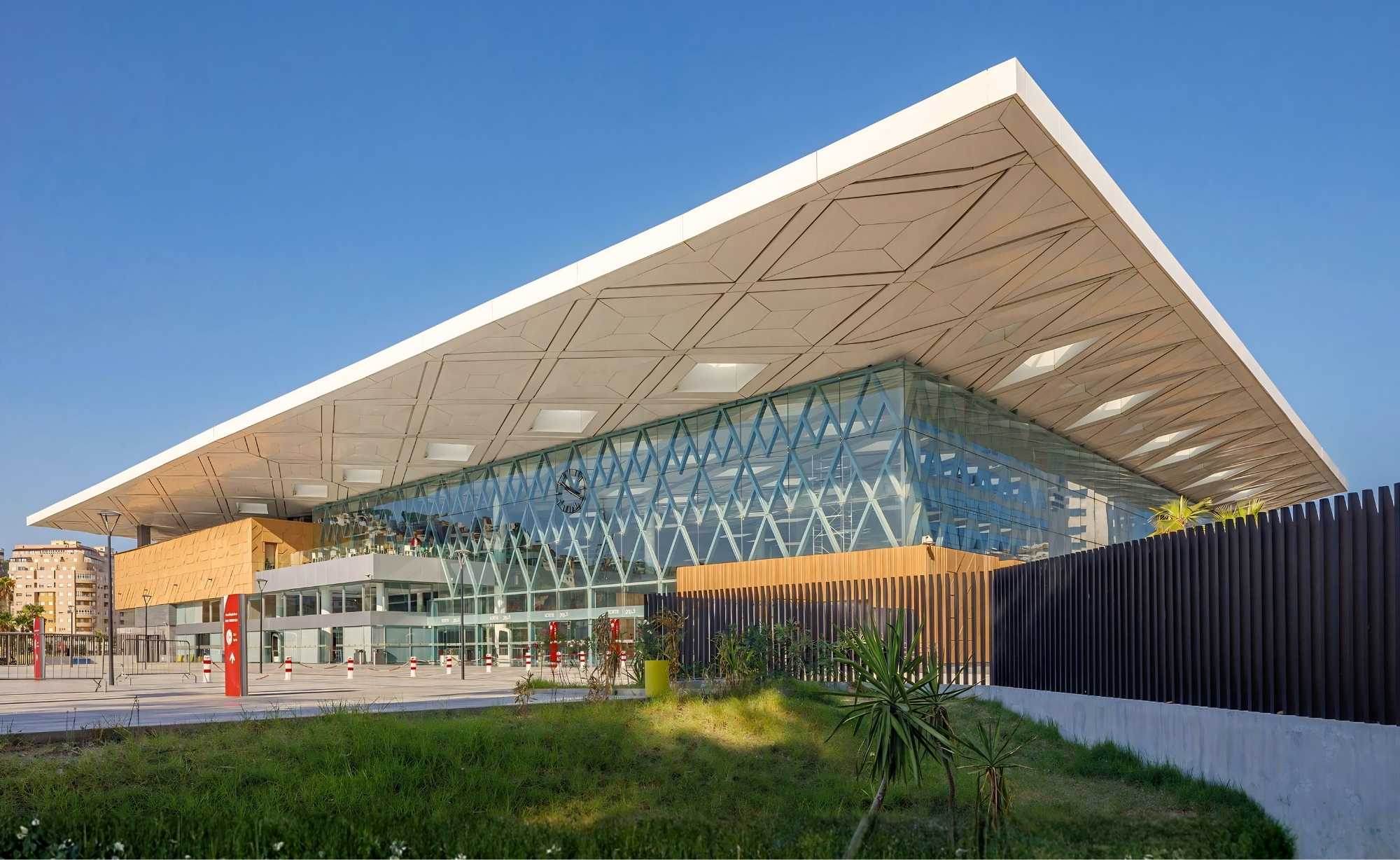 On the edge of Morocco's northern gateway, Tangier's high-speed rail station turns travel into architecture. Designed as part of the country's Al Boraq high-speed line, the station is structured like a city in motion: three vast halls shaped after traditional urban spaces. Arrivals unfold in a space inspired by a souk, departures echo the rhythm of a caravanserai, and boarding takes place beneath a garden-like hall filled with light and greenery.
At its core sits an older 2002 station, absorbed into the new design rather than erased, allowing the building to carry both past and future at once. The structure now handles millions of passengers a year, linking Tangier more tightly than ever to Rabat and Casablanca, and extending Morocco's rail story into the high-speed era.
On the edge of Morocco's northern gateway, Tangier's high-speed rail station turns travel into architecture. Designed as part of the country's Al Boraq high-speed line, the station is structured like a city in motion: three vast halls shaped after traditional urban spaces. Arrivals unfold in a space inspired by a souk, departures echo the rhythm of a caravanserai, and boarding takes place beneath a garden-like hall filled with light and greenery.
At its core sits an older 2002 station, absorbed into the new design rather than erased, allowing the building to carry both past and future at once. The structure now handles millions of passengers a year, linking Tangier more tightly than ever to Rabat and Casablanca, and extending Morocco's rail story into the high-speed era.
Related Articles
Trending This Month
-
-
-
-
 Oct 02, 2026