

This Cairo Stay Has a Hassan Fathi Dome & a Dog Who Silently Judges
One moment you're floating in the pool watching a brick dome glow pink at sunset, the next you're accepting a second breakfast from a family who refuses to let you leave hungry.

We're just halfway through 2026, and the travel industry has decided we all need fixing. Silent retreats. Digital detoxes. Seven-day juice cleanses in the Balinese jungle where you're not allowed to speak or look at a screen. The messaging is always the same: you are broken, and here is a very expensive way to become slightly less broken.
But honestly? Sometimes all you need is just a really, really nice dome.
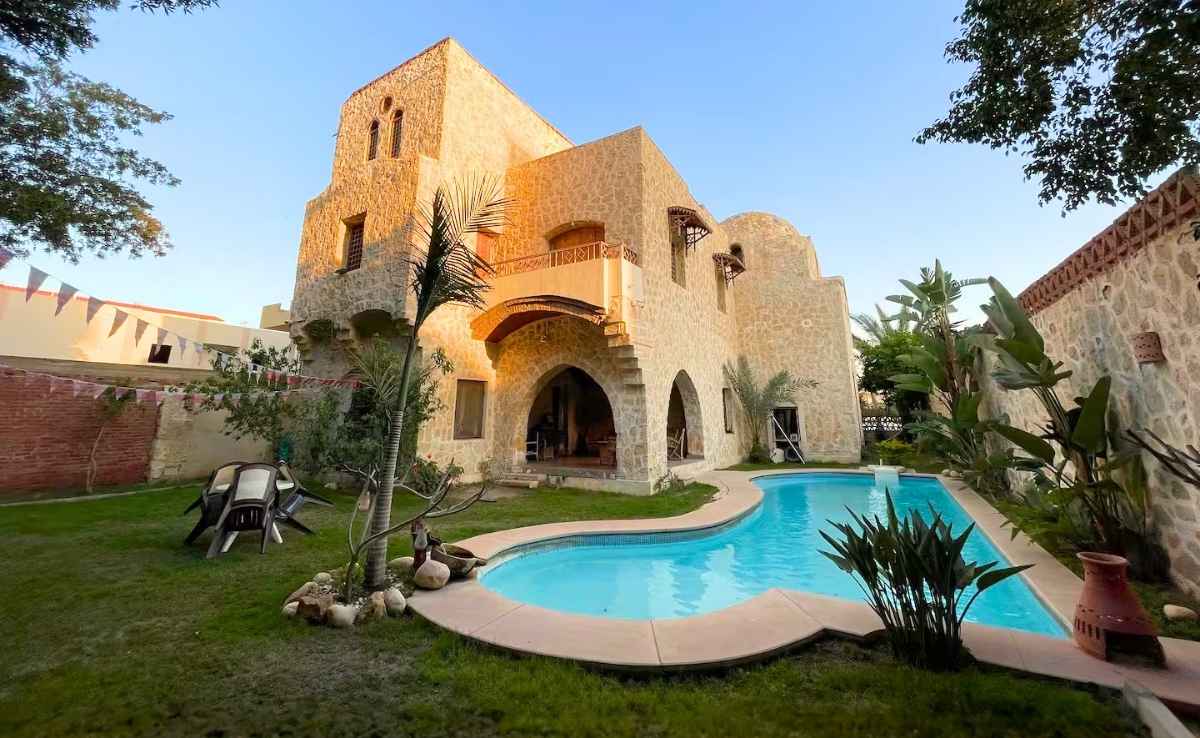
A brick one, low and round, the kind of curve that makes you think of Hassan Fathy, the Egyptian architect who proved mud and gravity could do the work of steel and ego. At the shared stay of Villa Ahmed Fathi on the eastern edge of Cairo, the dome stands apart from the main house - a double-height room of its own, holding the ground-floor reception, visible from the upper floor if you lean over the right railing and look down into it.
Inside, the brick spirals upward in tight rings, and the air drops a few degrees the second you're under the curve. Small round windows - coin-sized, no more - punch through the walls at odd heights and throw loose circles of light across the floor.
Ahmed, the architect who built it, still lives there with his wife, children and with Rocky the dog, who has the energy of a retired professor and the schedule to match: a tail thump for whoever's just arrived, then straight back to the shade. You'll probably meet Ahmed within the hour, maybe over tea, maybe halfway through fixing something in the garden, as you slyly pick his brain about why the walls are shaped the way they are, or his go-to coffee shop. Either way, he'll probably end up telling you the tale of how this all started on the family's first trip to Europe, staying with a host in Switzerland.
"He was so warm, so open, that just being around him we understood something about his culture and the way he lived," Ahmed says. "He told us about the idea of opening your home to guests, and it stuck with us. We came home and thought: let's try it ourselves."
A few years and around forty guests later, there's still no lockbox. "A lockbox means losing the chance to actually meet people - to answer their questions, help them, make sure the food suits them," he says. Guests have come from what he describes as every nationality and age bracket he can think of, "each bringing their own character, their own strengths, their own language for us to discover."
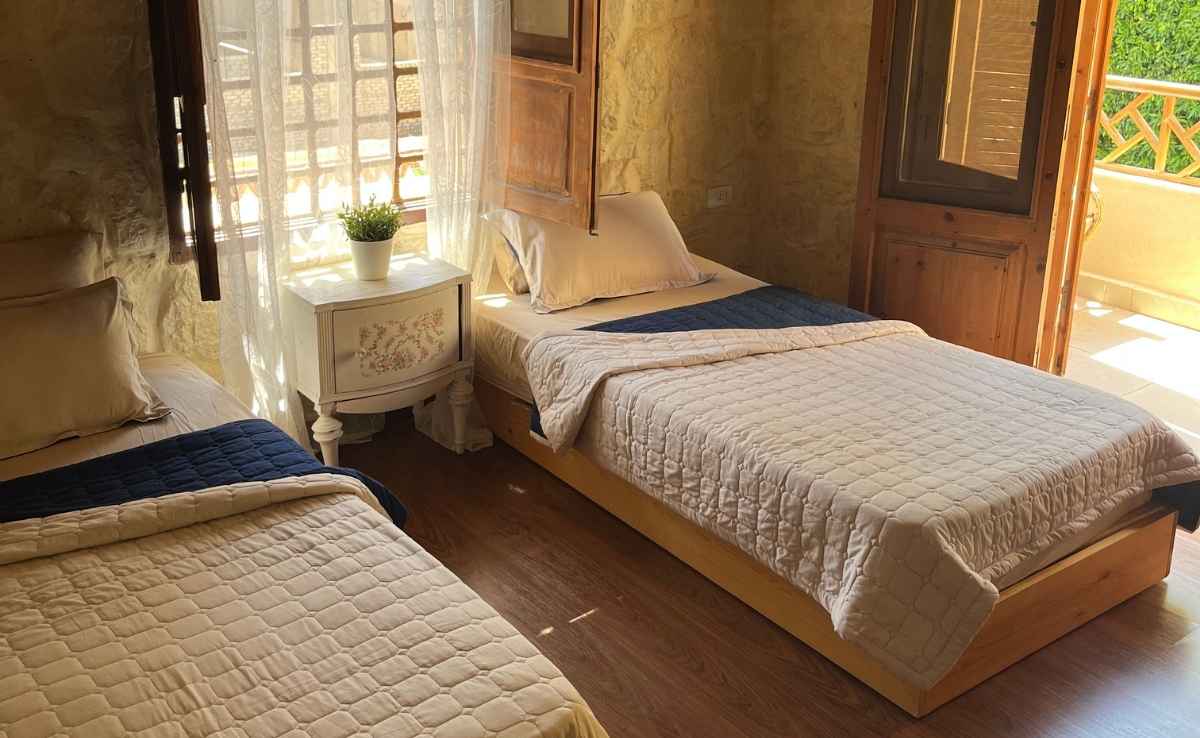
You could book one of two rooms - one with two single beds, one with a king - and both open onto balconies that look straight down over the pool. Bring a friend. Bring a parent. Bring no one and spread across the mattress like a starfish that has finally relaxed. Air conditioning hums. Linens are fresh. Hangers exist. This is not a lot to ask, and yet.
An Egyptian breakfast lands every morning: bread still warm from the bakery, cheese, olives, boiled eggs lined up like they're posing for it, a pickled something that arrives unannounced and departs finished, mint tea poured from a glass pot onto a tray that's clearly seen a few mornings like this one. Upstairs, a kitchenette does its best impression of a full kitchen - kettle, mini fridge, water dispenser, a blender that exists because, it turns out, this family believes in the possibility of smoothies. A terrace looks out over the garden, the dome, the whole quiet operation. This is where you drink your tea, watch the light drain, and realise you haven't thought about work in three hours. Rocky will not join you. Rocky is busy being a dog.
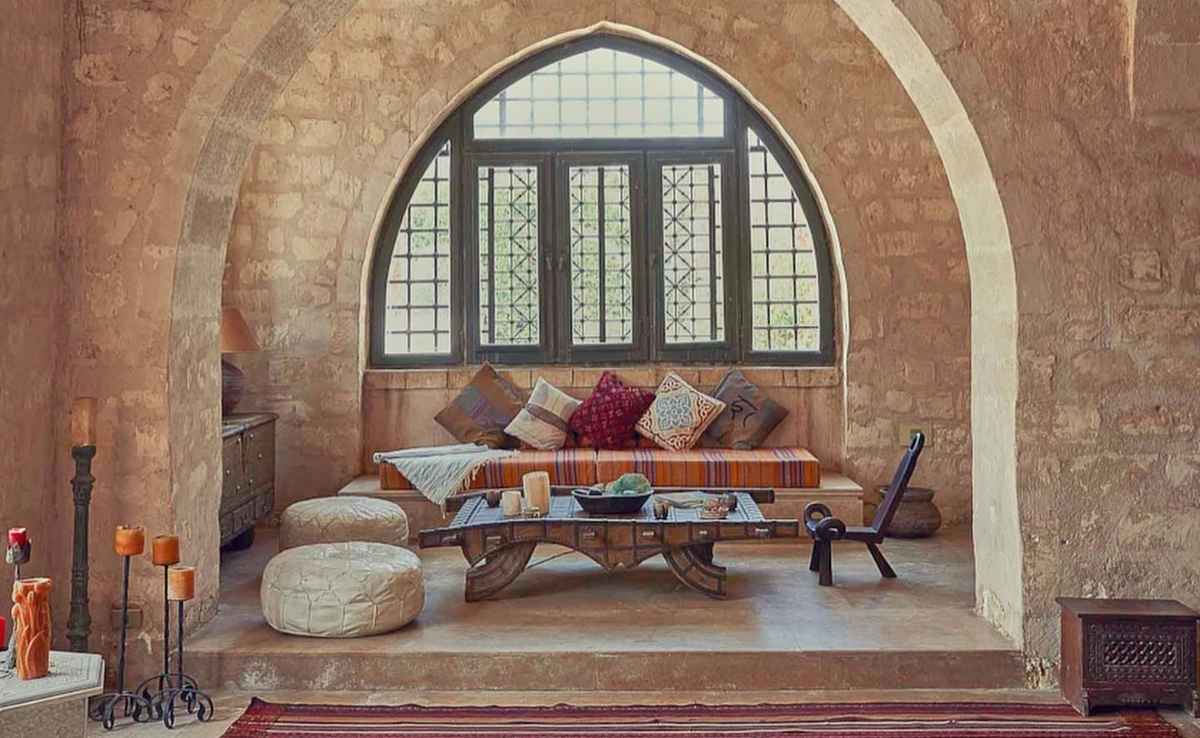
And throughout all of it, Fathy's presence is felt in almost every corner. "The design draws on Hassan Fathy's approach - natural materials, respecting the environment, suited to our climate," he says. "But I added my own touch too. Marble, more modern furniture; comfort that still reflects who I am." It shows: the ground-floor living room is stone and soaring and almost monastic, tall arched windows and vaulted brick overhead, and then there's a tufted blue velvet sofa in the middle of it, entirely unbothered by the architectural history around it.
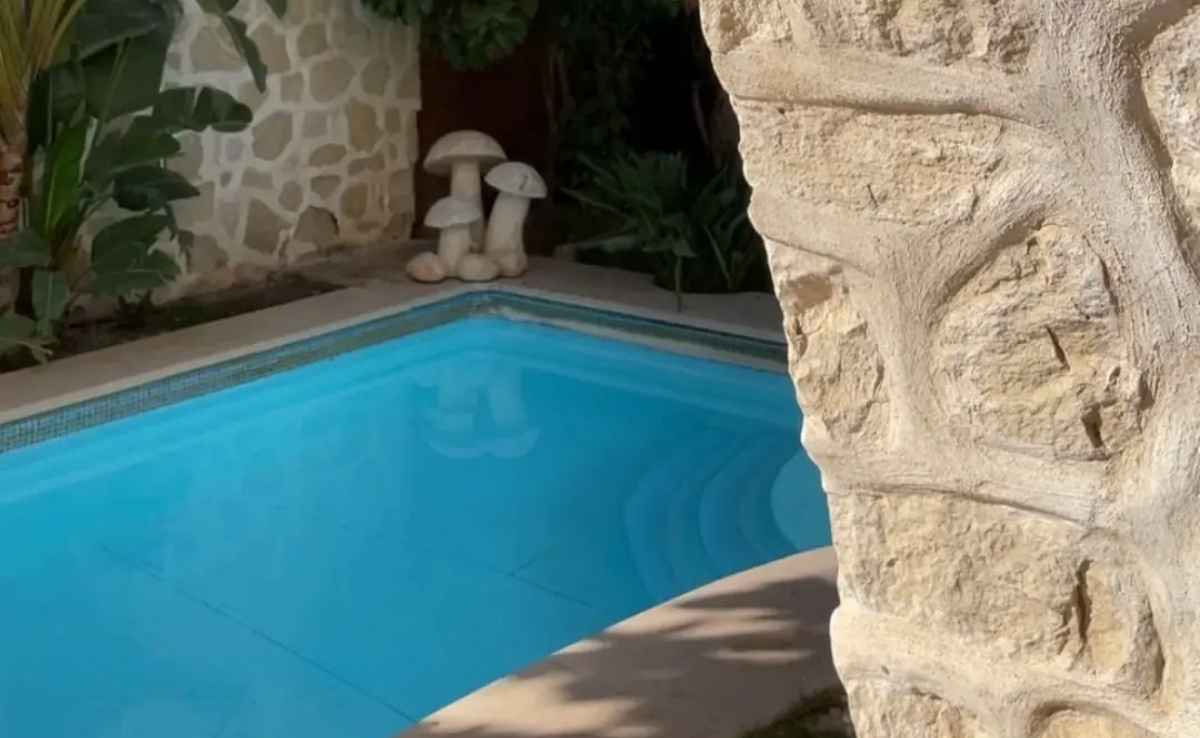
Outside, the pool sits in a garden that wraps the house front and back, a rectangle of blue that reflects the dome like a mirage that decided to stay, and it's genuinely shared: family, guests, whoever else happens to be staying that week, all in the same water. From April to October you can swim laps or just float, arms out, pretending you're the only person in Egypt with nowhere to be. The rest of the year you sit by the empty basin and imagine the splash.
"Every guest who's stayed with us has brought something new," he says. "A fresh idea, a unique experience, different perspectives and personalities - they've all left their mark on us." Forty-something guests, forty-something reasons a family's living room in East Cairo now carries a little bit of somewhere else inside it.
At sunset, the dome glows pink. Somewhere, a call to prayer begins, distant enough to be music. You're not sure how long you've been here. You're not sure you want to know, and neither, it turns out, is your host. Guests, Ahmed says, are welcome back anytime.