

Meen Beirut Gives Beirut Somewhere to Spend All That Feeling
As the collective turns one, its roaming parties turn Beirut's own rituals into a reason to gather, from oriental dance nights to coffee-fuelled mornings.

Meen Beirut meets at its 'Headquarters', Zmrd Social Space in Forn El Chebbak.
The team of four sits around the table where it all began, its glass top holding Lebanese banknotes, some of which are no longer printed.
This is where they first brainstormed what a new kind of party could look like in the country, one that would answer the question in their name, 'Meen Beirut?' (Who is Beirut?), in all its complexity.
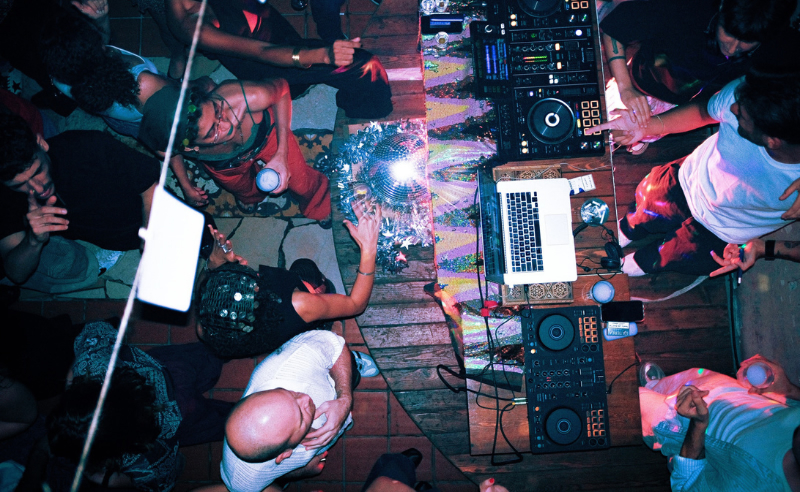 The answer came in the form of three events: the bi-weekly night party Hizz يا Wizz, built around two DJs and oriental dancing performances that draw their largest crowds, sometimes over 300 people; the bi-weekly day party Ahwe مارتيني (Martini), inspired by how special the morning in Beirut is and the coffee that defines it; and the monthly concert Solo تحت الأرض (Underground), which showcases local musicians, typically at the Beit Beirut Museum & Cultural Center.
Meen Beirut is now set to mark its first anniversary on November 28 at Metro Al Madina with 'Kellon Mabsoutin', another night built around belly dance, live performance and the kind of theatrical world-building the collective has spent a year making its own.
Each of the four members has a role as distinct as their personality, though they have spent the past year depending just as much on each other.
 Malek Mezher, 23, the youngest of the bunch, is the creative producer and content writer. He works with visual director Tamara Bourji, who designs Meen Beirut's posters, the kind you don't have to search hard to find around the city, especially on the streets of Gemmayze or the walls of Riwaq.
Khaled Alhassan, the event producer and talent coordinator, communicates with the artists they bring in and finds their ever-changing venues.
The parent of the group is Bshara Atallah, a 52-year-old lifelong creative who wears a ring on every finger, his brown hair falling past his shoulders. An actor, stylist and dancer, he runs public relations and creative direction for the group.
"There are a lot of parties in Beirut,” Malek said, “but we are putting a lot of effort into the creative writing behind the events. Every time there’s a different story. A new theme."
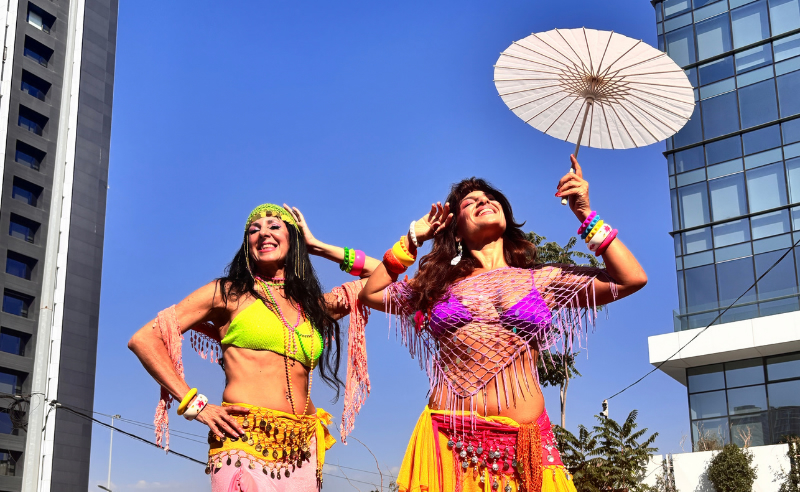
 The pre-party hype depends on his carefully directed and edited videos. Malek pulls out his phone to play the Instagram teaser reel for an upcoming party. In it, their resident oriental dancers Randa and Naima embark on a search for treasure, twirling their hips from a boat onto the sandy beach of Hizz Ya Wizz-land. They open a tiny chest and unfurl a map with directions to their final destination: Tota Beirut, 9 PM, Saturday, a favourite location for their events.
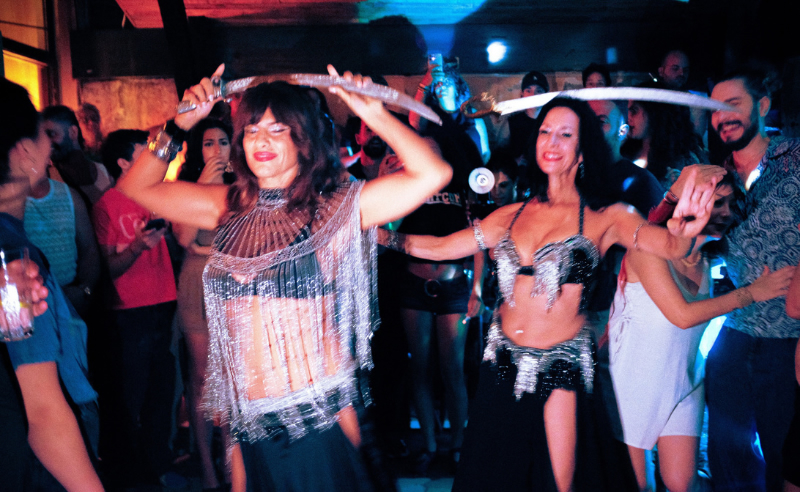
Pretty soon, Randa and Naima will be twirling through the real crowd, shaking the beads on their bedlah between partygoers on the dance floor.
“It’s not like a show on stage,” Malek said.
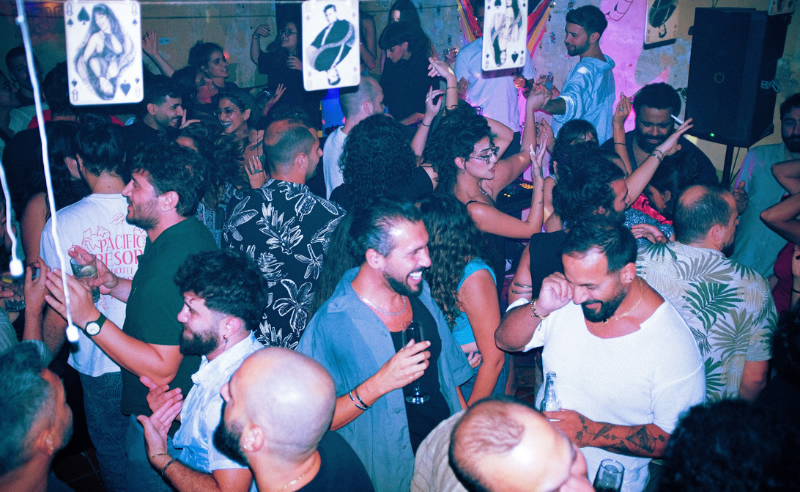
Most of the people he sees in the crowd belong to Beirut's sprawling creative scene, crossing mediums, ages, genders and sexual orientations.
"If you're living in Beirut you'll see lots of familiar faces when you walk in," Tamara said.
 The crowd she describes feels less anonymous than a typical night out. People arrive knowing faces and leave knowing more.
Tamara had recently returned from nine months in Amman, where she spent much of the latest war between Israel and Hezbollah away from Beirut. Distance only sharpened how badly she wanted the city she grew up in.
"Even though there was a war, I really wanted to be in Beirut," she said. "There is a relationship with Beirut that always makes you want to come back even if you know it's not the right time to be there."
That pull sits somewhere close to the heart of Meen Beirut. Tamara came home wanting to give something to the community she had spent months missing, after years in which Lebanon had moved from economic collapse and revolution to the Beirut port explosion and war.
There are easier places to throw a party. Beirut keeps giving people reasons to need one.
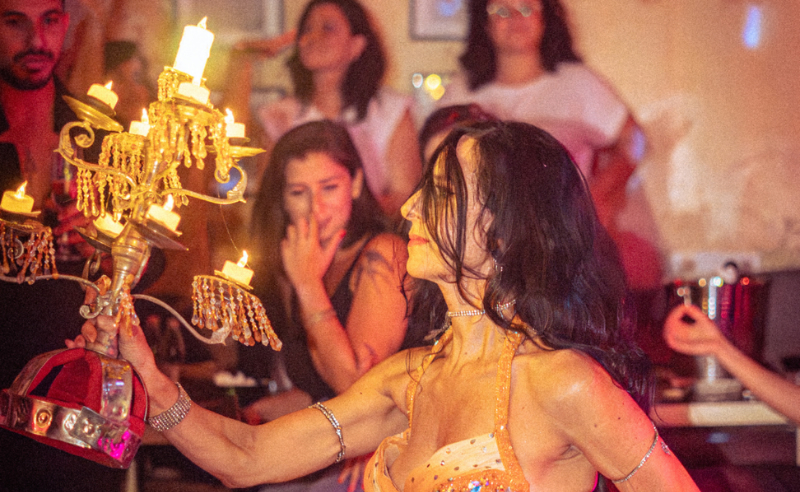 "When I see people in the crowd, I don't feel proud of the party, I feel proud of the people in this country, how they leave everything behind at the door and enter the party," Tamara said.
"Knowing what the Lebanese people have gone through, and at the same time seeing these happy faces going crazy - it's amazing."
The relief she describes is brief and completely aware of what waits outside. A few hours to drink, dance and recognise each other can carry more weight in a city where normal life has been interrupted so many times.
"Meen Beirut is able to bring everyone from the city together, people who have spent their entire lives here and people who are new to the city - even when the city is tired, even in the middle of war," Khaled said.
"These parties become a space for us to all come together and not think about all that - instead just have a drink, listen to music, and dance."
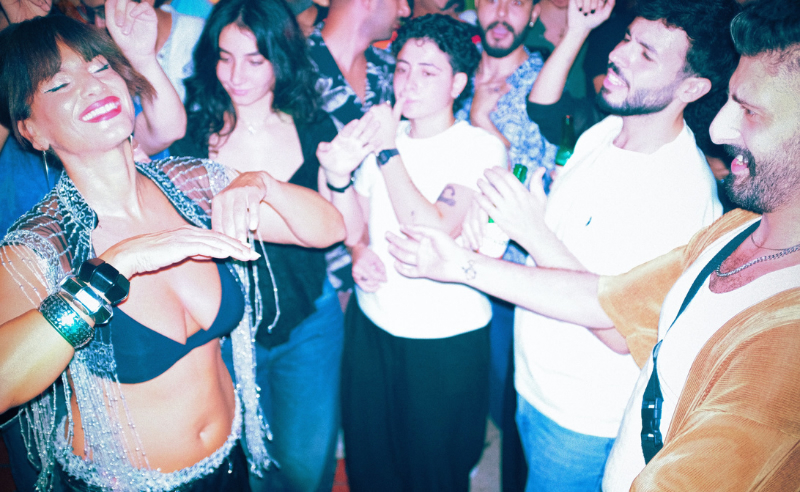 The party itself never stays still. Meen Beirut moves from venue to venue, pulling people into different corners of the city along with it.
"This party moves through the heart of Beirut, it moves people along with it from one place to another, it introduces them to the places this party travels to," Bshara said.
"It's like we're doing a treasure hunt - showing people these hidden gems in the heart of Beirut."
"Meen Beirut isn't four people," he said. "It's all the people who come and take part in Meen Beirut's work."
Bshara reaches into his imagination while trying to explain it.
"I feel Meen Beirut is like an octopus that extends its tentacles and gathers all the things it loves around it."
- Previous Article Direct Flights Between Egypt & Syria Set to Resume