

This Tunisian Cliffside Village Can Only Be Reached on Foot
Six kilometers from Enfidha and an hour from both Sousse and Hammamet, Takrouna is a well-preserved Amazigh hilltop village with layered history and just enough to do for an unhurried half-day.

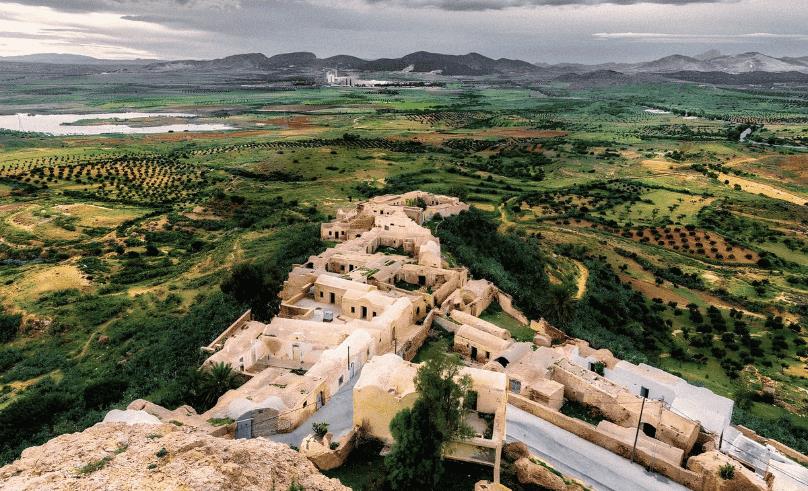
If you’ve ever driven the stretch between Tunisia’s Sousse and Hammamet and noticed a rocky hilltop village rising in the distance, that is Takrouna. It sits about six kilometers west of Enfidha, roughly an hour from either city, and works best as a stop of one to three hours — enough to walk it, explore, and take in the views across northern Tunisia.
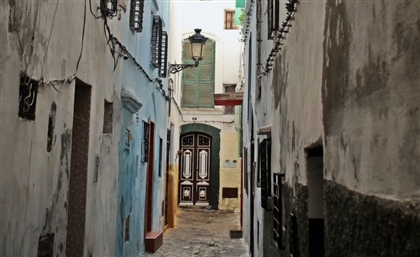
Takrouna is one of the best-preserved Amazigh hilltop settlements in the region, its origins predating the Arab conquest of North Africa. Built into the rock itself, it was shaped by both geography and defence, a settlement designed to hold its position rather than sprawl outward. That logic is still visible today in its narrow whitewashed lanes and stone houses stacked into the hillside.
-6c660d72-fcbf-481e-8389-7aceafe00e74.png) Leave the car at the base, because the village is entirely on foot. The climb is part of the experience. At the centre are the village mosque and the shrine of Sidi Abdelkader, one of Takrouna’s most photographed landmarks. From the top, the view opens across the Gulf of Hammamet, the Zaghouan Mountains, and the Kairouan plain, with Hergla and Sousse visible on clear days.
To understand the village beyond its architecture, Dar Gmach is worth the stop. This small family-run eco-museum holds collections on local crafts, domestic traditions, and works by Tunisian painter Ali Bellagha, offering context for the Amazigh heritage and everyday life that shaped places like Takrouna. Traditional weaving is still practiced in the village as well, and if demonstrations are happening, they are worth pausing for.
Leave the car at the base, because the village is entirely on foot. The climb is part of the experience. At the centre are the village mosque and the shrine of Sidi Abdelkader, one of Takrouna’s most photographed landmarks. From the top, the view opens across the Gulf of Hammamet, the Zaghouan Mountains, and the Kairouan plain, with Hergla and Sousse visible on clear days.
To understand the village beyond its architecture, Dar Gmach is worth the stop. This small family-run eco-museum holds collections on local crafts, domestic traditions, and works by Tunisian painter Ali Bellagha, offering context for the Amazigh heritage and everyday life that shaped places like Takrouna. Traditional weaving is still practiced in the village as well, and if demonstrations are happening, they are worth pausing for.
-095f3539-77bb-4a71-b15c-6a252d097f04.png) The layering of history becomes more visible as you move through it — Amazigh foundations, later cultural influences, and traces of settlement patterns that have shifted across centuries. Local legend ties Takrouna to nearby Jradou and Zriba, said to be founded by three brothers, which today also makes for a natural half-day loop across all three villages.
That sense of layered history becomes even sharper in April 1943, when Takrouna briefly became a battlefield during the Tunisian Campaign of the Second World War, as Allied and German forces fought over its strategic elevation. The same geography that shaped its early life also made it militarily significant, adding another layer to a landscape already defined by survival and endurance.
The layering of history becomes more visible as you move through it — Amazigh foundations, later cultural influences, and traces of settlement patterns that have shifted across centuries. Local legend ties Takrouna to nearby Jradou and Zriba, said to be founded by three brothers, which today also makes for a natural half-day loop across all three villages.
That sense of layered history becomes even sharper in April 1943, when Takrouna briefly became a battlefield during the Tunisian Campaign of the Second World War, as Allied and German forces fought over its strategic elevation. The same geography that shaped its early life also made it militarily significant, adding another layer to a landscape already defined by survival and endurance.
-52610514-2137-4b54-92d2-b1f8ae0d7bd1.png) For those planning a base, Hergla works well — a relaxed coastal town about fifteen to twenty minutes away by car, with stays like Dar Khadija and Dar Yessine Boutique Hôtel, and easy access to both coast and inland villages. For a quieter alternative closer to the hills, Borj Waly near Zriba offers a more secluded option.
For those planning a base, Hergla works well — a relaxed coastal town about fifteen to twenty minutes away by car, with stays like Dar Khadija and Dar Yessine Boutique Hôtel, and easy access to both coast and inland villages. For a quieter alternative closer to the hills, Borj Waly near Zriba offers a more secluded option.
- Previous Article You Can Now Get Your Dubai Tourist Visa in 48 Hours
- Next Article This Deserted Village Tells the Story of the UAE's Pearling Past