

Acclaimed Filmmaker Eser Tokaş Frames the Universe Over Turkey
Filmmaker Eser Tokaş travels across the country capturing human stories and vast night skies through cinema and long-exposure photography.

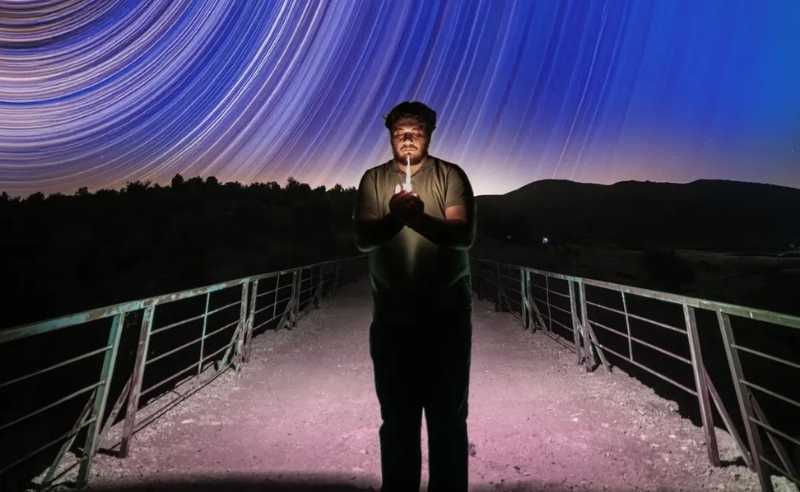
The city of Van sits at 1,750 metres above sea level in Turkey's far east, close to the Iranian border and a vast inland lake, where the darkness has a structural weight to it. Turkish director Eser Tokaş, who’s better known for his acclaimed documentary Dehliz, was born there in 1993, into what he describes to SceneTraveller as "an ancient geography with its own perception of time and visual memory.” A place where Persian, Uzbek, Pakistani, Hindu, Japanese, and Russian families once lived side by side in "a sociology like the Tower of Babel." There, Tokaş grew up under a sky so dense and dark that looking up became habitual. He hasn’t looked down since.
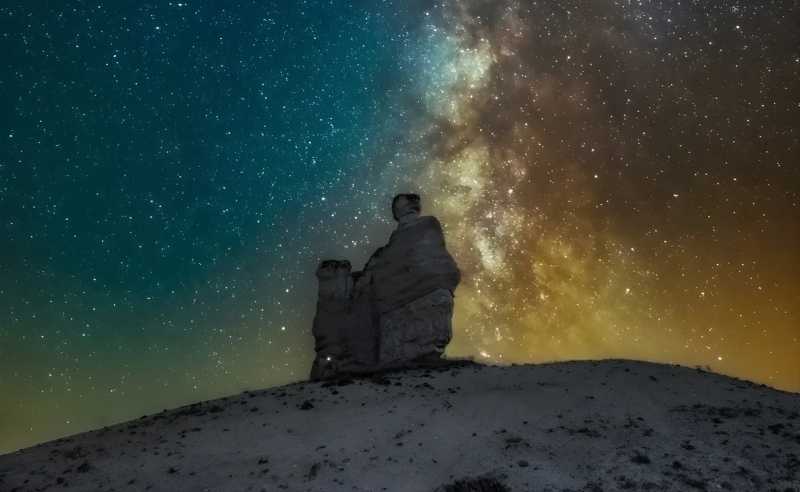 His vibrant photographs of the night sky come from drives out into "the deep and desolate steppes of Anatolia" and high-altitude, secluded peaks where “the stars speak to the earth, far from light pollution." He arrives at a location before the sun has fully set, while the light is still beginning to recede. His goal is to feel the texture of the place, the direction of the wind, the “breath of the geography." Then he sets up a tripod, determines the frame, and waits, sometimes for hours. His eyes during this time are not on the viewfinder but on the sky itself. "At that moment, my camera becomes a silent and compassionate witness, accumulating time on my behalf."
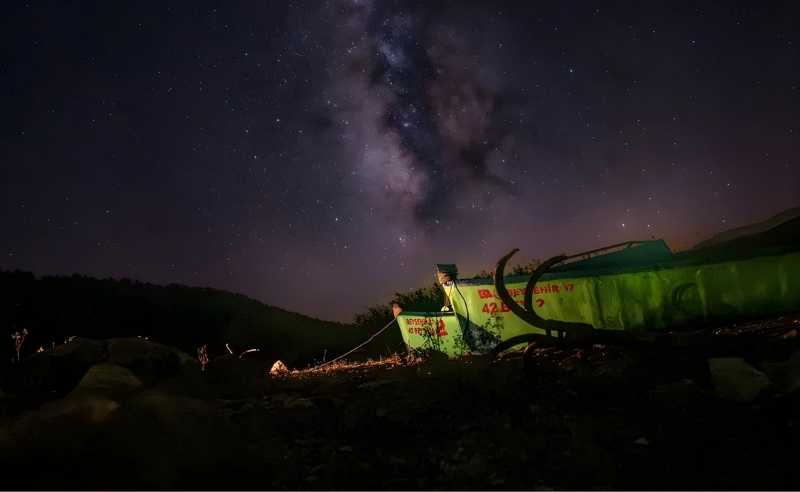 Long-exposure images are the residue of this practice: star trails spiralling above still lake water, the Milky Way arching over ridgelines, small human figures standing on pale ground beneath an impossible density of stars. "When composing a frame I calculate the balance of tones between the earth and the sky, and the power of the void." His background in graphic design gave him compositional mathematics, the reflex to build a frame around the golden ratio, but just before pressing the shutter the technique is silenced and Tokaş focuses only on the emotion. “A frame that is technically perfect but soulless means nothing, emotion always precedes mathematics."
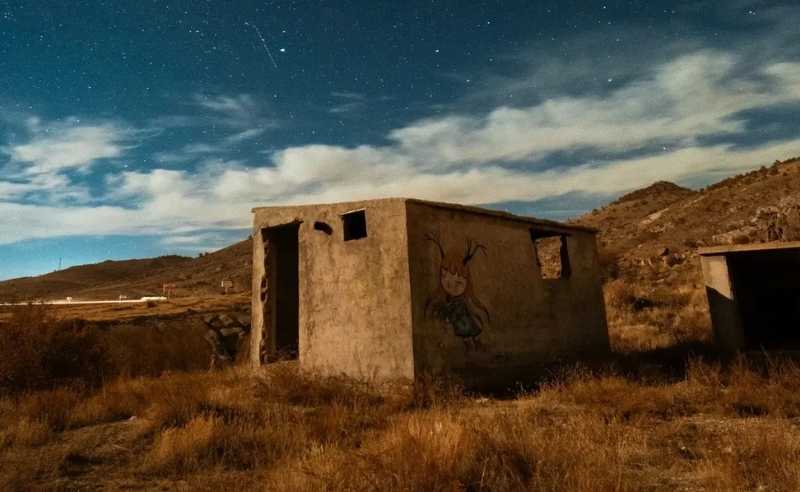 And his experience in filmmaking, as well as teaching at Sinatölye, the film academy he founded, helps him see a character in the night sky—one that "speaks, has weight, and breathes." The darkness to Tokaş functions as a powerful backdrop that “reveals the main subject and emotion." For him, it’s not so much a process of construction as it is “a process of witnessing.” On a film set, as in the field, he does not force an emotion upon an actor or try to make a scene happen mechanically. Instead he settles a space and a character within a solid frame then allows time, emotion, and truth to flow through it.
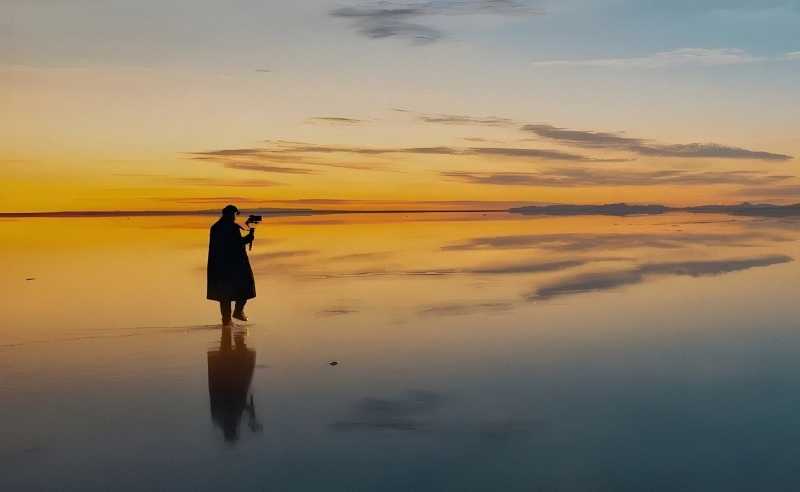 He traces this sensibility to Abbas Kiarostami, the Iranian director who built entire films around a stretch of road, a night sky or a child running across a hillside. "I adopt a style leaning on Kiarostami's natural flow of life, landscape, simplicity, and hopeful sadness." For him, looking at an endless sky through a viewfinder and looking at the lines on a person's face is the same. "Both," he says, "are different manifestations of the same philosophy: to understand and compassionately record the mystery of existence."
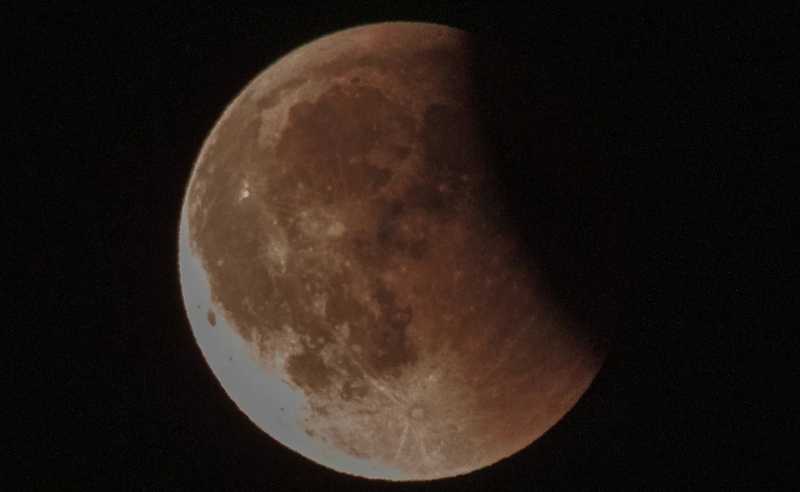 Perhaps that is the allure one senses in his work. Against the fast cutting and visual bombardment of contemporary cinema, he advocates for stopping and looking. He embraces a slowness that’s inspired by the serenity of the night, one that he hopes transforms the viewer "from a passive consumer into an active companion who listens to the emotion within the frame and their own inner voice."