

Yasmine Ghoniem Designs Residences for Sydney’s New Powerhouse Museum
Colour defines Yasmine Ghoniem’s work. Sydney’s major new museum gave YSG Studio 30 residences and one rule: the walls had to stay grey.

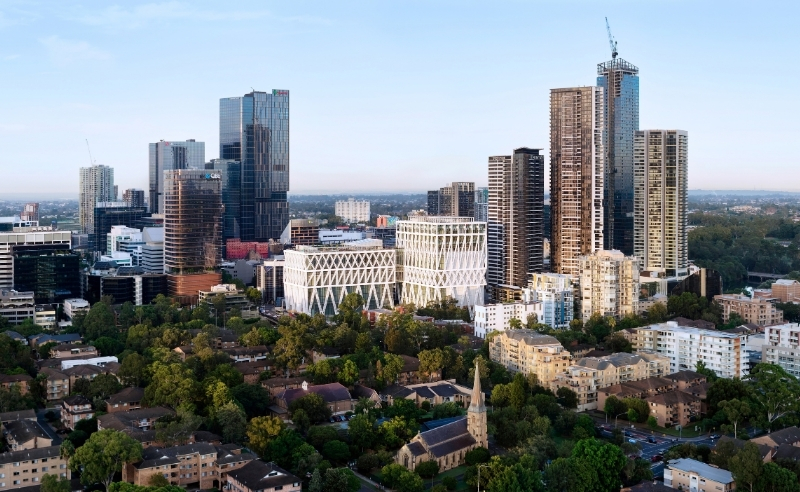
Colour is central to Egyptian-Australian interior designer Yasmine Ghoniem’s work. YSG Studio was commissioned to design 30 residences inside Powerhouse Parramatta, a major new museum opening in Sydney, and Ghoniem’s first instinct was to paint the walls.
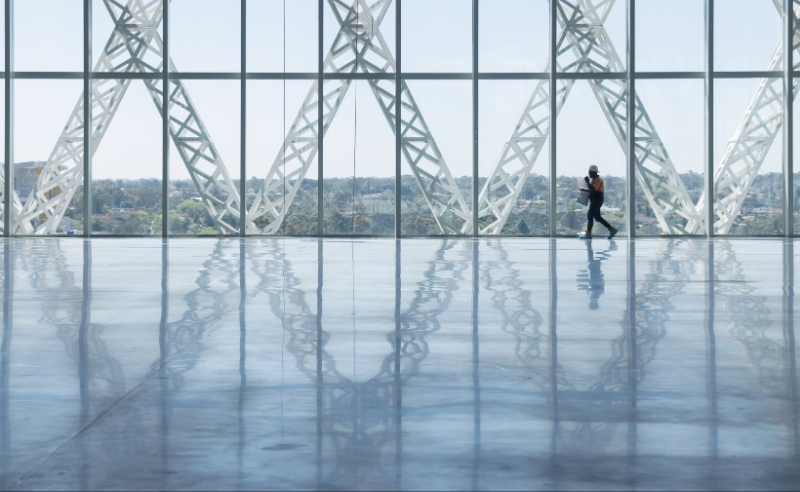
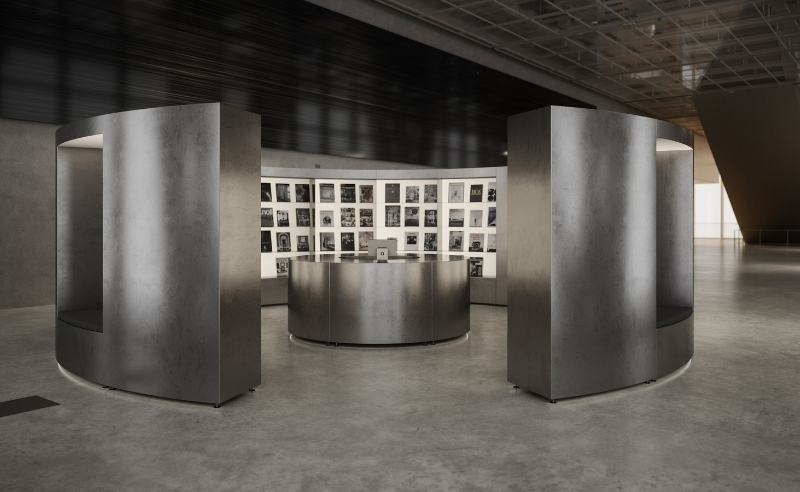
The museum had other plans. Designed by Moreau Kusunoki with Genton, the building uses a restrained architectural palette of concrete, steel, aluminium and grey.
Ghoniem says the curator required the walls inside the residences to stay grey.
"I was really excited by the idea of painting the walls a colour, but the brief called for keeping them grey. So we had to find other ways to introduce that warmth and personality."
"The architects had a very specific vision for the building," she says. "They had their own very strict layer of base build."
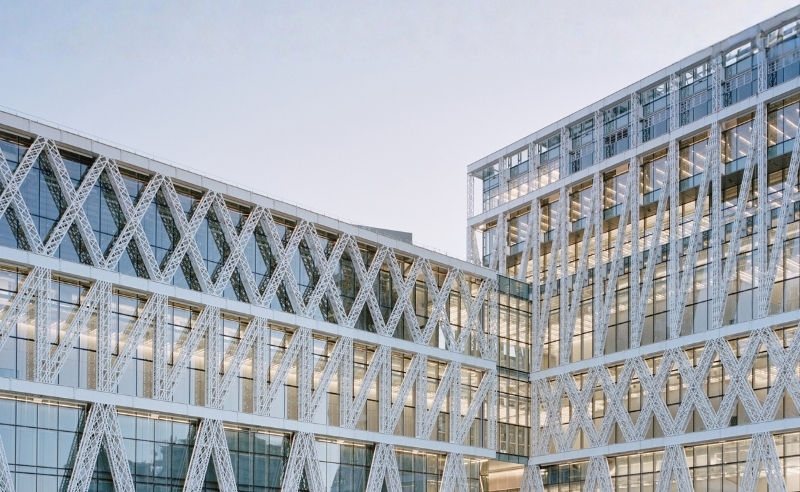 Powerhouse Parramatta is set to open November 7, 2026 as Western Sydney’s first state cultural institution and the largest cultural infrastructure project in Australia since the Sydney Opera House.
The museum brings exhibitions, laboratories, education, food, research, public spaces and residences under one roof. More than 50 designers from across Australia have contributed to the building, including its furniture, lighting and joinery.
YSG Studio, led by designer Yasmine Ghoniem with associate Tina Fox and interior designer Alice Tait, designed the 30 residences for artists, scientists, researchers and visiting academics staying at the museum. Powerhouse has not announced whether the public will be able to enter the residences through tours or other programming.
"The assignment worked for me because of my cocktail background, my mixed origins. There were going to be so many people from all over the world staying in these residences. And I thought who would be better to tell their stories about their homes, and inject some of that ethnicity in a concrete shell, but in a home setting?" Ghoniem says.
 Ghoniem was born to an Egyptian father and an Australian mother and spent parts of her childhood between Kuwait, Saudi Arabia and Sydney.
"For me, it was really imperative to bring the Middle Eastern influence, the Asian influence, the Oceania influence and mix them all together," she says.
The walls had to remain grey, the lighting system could not change and the rooms were relatively small. YSG concentrated each residence around a few larger elements.
"We had to really work out a hero, a big gesture, not thousands of small pieces, but more like three very big gestures that would make up each of the rooms."
 One is a lantern by Indonesian-Australian artist Jumaadi, made from buffalo hide and formed into a large sculptural shape.
"It was like the soul light in the room," Ghoniem says. "It really takes up a lot of this very pure grey background."
Rugs became another major element. New South Wales-based Tappeti produced bespoke rugs for the residences, with each room holding one fragment of a larger composition.
"Being Middle Eastern, I love rugs," Ghoniem says. "If you were to take all of the rugs from the thirty rooms and put them all together, they would create this one big, beautiful painting, like a patchwork."
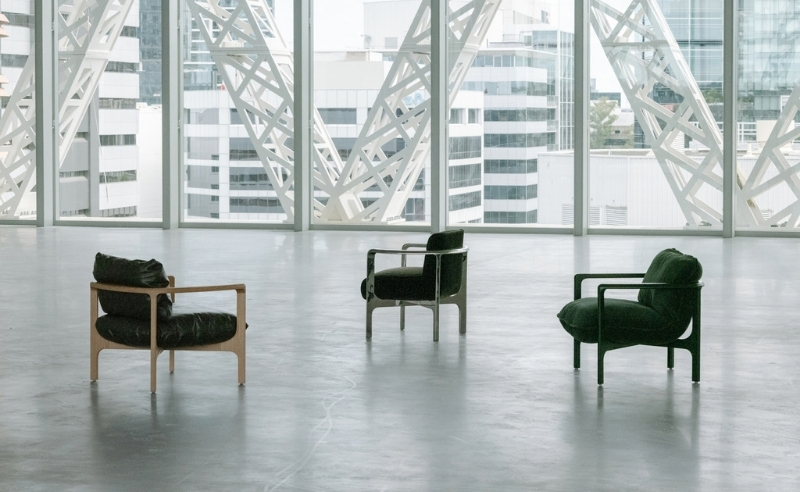 More than 20 designers and fabricators contributed pieces throughout the residences. Olivia Bossy created sofas and day beds, Adam Goodrum contributed chairs and tables, Maryam Moghadam designed laser-cut marquetry tabletops, Katrina Ramm of Ka Ra Studio designed side tables and Tantri Mustika worked on lighting.
YSG found some of its collaborators through an open call.
"When we were engaged by the Powerhouse, we went on socials and did this massive call-out and said, If you're an artist or a maker, please let us know, send us your portfolio," Ghoniem says.
Some designs changed during production. A bespoke joinery bedhead originally envisioned in wine or maroon eventually became sage green or muted peach depending on the residence.
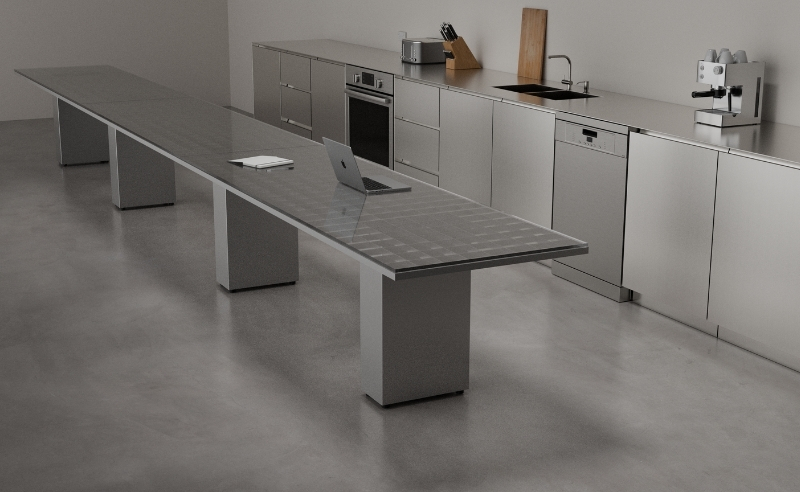 Handmade joinery by Maiden Co became one of the details Ghoniem fought to retain.
"Without them, I felt like our story was being lost," she says. "Some of the details, we simply can't change."
"I wanted this desk and bedhead to have this touch of being alive, not machine-made," she says. "That sense of hand-carving, the presence of a maker. As far as I remember, there was no single surface there that was left untouched."
Ghoniem also connects the project’s textures to the landscapes she grew up around.
 "For me, that kind of summarizes the imperfection of the Middle East in their trades, in their timber work. I grew up in the desert, there's not much colour difference between the sky and the sand, and there's nothing in between," she says.
"I value colour. But I value the serenity of the desert. People think the coast is where nature is at its best. I don't. Some of my calmest moments have happened alone in the desert."
Her daughter is named Sahara, a choice that still draws affectionate disbelief from her Egyptian family.
The fit-out is now complete ahead of the museum’s opening. Ghoniem hopes the residences eventually carry evidence of the people who have lived in them.
"All the marks on the tops of the timber on their bedside tables," she says. "The troddenness of the floor rugs. The dents on things."
- Previous Article Four Seasons Is Bringing a Cliffside Luxury Resort to Tangier