


48 Hours in Asilah, Morocco
Where a 15th-century sea wall meets an open-air gallery repainted every year, and a bandit king's palace still stands above the Atlantic. Asilah is Morocco's most quietly extraordinary coastal city.
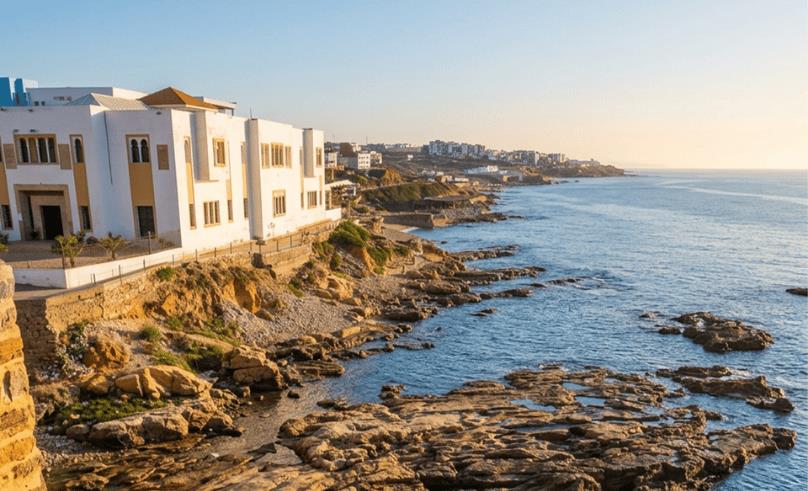
Most Moroccan coastal towns make their pitch through food markets and medina chaos. Asilah makes its pitch through painted walls, 15th-century Portuguese ramparts rising straight out of the Atlantic, and a biography that includes a stretch as an independent pirate state. It is, in other words, not making the same pitch as everyone else.
The medina here functions as an open-air gallery, its whitewashed facades repainted across successive editions of the annual Cultural Moussem until the city became inseparable from the art covering it. The ramparts that frame it are among the best-preserved on Morocco's northern coast, their stone dropping directly into the ocean with a bluntness that photographers spend entire afternoons trying to do justice to. And threaded through all of it is a history that runs from corsair raids to a bandit king who financed a lavish palace entirely through kidnapping ransoms and then used its balcony to dispose of his enemies into the sea below.
Two days here is enough to understand why Asilah tends to hold people longer than planned.
Friday
09:00 Start with breakfast by the Atlantic at Port XIV
-077d34f4-2c8a-4edd-9a08-63b2f07c8523.jpg) Asilah doesn't ask much of you on a Friday morning. Port XIV makes it easy to comply. The restaurant sits close enough to the seafront that the Atlantic announces itself before you've ordered anything, and the kitchen handles the basics well: coffee, pastries, eggs, the smell of salt air doing its part. It's a gentle beginning to a city that, for all its colour and character, has the good sense not to rush you.
10:00 Explore the murals of the medina
Asilah doesn't ask much of you on a Friday morning. Port XIV makes it easy to comply. The restaurant sits close enough to the seafront that the Atlantic announces itself before you've ordered anything, and the kitchen handles the basics well: coffee, pastries, eggs, the smell of salt air doing its part. It's a gentle beginning to a city that, for all its colour and character, has the good sense not to rush you.
10:00 Explore the murals of the medina
-4f1f5cc6-4c64-4f19-b851-67753a6c5b0a.jpg) No single museum holds what Asilah considers its most important collection. The city's medina is its gallery, and the works on display span entire walls, narrow alleyways, and sudden courtyard corners that you stumble into rather than find. These murals were created during successive editions of the Cultural Moussem, the annual arts festival that put Asilah on the map, and many have since been painted over by newer editions. What you see today might be gone by next year. That ephemerality is the point.
12:30 Go art gallery-hopping
No single museum holds what Asilah considers its most important collection. The city's medina is its gallery, and the works on display span entire walls, narrow alleyways, and sudden courtyard corners that you stumble into rather than find. These murals were created during successive editions of the Cultural Moussem, the annual arts festival that put Asilah on the map, and many have since been painted over by newer editions. What you see today might be gone by next year. That ephemerality is the point.
12:30 Go art gallery-hopping
-cae229b4-362f-4544-bcec-85ccfa9495b7.jpg) Tucked into the streets surrounding the old town are several small galleries that operate quietly alongside the medina's more photogenic distractions. Aplanos is among them, as are the studios of local artists working in contemporary painting, calligraphy, and mixed media. Together, they fill in the portrait of the artistic community that first gave Asilah's walls something worth looking at.
14:00 Have lunch between two continents at Casa García
Tucked into the streets surrounding the old town are several small galleries that operate quietly alongside the medina's more photogenic distractions. Aplanos is among them, as are the studios of local artists working in contemporary painting, calligraphy, and mixed media. Together, they fill in the portrait of the artistic community that first gave Asilah's walls something worth looking at.
14:00 Have lunch between two continents at Casa García
-c913230c-f36e-4594-a46f-07e44ca73d86.jpg) Northern Morocco and southern Spain share more than a body of water, and Casa García is where that particular relationship shows up on a plate. The menu leans into seafood and Spanish-inflected dishes built around whatever the local boats brought in that morning. It sits conveniently close to the medina, which means lunch doesn't become a detour.
16:00 Take an afternoon dip at Paradise Beach
Northern Morocco and southern Spain share more than a body of water, and Casa García is where that particular relationship shows up on a plate. The menu leans into seafood and Spanish-inflected dishes built around whatever the local boats brought in that morning. It sits conveniently close to the medina, which means lunch doesn't become a detour.
16:00 Take an afternoon dip at Paradise Beach
-0eb03e22-e798-4391-bb7b-922c7878a9f7.jpg) Seven kilometres south of the centre, Paradise Beach earns its somewhat immodest name. A wide sweep of golden sand flanked by low rocky cliffs, largely undeveloped and reliably breezy. Most people get there by taxi or calèche, the horse-drawn carriages that add a certain period-piece quality to the afternoon commute. Thatched umbrellas are available for rent. The water is brisk, the light at this hour is generous, and if you're lucky, a camel will wander past as if it has somewhere to be.
20:00 Have a Moroccan dinner at Dar Al Maghrebia
Seven kilometres south of the centre, Paradise Beach earns its somewhat immodest name. A wide sweep of golden sand flanked by low rocky cliffs, largely undeveloped and reliably breezy. Most people get there by taxi or calèche, the horse-drawn carriages that add a certain period-piece quality to the afternoon commute. Thatched umbrellas are available for rent. The water is brisk, the light at this hour is generous, and if you're lucky, a camel will wander past as if it has somewhere to be.
20:00 Have a Moroccan dinner at Dar Al Maghrebia
-e433662f-5c80-4531-8216-f0d7b483cf6f.jpg) The medina after dark is a different proposition: quieter, more private, lit at a different register. Dar Al Maghrebia fits the mood. The menu covers familiar Moroccan ground, tagines and couscous, prepared without pretension and served in a setting that feels genuinely embedded in the architecture around it rather than designed to evoke it.
Saturday
The medina after dark is a different proposition: quieter, more private, lit at a different register. Dar Al Maghrebia fits the mood. The menu covers familiar Moroccan ground, tagines and couscous, prepared without pretension and served in a setting that feels genuinely embedded in the architecture around it rather than designed to evoke it.
Saturday
08:30 Have breakfast at Al Alba
-097945e5-ba57-4321-8d2e-eb1bb087c739.jpg) Slightly removed from the medina's more trafficked corners, Al Alba draws from both Moroccan and southern Spanish cooking traditions, which in Asilah amounts to a fairly well-established local dialect. The pace is unhurried. Take advantage.
10:30 Walk around the fishing port
Slightly removed from the medina's more trafficked corners, Al Alba draws from both Moroccan and southern Spanish cooking traditions, which in Asilah amounts to a fairly well-established local dialect. The pace is unhurried. Take advantage.
10:30 Walk around the fishing port
-5817c222-14f7-4e6a-8cfb-84fce207b9a0.jpg) By mid-morning, the harbour is deep into its working day. Boats have already returned with the catch, and the docks are moving: vendors, restaurant buyers, crew. It's the part of Asilah that doesn't particularly care whether anyone is watching, which makes it worth watching. Most of the seafood you've been eating all weekend began here.
12:30 Have lunch by the water at La Perle
By mid-morning, the harbour is deep into its working day. Boats have already returned with the catch, and the docks are moving: vendors, restaurant buyers, crew. It's the part of Asilah that doesn't particularly care whether anyone is watching, which makes it worth watching. Most of the seafood you've been eating all weekend began here.
12:30 Have lunch by the water at La Perle
-b9ea1249-05e5-4435-83bf-c682a94f5d59.jpg) La Perle has been synonymous with Atlantic seafood long enough that its reputation doesn't require much maintenance. Fresh fish and shellfish, views of the water, a midday meal that makes a persuasive case for not doing anything strenuous afterward.
14:30 Snap pictures at Krikia
La Perle has been synonymous with Atlantic seafood long enough that its reputation doesn't require much maintenance. Fresh fish and shellfish, views of the water, a midday meal that makes a persuasive case for not doing anything strenuous afterward.
14:30 Snap pictures at Krikia
-c5430685-d1ec-4b56-8388-edd106347a62.jpg) Krikia is busiest at sunset, but the afternoon hours have their own appeal. The historic platform extends towards the sea, and the light at this hour has started to soften without yet committing to golden hour. Photographers come here with intention; everyone else drifts in and stays longer than planned. Both responses are appropriate.
17:00 Explore the legacy of a bandit king at Palais de Raissouli
Krikia is busiest at sunset, but the afternoon hours have their own appeal. The historic platform extends towards the sea, and the light at this hour has started to soften without yet committing to golden hour. Photographers come here with intention; everyone else drifts in and stays longer than planned. Both responses are appropriate.
17:00 Explore the legacy of a bandit king at Palais de Raissouli
-0e2009aa-637a-4a80-809c-ff90b3ff67ed.jpg) Mulai Ahmed er-Raisuni built his palace in 1909 with money he had no intention of earning honestly. A tribal leader, pirate, and extortionist of considerable ambition, he financed the entire project through ransoms demanded for high-profile European and American captives. The result is lavish in the way that only guilt-free spending can produce: a beautifully restored central courtyard, Andalusian zellij tilework, carved plaster ceilings. The architectural centerpiece is a glass-enclosed loggia cantilevering out over the 15th-century Portuguese ramparts, a balcony from which Raisuni reportedly compelled enemies to step into the Atlantic 30 metres below. The views remain exceptional. The ethics of the original owner remain his problem.
20:30 End with seafood at Soujoud Food
Mulai Ahmed er-Raisuni built his palace in 1909 with money he had no intention of earning honestly. A tribal leader, pirate, and extortionist of considerable ambition, he financed the entire project through ransoms demanded for high-profile European and American captives. The result is lavish in the way that only guilt-free spending can produce: a beautifully restored central courtyard, Andalusian zellij tilework, carved plaster ceilings. The architectural centerpiece is a glass-enclosed loggia cantilevering out over the 15th-century Portuguese ramparts, a balcony from which Raisuni reportedly compelled enemies to step into the Atlantic 30 metres below. The views remain exceptional. The ethics of the original owner remain his problem.
20:30 End with seafood at Soujoud Food
-dd5b21d3-58ea-433b-bc76-ba7ff5ab5804.jpg) Soujoud Food is informal in a way that feels earned rather than designed. The menu focuses on traditional Moroccan cooking, the atmosphere doesn't try to compete with the medina's more theatrical dining rooms, and it makes for a fitting final meal: unpretentious, local, and exactly the right register for a city that has spent two days quietly exceeding expectations.
Soujoud Food is informal in a way that feels earned rather than designed. The menu focuses on traditional Moroccan cooking, the atmosphere doesn't try to compete with the medina's more theatrical dining rooms, and it makes for a fitting final meal: unpretentious, local, and exactly the right register for a city that has spent two days quietly exceeding expectations.
https://www.google.com/maps/d/edit?mid=1R-e1axpGiS6Y_i9WSGGxV9c49vDcfyk&usp=sharing
Related Articles
Trending This Month
-
-
-
-
 Oct 02, 2026