


A Three-Part Itinerary for Walking the Jordan Trail End to End
You don’t need forty days to experience the Jordan Trail. This three-part itinerary breaks the 650-kilometre route into manageable stretches through Umm Qais, the Dead Sea, Petra, Wadi Rum and Aqaba.

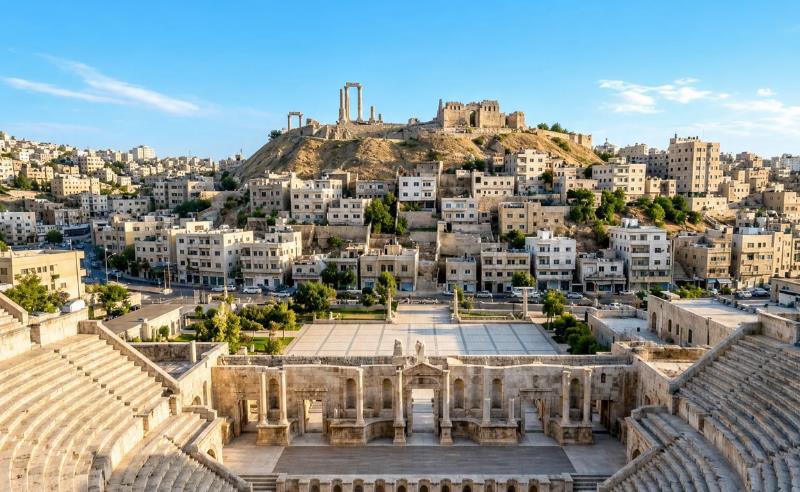
The Jordan Trail is less one long hike than a journey through several very different versions of the country.
Running roughly 650 kilometres from Umm Qais in the north to Aqaba on the Red Sea, the route moves through green highlands, ancient towns, the Dead Sea, Petra’s sandstone valleys and the open desert of Wadi Rum before finally reaching the coast.
Walking the entire trail continuously is possible, but it is far from the only way to experience it. Most travellers tackle individual stretches instead, giving each landscape a little more room to breathe and leaving time to stop in the villages, ruins and towns along the way.
This itinerary follows that rhythm, dividing the trail into three distinct sections with a suggested place to stay for each part.
Part One: Umm Qais to the Dead Sea
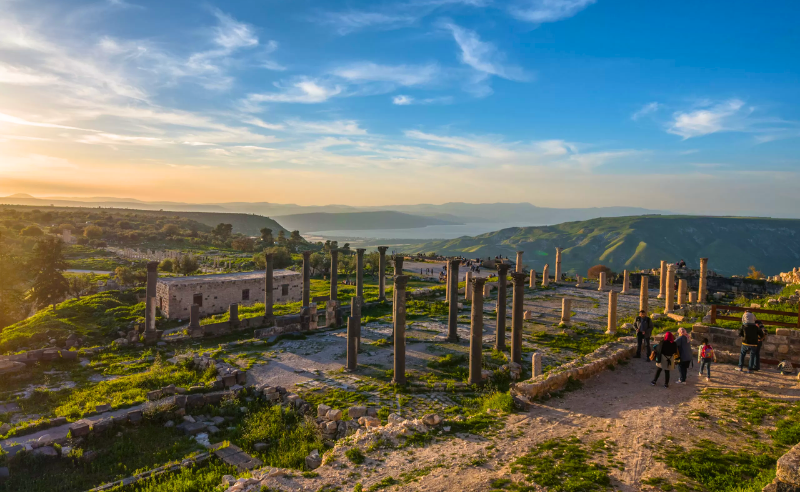
 The trail begins at Umm Qais, the site of ancient Gadara, a Greco-Roman city built in black basalt on a hilltop. From here, three countries are visible at once — the Yarmouk Valley falls away toward the Sea of Galilee, with the Golan Heights beyond it and Lebanon faintly visible on clear days.
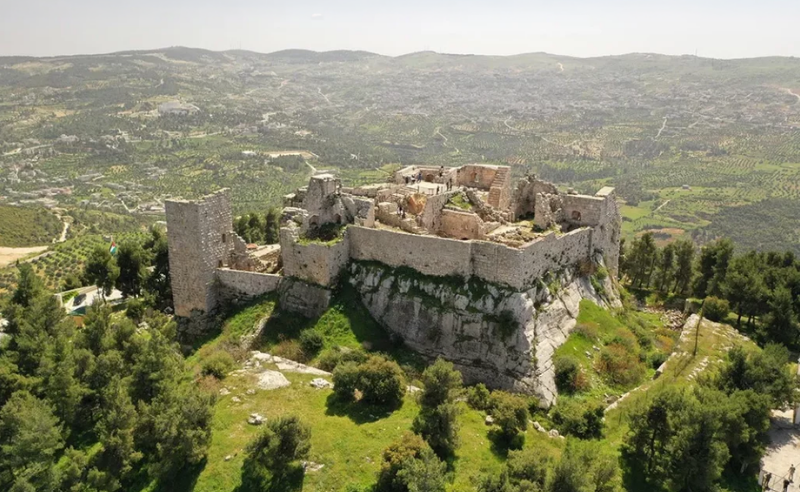
South of the ruins, the land turns to forest. Ajloun Castle, built in the 1180s by a nephew of Salah El Din, sits at 1,250 metres and was once part of a defensive relay chain that could pass messages from Damascus to Cairo in a single day using beacons and pigeons.
From Ajloun, the trail descends into As-Salt, a hill town built across three ridges in pale limestone. Its old town was added to the UNESCO World Heritage List in 2021.
The next stretch is short but steep. The trail passes Iraq Al-Amir, a Hellenistic palace roughly 2,300 years old, then descends King Hussein's Rally Road toward Wadi Zarqa Ma'in before reaching the shore of the Dead Sea, which at -430 metres is the lowest point on the Earth's surface.
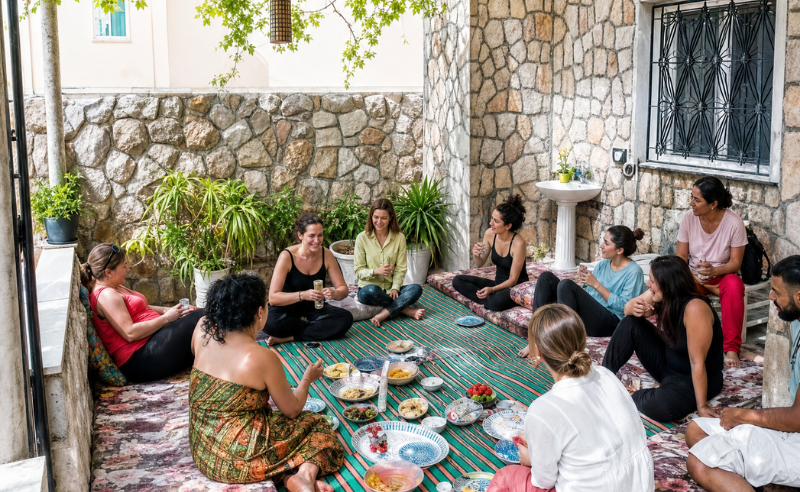
Where to stay: Beit Al Baraka, a community-run guesthouse in Umm Qais village, a short walk from the ruins. Rooms are simple, meals are served family-style, and the view still reaches toward the same three borders visible from the site above it.
Part Two: Dana to Petra
 This is the trail's longest and most highly regarded stretch, and it's worth budgeting extra time for it.
Dana village sits on the rim of the Dana Biosphere Reserve, Jordan's largest protected area. From the village, the trail descends through Wadi Feynan, passing the ruins of an ancient copper-mining settlement as the terrain shifts from dark rock to the pale sandstone that defines the rest of the route south.
Most hikers on this route arrive in Petra from behind, at the Monastery, rather than through the more commonly photographed Siq and Treasury entrance. The Monastery's facade emerges gradually from the rock as the path approaches, offering a different first impression of the site than the one most visitors get.
Where to stay: Feynan Ecolodge, at the base of the Wadi Feynan descent. The property runs entirely on solar power during the day and is lit only by candlelight after dark.
Part Three: Wadi Rum to Aqaba
 South of Petra, the trail enters Wadi Rum, a desert landscape that has been inhabited for roughly 12 thousand years. UNESCO has listed the site for both its geology and its human history, which includes an estimated 25 thousand rock carvings and 20 thousand inscriptions spanning several ancient scripts.
T. E. Lawrence was based here during the Arab Revolt of 1917 and 1918, and the rock formation known as the Seven Pillars of Wisdom takes its name from the book he wrote afterward. The Zalabieh Bedouin still live in the area today, and most overnight stays on this leg are in Bedouin-run camps, typically with a fire, a meal of zarb cooked underground, and the desert sky overhead.
The trail's final stretch drops from Wadi Rum's granite domes to the coast at Aqaba, a city inhabited continuously since roughly 4000 BC under a succession of names — Elath, then Nabataean Ayla, then Roman and Byzantine Aela. It was here, in July 1917, that Lawrence and Arab irregular forces captured the Ottoman garrison, having crossed the same desert that the trail crosses today.
Where to stay: Kempinski Hotel Aqaba, on the Red Sea corniche, marking the end of the route and the first proper coastline since Umm Qais.
- Previous Article Egypt Wins Two Awards for Its Tourism Showcase at WTM London 2026
Related Articles
Trending This Month
-

-
-
-
 Oct 08, 2026