

A Wanderer’s Guide to North Africa’s Amazigh Villages
Built for the unlazy traveller, this Amazigh village circuit stretches from Siwa to Morocco through cave villages, Saharan settlements and some of North Africa’s most overlooked communities.

Amazigh is the self-designation of many Berber-speaking communities, whose name translates to “free people” or “noble people” in English. Through most of their known history, however, their naming has been the prerogative of others. The Romans used the term Barbaros in referring to the peoples we now call Berbers; an insult that was later reworked into an ethnic term and has remained so through much of history. Before the Romans came the Carthaginians, before the Carthaginians came the Phoenicians; following the Romans were the Vandals, the Byzantines, the Arab conquerors of the seventh century CE, the Ottoman administrators, the French colonialists, and the Spanish colonisers. Each left behind a linguistic contribution, a patron saint’s shrine, a particular building style; but the Imazighen adopted them all without breaking up, preserving a language that has outlasted every empire that tried to erase it: Tamazight.
 From the Siwa Oasis on Egypt’s western frontier to Morocco’s Atlantic shore, communities speaking some variation of Tamazight have existed for at least three thousand years. And though centuries of Arabisation and migration have sharply reduced its geographic spread, four villages, scattered across four countries and vastly different climates and architectural traditions, remain tied together by the language and heritage they kept.
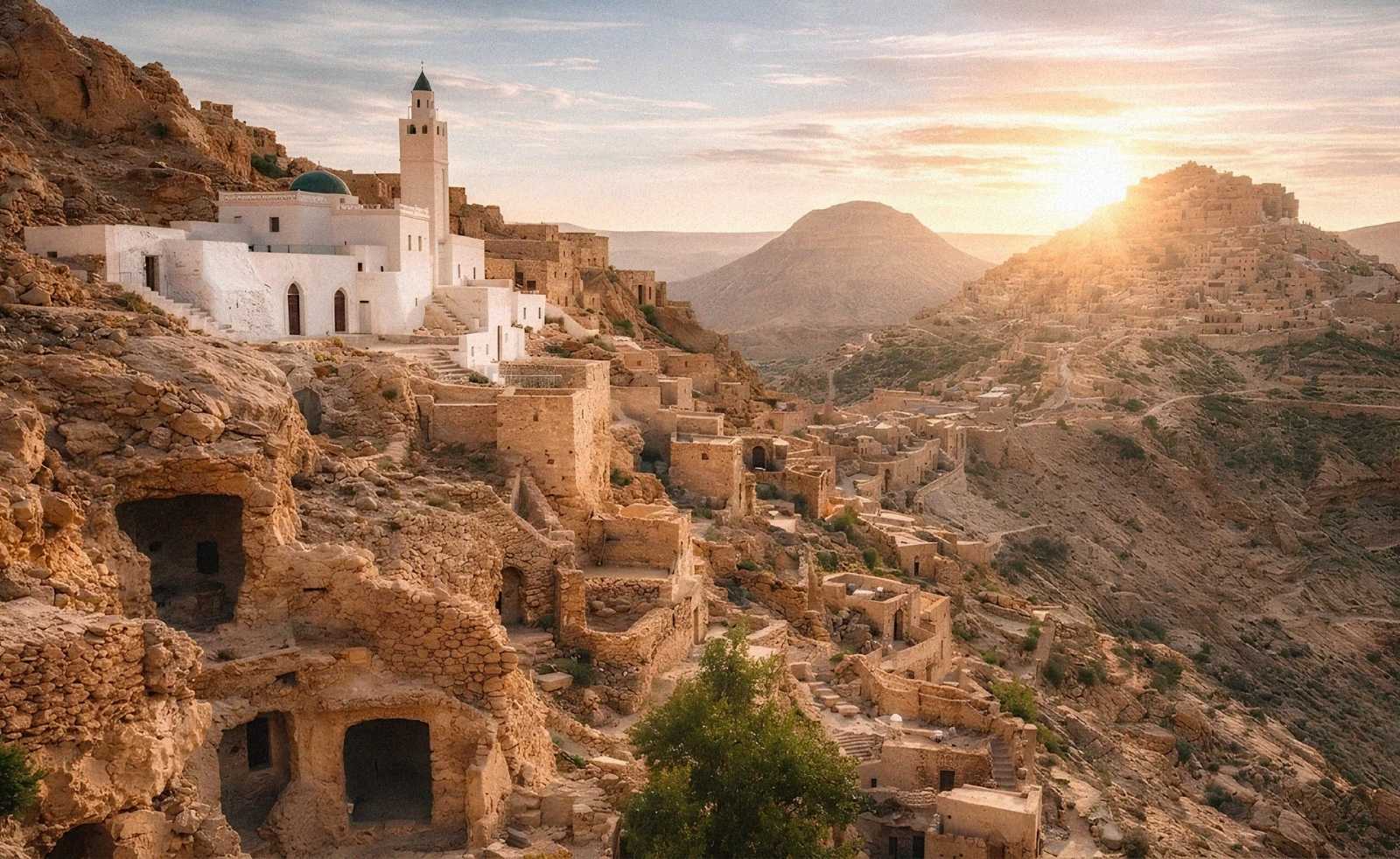
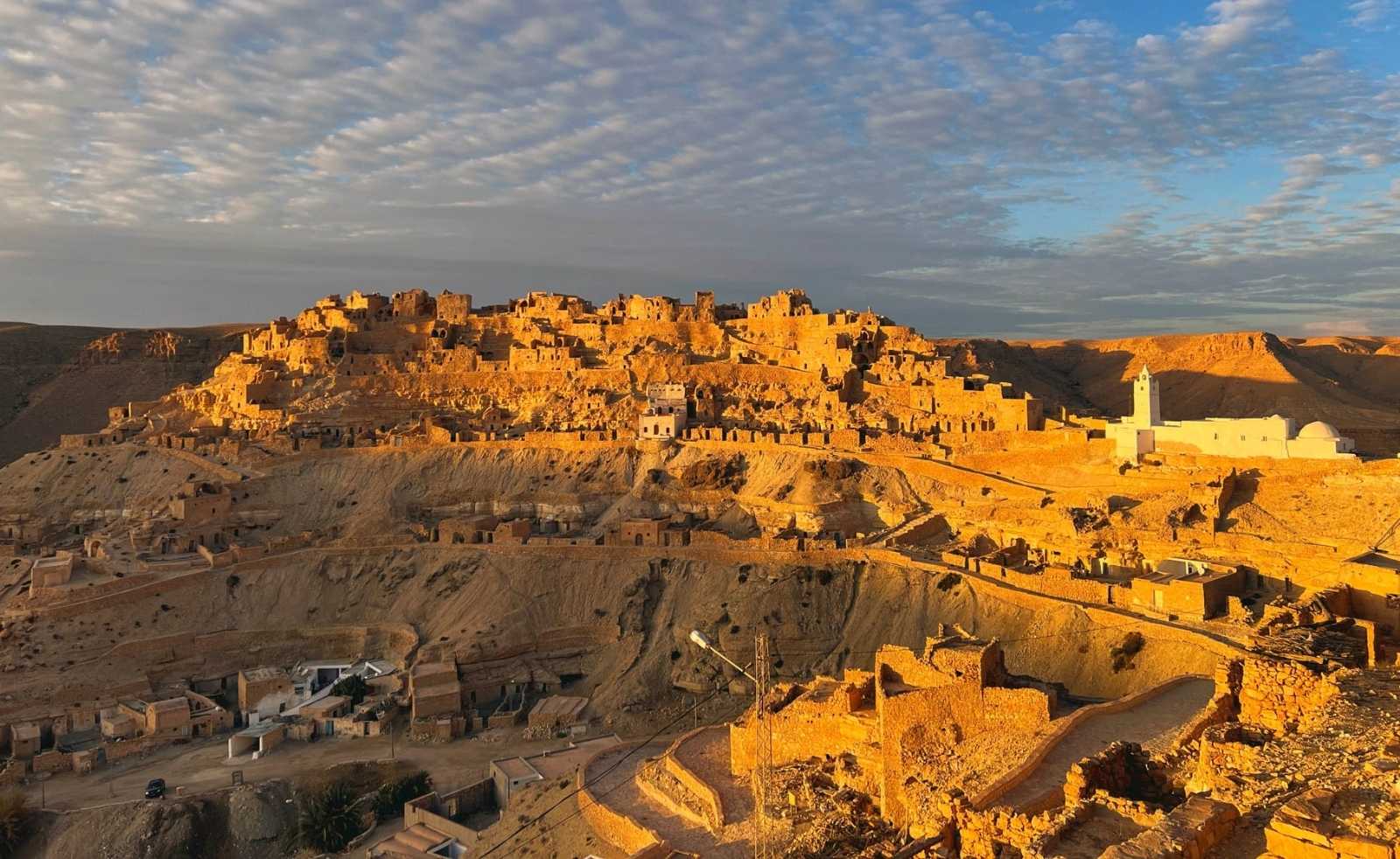
In southern Tunisia, about seven hours south of Tunis and a short drive from the town of Tataouine, the village of Chenini emerges from the Jebel Dahar mountains. The older part of the settlement is built entirely into the rock face, a long ridge of cave-like chambers honeycombed into the cliff, with a whitewashed mosque cantilevering over the valley below. Today, the ancient troglodyte quarters lie largely in ruin, and some of the caves have been converted into simple guesthouses for the travellers who come through from Tataouine on their way south. Though roughly six hundred people still call the village home, the local Berber dialect, Chenini-Douiret, is now considered endangered, spoken almost exclusively by the elderly while the children of Chenini go to school in Tunisian Arabic.
From the Siwa Oasis on Egypt’s western frontier to Morocco’s Atlantic shore, communities speaking some variation of Tamazight have existed for at least three thousand years. And though centuries of Arabisation and migration have sharply reduced its geographic spread, four villages, scattered across four countries and vastly different climates and architectural traditions, remain tied together by the language and heritage they kept.
In southern Tunisia, about seven hours south of Tunis and a short drive from the town of Tataouine, the village of Chenini emerges from the Jebel Dahar mountains. The older part of the settlement is built entirely into the rock face, a long ridge of cave-like chambers honeycombed into the cliff, with a whitewashed mosque cantilevering over the valley below. Today, the ancient troglodyte quarters lie largely in ruin, and some of the caves have been converted into simple guesthouses for the travellers who come through from Tataouine on their way south. Though roughly six hundred people still call the village home, the local Berber dialect, Chenini-Douiret, is now considered endangered, spoken almost exclusively by the elderly while the children of Chenini go to school in Tunisian Arabic.
 What draws most visitors to Chenini, beyond the architecture, is a story that belongs equally to local Berber memory and to the Quran. The Mosque of the Seven Sleepers marks the site where, according to memory, seven Amazigh men hid from Roman persecution in a cave above the village, fell into an impossible sleep, and woke several centuries later into a world they had never seen before. The story parallels the Quranic Surat al-Kahf, though local versions carry their own inflections. The graves of the seven men lie inside the mosque, and they are famously, improbably long — over four metres each —which some storytellers explain as evidence of giants, or their bodies continuing to grow during the long sleep.
Crossing westward into Morocco, the road eventually reaches the edge of the Sahara proper, and seven kilometres south of Merzouga, where the Erg Chebbi dunes begin, sits the village of Khamlia. The call to prayer sounds in Arabic, the cooking draws on Saharan and West African traditions and the community itself is descended from Malians, Sudanese, and Senegalese people brought across the desert as enslaved labour over several eras, the last arrivals coming in the nineteenth century. After emancipation, they settled here, put down roots, and gradually adopted the Amazigh language spoken by surrounding communities.
What draws most visitors to Chenini, beyond the architecture, is a story that belongs equally to local Berber memory and to the Quran. The Mosque of the Seven Sleepers marks the site where, according to memory, seven Amazigh men hid from Roman persecution in a cave above the village, fell into an impossible sleep, and woke several centuries later into a world they had never seen before. The story parallels the Quranic Surat al-Kahf, though local versions carry their own inflections. The graves of the seven men lie inside the mosque, and they are famously, improbably long — over four metres each —which some storytellers explain as evidence of giants, or their bodies continuing to grow during the long sleep.
Crossing westward into Morocco, the road eventually reaches the edge of the Sahara proper, and seven kilometres south of Merzouga, where the Erg Chebbi dunes begin, sits the village of Khamlia. The call to prayer sounds in Arabic, the cooking draws on Saharan and West African traditions and the community itself is descended from Malians, Sudanese, and Senegalese people brought across the desert as enslaved labour over several eras, the last arrivals coming in the nineteenth century. After emancipation, they settled here, put down roots, and gradually adopted the Amazigh language spoken by surrounding communities.
 Yet, beyond language, what Khamlia has held onto with fierceness is its music. The gnawa tradition — one of the oldest surviving musical forms in North Africa, inscribed by UNESCO as Intangible Cultural Heritage in 2019 — is performed here nightly through high season by the local ensemble, Pigeons du Sable. The instruments are the guembri, a three-string bass lute, and the krakeb, heavy metal castanets whose sound is said to echo the chains of enslaved people. Once a year, in August, the village gathers for the three-day Sadaka festival full of trance, healing, continuous drumming and the past is neither buried nor mourned, only relived.
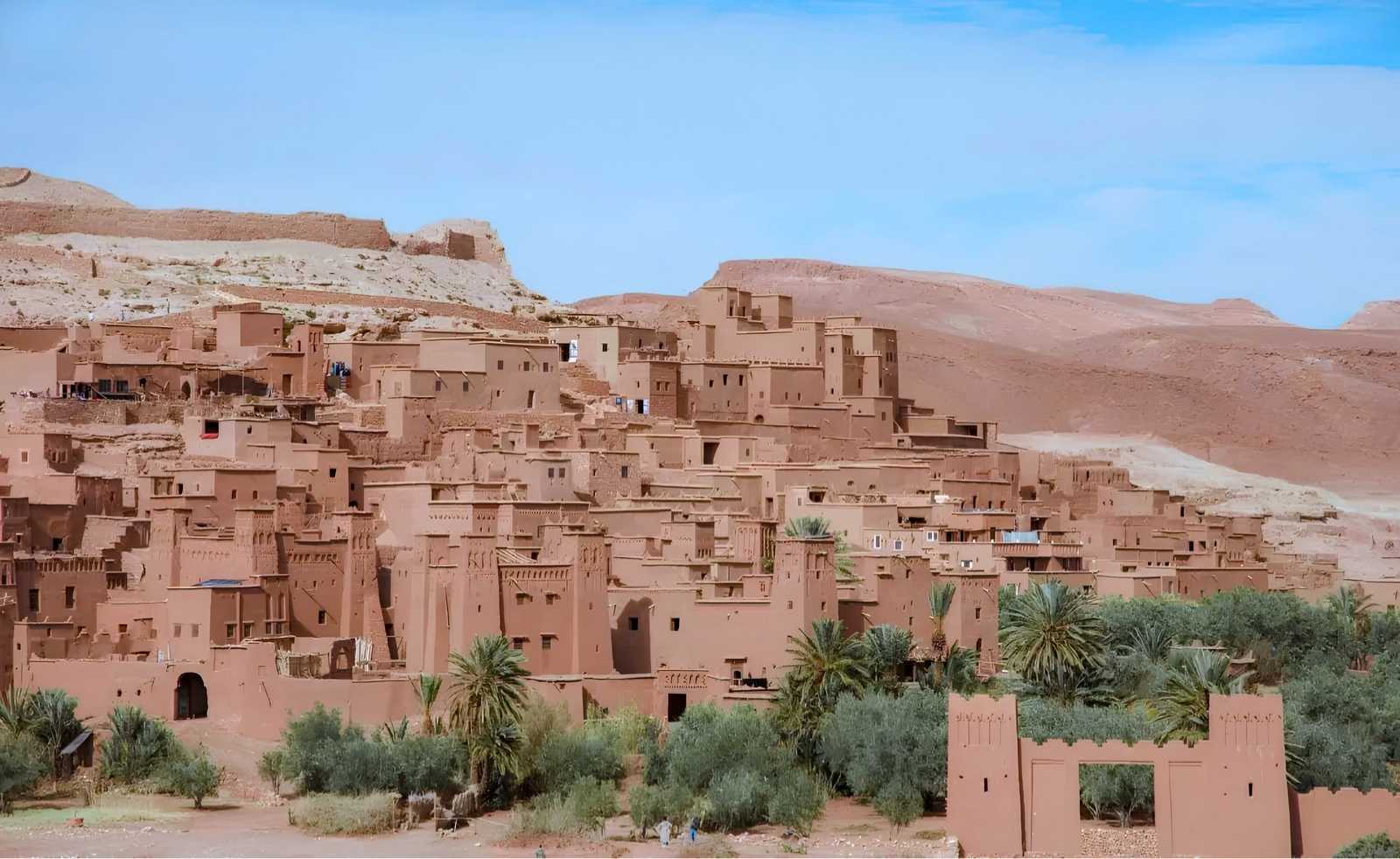
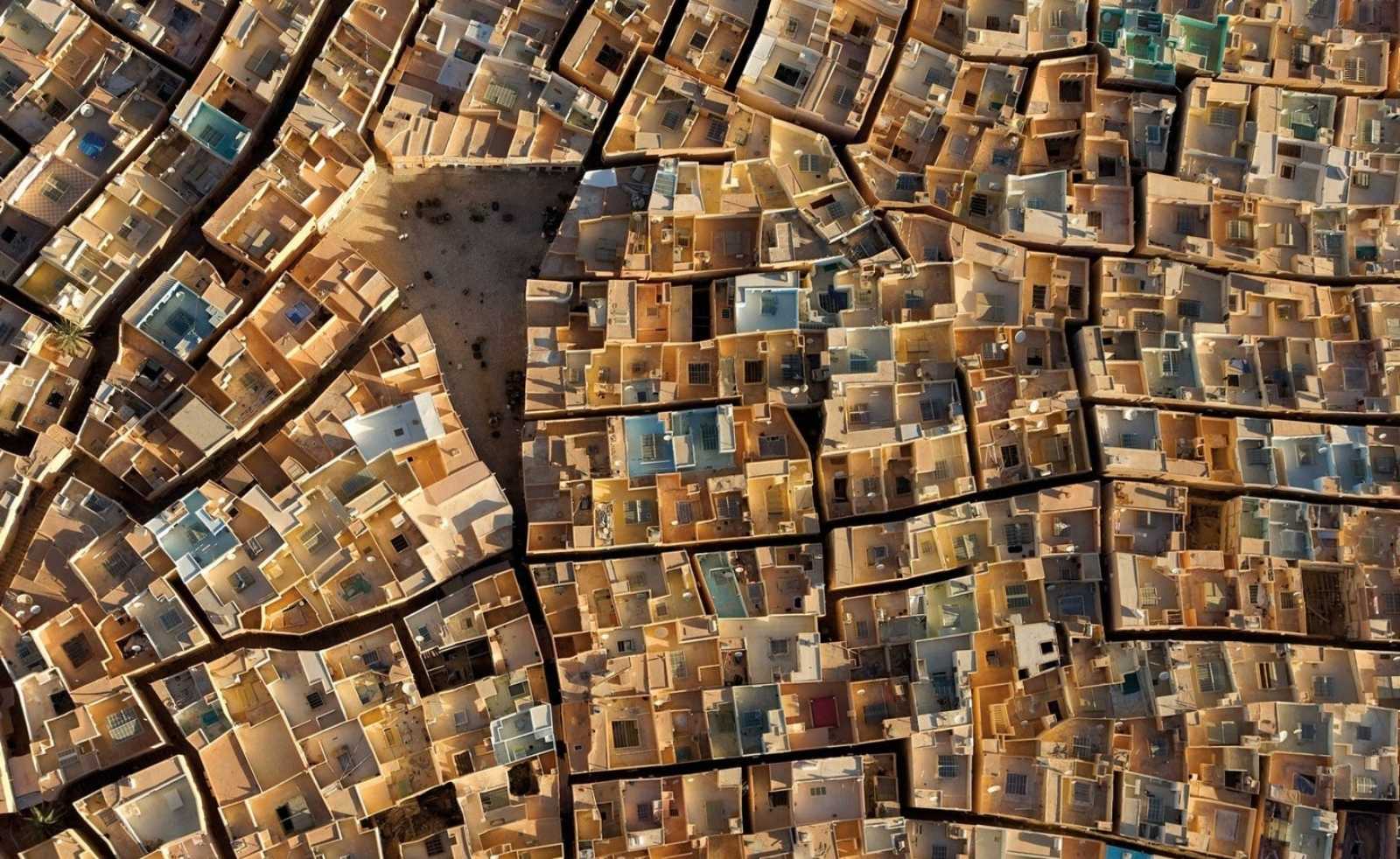
Moving on to Algeria, the M'zab Valley sits in the northern Sahara, six hundred kilometres from Algiers, its floor holding five fortified cities that have barely changed since the eleventh century. The Mozabites who built them were Ibadi Muslims, driven south after the destruction of their earlier capitals at Tahert and Sedrata, seeking somewhere remote enough that they could practise their faith and govern themselves. The UNESCO designation came in 1982, and the valley is one of the most intact examples of medieval urban planning anywhere in the Arab world.
The holiest of the five cities is Beni Isguen, where the gates are still locked each evening and visitors may enter only with a local guide. The architecture is philosophically spare with cubic buildings in anti-excess whitewashed mud brick and everything calibrated to the Ibadi principle of religious modesty. The clean lines and flat planes of Mozabite construction would later catch the eye of Le Corbusier, who acknowledged the M'zab as a formative influence on modernist architecture. The language there, Tumzabt, also called Mozabite Berber, remains one of the most actively spoken Berber varieties in the region, sustained partly by the community's long history of isolation and by the strength of the Ibadi religious identity.
Yet, beyond language, what Khamlia has held onto with fierceness is its music. The gnawa tradition — one of the oldest surviving musical forms in North Africa, inscribed by UNESCO as Intangible Cultural Heritage in 2019 — is performed here nightly through high season by the local ensemble, Pigeons du Sable. The instruments are the guembri, a three-string bass lute, and the krakeb, heavy metal castanets whose sound is said to echo the chains of enslaved people. Once a year, in August, the village gathers for the three-day Sadaka festival full of trance, healing, continuous drumming and the past is neither buried nor mourned, only relived.
Moving on to Algeria, the M'zab Valley sits in the northern Sahara, six hundred kilometres from Algiers, its floor holding five fortified cities that have barely changed since the eleventh century. The Mozabites who built them were Ibadi Muslims, driven south after the destruction of their earlier capitals at Tahert and Sedrata, seeking somewhere remote enough that they could practise their faith and govern themselves. The UNESCO designation came in 1982, and the valley is one of the most intact examples of medieval urban planning anywhere in the Arab world.
The holiest of the five cities is Beni Isguen, where the gates are still locked each evening and visitors may enter only with a local guide. The architecture is philosophically spare with cubic buildings in anti-excess whitewashed mud brick and everything calibrated to the Ibadi principle of religious modesty. The clean lines and flat planes of Mozabite construction would later catch the eye of Le Corbusier, who acknowledged the M'zab as a formative influence on modernist architecture. The language there, Tumzabt, also called Mozabite Berber, remains one of the most actively spoken Berber varieties in the region, sustained partly by the community's long history of isolation and by the strength of the Ibadi religious identity.
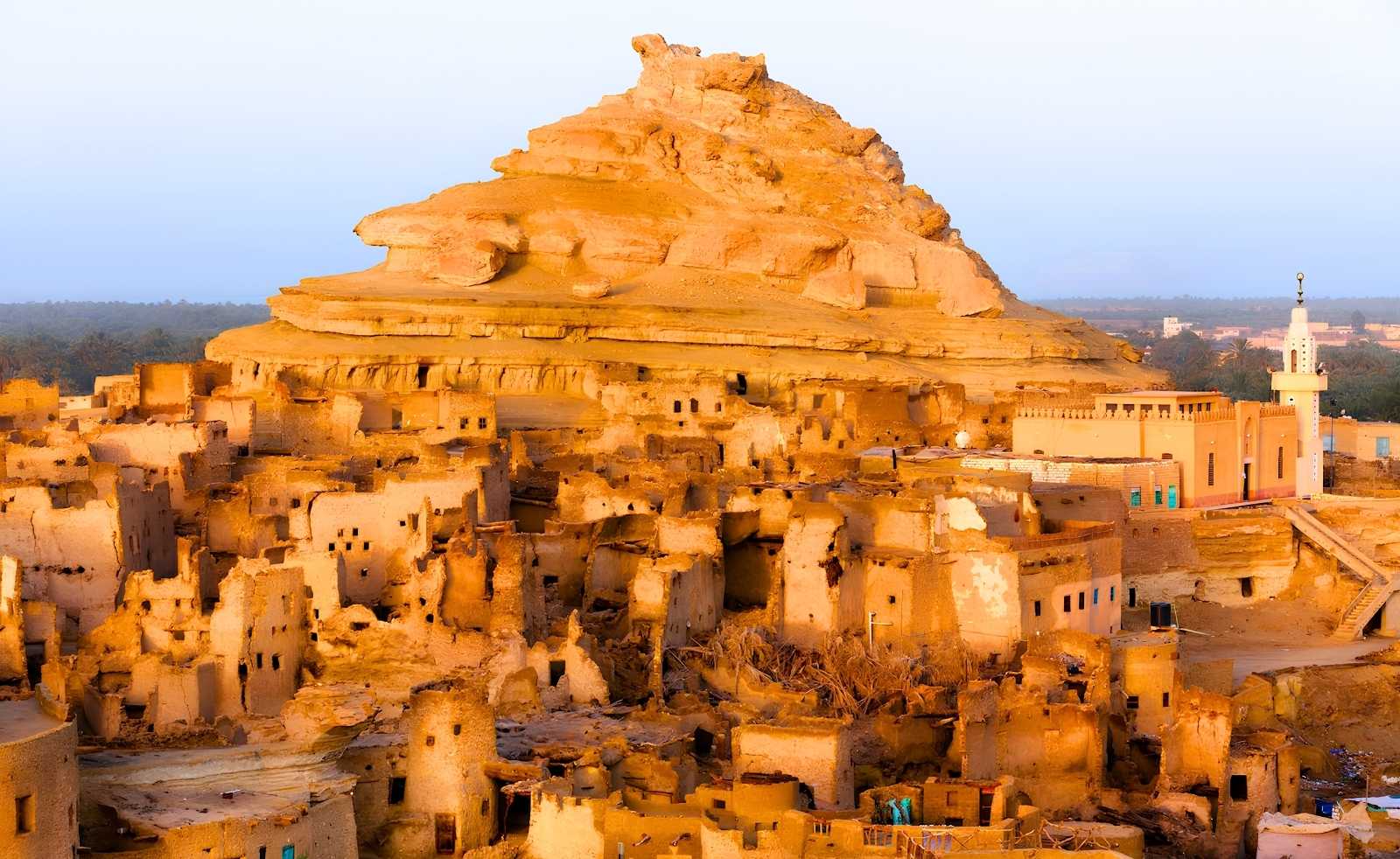 Further east, past Libya and into Egypt's Western Desert, Siwa occupies a depression fifty kilometres from the Libyan border and seven hundred kilometres from Cairo. For most of its history, reaching it meant six to ten days by camel across an open desert, and that distance is the reason Siwi — the easternmost Berber language now spoken anywhere — survived when every other Egyptian Berber dialect did not. The oasis today holds around thirty thousand people, among them fifteen thousand Siwi Berbers alongside Egyptian Arabs and Bedouins. The closest linguistic relative to Siwi is Awjili, spoken in Libya.
In Siwa, the ruins of the Oracle of Amun at Aghurmi — a limestone outcrop a few kilometres east of town — mark the site where Alexander the Great arrived in 331 BC to ask whether he was a god and received an answer that satisfied him. The temple still stands, best approached in the late afternoon when the light flattens the desert into gold. Closer to town, the fortress of Shali, built in the thirteenth century from kershef, a local composite of salt rock, mud, and palm wood, partially melted over three days of unprecedented rainfall in 1926, its towers softening at the edges into the colour of the surrounding earth.
Studied and visited separately, the four villages on this route seem to belong to different worlds. Ones separated by borders, deserts, mountains, and centuries of history. Some speak Tamazight fluently, others only in fragments passed between generations. But taken together, they form a single thread of language across North Africa, one that has survived Romans, caliphs, colonial powers, and modern nation-states, carrying traces of each, while remaining unmistakably its own.
Further east, past Libya and into Egypt's Western Desert, Siwa occupies a depression fifty kilometres from the Libyan border and seven hundred kilometres from Cairo. For most of its history, reaching it meant six to ten days by camel across an open desert, and that distance is the reason Siwi — the easternmost Berber language now spoken anywhere — survived when every other Egyptian Berber dialect did not. The oasis today holds around thirty thousand people, among them fifteen thousand Siwi Berbers alongside Egyptian Arabs and Bedouins. The closest linguistic relative to Siwi is Awjili, spoken in Libya.
In Siwa, the ruins of the Oracle of Amun at Aghurmi — a limestone outcrop a few kilometres east of town — mark the site where Alexander the Great arrived in 331 BC to ask whether he was a god and received an answer that satisfied him. The temple still stands, best approached in the late afternoon when the light flattens the desert into gold. Closer to town, the fortress of Shali, built in the thirteenth century from kershef, a local composite of salt rock, mud, and palm wood, partially melted over three days of unprecedented rainfall in 1926, its towers softening at the edges into the colour of the surrounding earth.
Studied and visited separately, the four villages on this route seem to belong to different worlds. Ones separated by borders, deserts, mountains, and centuries of history. Some speak Tamazight fluently, others only in fragments passed between generations. But taken together, they form a single thread of language across North Africa, one that has survived Romans, caliphs, colonial powers, and modern nation-states, carrying traces of each, while remaining unmistakably its own.