

This Egyptian Village Turns Jasmine Into the World's Best Perfumes
At 3 AM, while much of Egypt is asleep, farmers in Shubra Beloula are already in the fields, hand-picking jasmine that will eventually become one of the world’s most prized perfume ingredients.

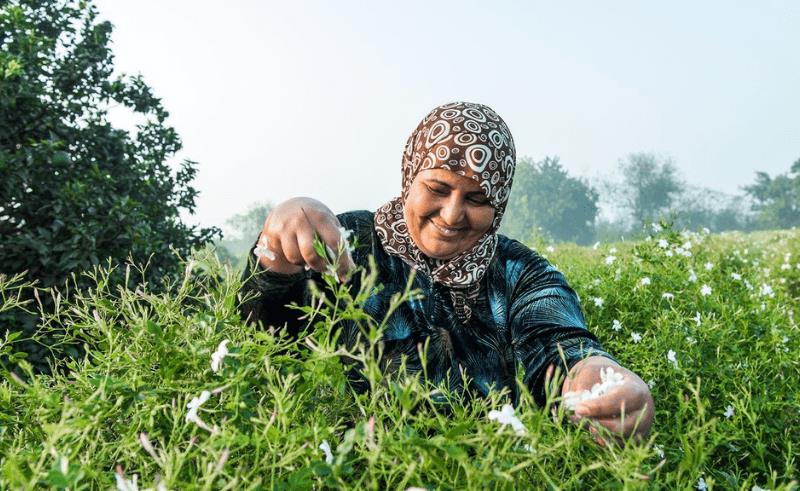
At around three in the morning, while much of Egypt is still asleep, the fields around Shubra Beloula begin to stir.
Headlamps flicker between rows of jasmine. Baskets fill slowly, flower by flower, as farmers move through the darkness of the Nile Delta, their hands moving instinctively through the plants. By the time the sun is high enough to turn the fields hot, much of the day's labour is already finished.
It is an unusual way to begin a working day, until you understand the flower. Jasmine is at its most fragrant in the cool hours before sunrise, and its delicate aroma begins to weaken as the heat sets in. Every flower has a small window in which it can be picked at its best, making the harvest a race against the rising sun.
For the people of Shubra Beloula, this rhythm has shaped life around the village for decades. Jasmine cultivation took root here in the 1960s, gradually transforming the surrounding fields and becoming a livelihood passed through generations. During the summer harvest, the flower dictates the hours: when people wake, when they head into the fields and how quickly the morning's work has to be done.
Once a basket is full, however, the flower's journey is only beginning.
The freshly picked jasmine has to leave the fields quickly, making its way to nearby collection points and factories before too much of its fragrance is lost. There, the flowers are handled with the same urgency that brought them out of the fields in the first place. This is where the humble white blossoms begin their transformation.
Unlike many aromatic plants, jasmine is too delicate to simply be steam-distilled. Instead, the flowers undergo solvent extraction, producing a fragrant material known as jasmine concrete. That material is then refined further to remove the waxes and other unwanted components, leaving behind jasmine absolute, a highly concentrated extract prized by the fragrance industry for its depth and complexity.
The scale of the process makes the value of each flower easier to understand. Hundreds of kilograms of jasmine can be needed to produce just one kilogram of absolute. By then, the scent has travelled a long way from where it began, but its story still starts in the same place: a jasmine field in Shubra Beloula, before dawn.