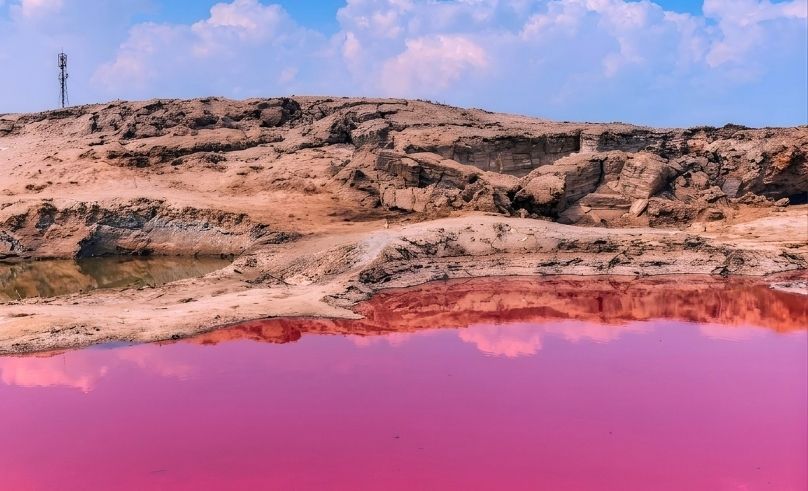
From Egypt’s Red Sea to Oman’s fjords and Saudi’s seasonal lakes, this is water in constant motion.
There are waters that behave. And then there are waters in the MENA region that refuse consistency altogether; shifting from glassy blue to milk-green to mirror-silver depending on light, salt, wind, or nothing at all except mood.
In these places, colour is not fixed. It’s a result of constant physical negotiation. Shallow depth changes tone. Evaporation alters density. Sun angle redraws the surface within hours. What you see in the morning is often not what survives the afternoon.
Chott Melrhir
📍Algeria
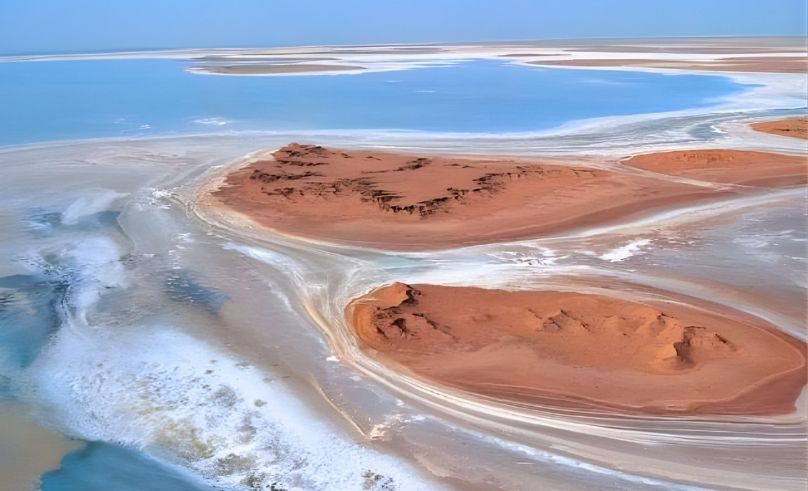
Chott Melrhir is less a lake and more a shifting surface between water and salt crust. In wetter periods, shallow water spreads across its basin, reflecting the sky so precisely that the horizon dissolves. In drier phases, the water retreats, leaving a blinding white salt plain that behaves like light itself. Its tone depends entirely on evaporation and wind—sometimes pale blue, sometimes silver, sometimes erased entirely into white.
Located in northeastern Algeria, it sits within a network of Saharan chotts that historically expanded and contracted with seasonal flooding, shaping trade routes and settlement patterns around their unpredictability.
Salt Lakes of Siwa
📍Egypt
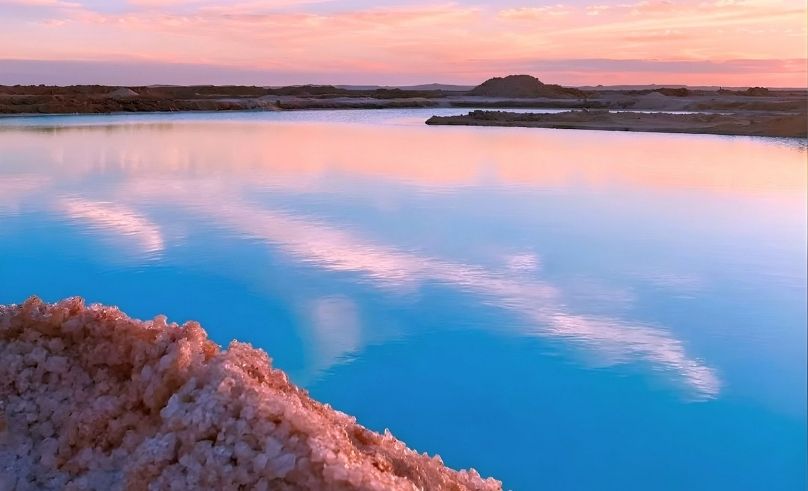
Siwa’s salt lakes don’t stay in one emotional register for long. At noon they look bleached white-blue, like crushed glass. By late afternoon, the minerals catch the sun and turn the water into a soft blush of pink and turquoise streaks.
Around them: date palm groves, crumbling mudbrick villages, and ancient ruins tied to the Oracle of Amun, where Alexander the Great once allegedly came to ask if he was divine.
Musandam Fjords
📍Oman
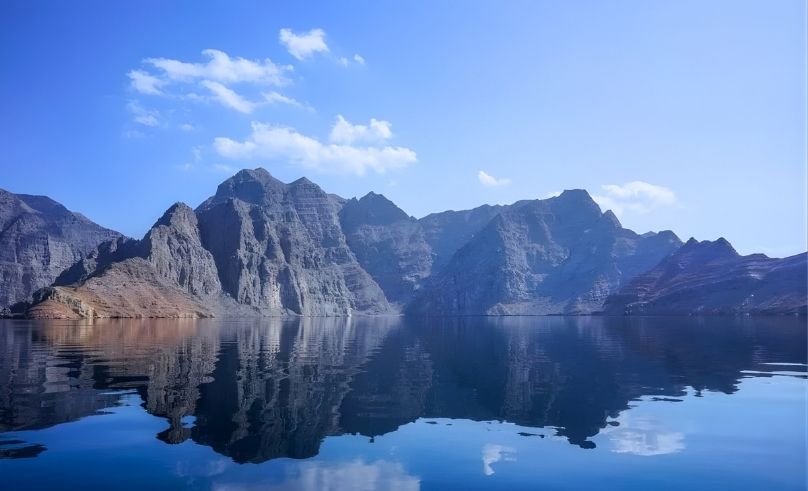
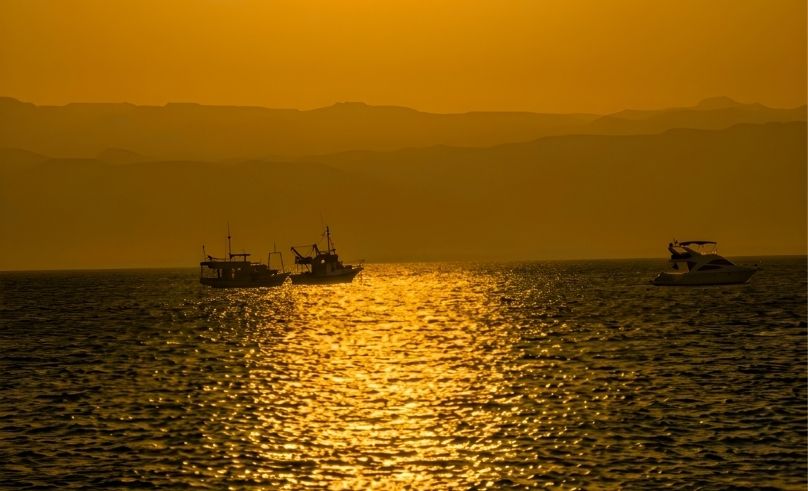
Here, water threads itself between cliffs like a living current carved through stone. In the morning it’s pale jade, almost soft enough to look still. By midday, it reflects the limestone walls and turns metallic. By sunset, it deepens into inked blues with streaks of gold caught in the folds of rock.
Dhow boats still glide through these channels—slow, wooden, almost unchanged for centuries—passing fishing villages that are often only reachable by sea.
Dead Sea
📍Jordan
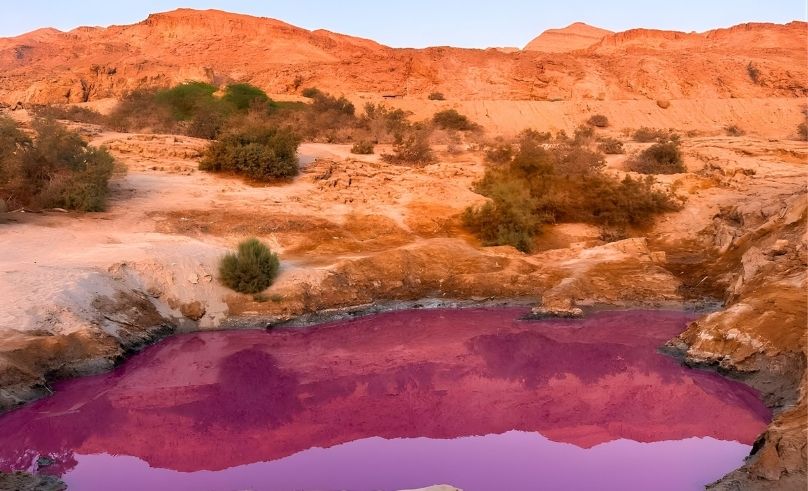
The Dead Sea rarely looks the same twice in a single day. Morning light flattens it into steel. Midday sun pulls it into bright mineral blue. As the sun lowers, haze and salt particles soften it into something almost pink-grey.
It sits more than 400 metres below sea level, making it one of the lowest accessible points on Earth, and its extreme salinity removes almost all life from its waters. What remains instead is density—so high you float without effort—and a surface that constantly reacts to heat, wind, and evaporation like a slow-moving mirror.
Al Wathba Wetland Reserve
📍UAE
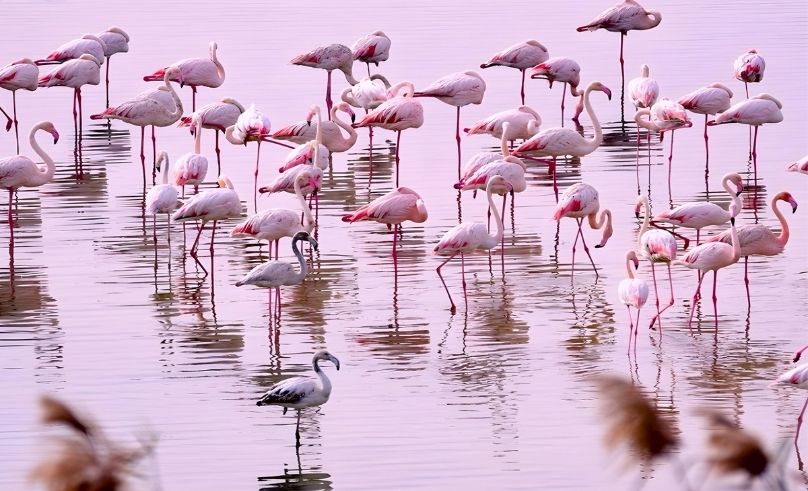
Outside Abu Dhabi’s desert edge, Al Wathba shifts between wetland and salt-flat depending on the season and evaporation cycle. After rare rains, shallow pools appear like scattered glass, turning soft blue-grey under early light. Later, as heat intensifies, they thin into white crusts that erase the water almost entirely. Flamingos arrive in long, deliberate arcs, turning the landscape unexpectedly pink against the pale waterline.
The reserve was once heavily degraded by development pressures before being restored into a protected habitat—now it operates like a quiet reversal of disappearance, where water keeps returning in temporary forms.
Al-Asfar Lake
📍Saudi Arabia
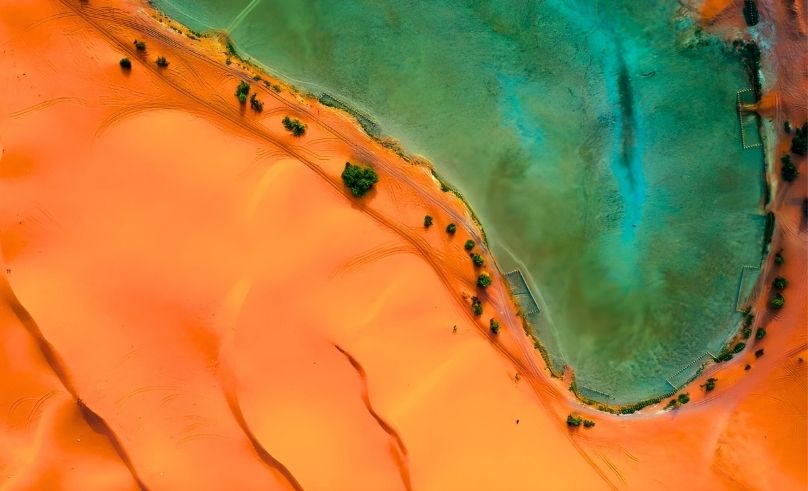
Near Al Ahsa’s vast oasis system, Al-Asfar Lake appears and retracts with rainfall cycles and groundwater shifts. When full, it spreads into a pale green-blue sheet across the desert floor. As evaporation intensifies, it fragments into shallow pools and then vanishes entirely into sand. Its colour is never stable—sometimes algae-rich green, sometimes dusty turquoise, sometimes reflective silver after storms.
The lake sits within one of the largest oasis regions in the world, historically tied to agricultural settlements that depended entirely on underground aquifers. What makes it truly striking is its absence as much as its presence—water here is seasonal enough to feel like a passing visitor.
Lake Qarun
📍Egypt
Lake Qarun sits in the Fayoum Depression, where water and desert negotiate their borders daily. Some hours it appears olive green, thick with algae movement. At others it turns gold under low sun, or flattens into dull silver when wind disappears.
Fishing villages line its edges, ancient settlements dating back to Greco-Roman Egypt scatter around it, and migratory birds trace seasonal routes across its surface.