

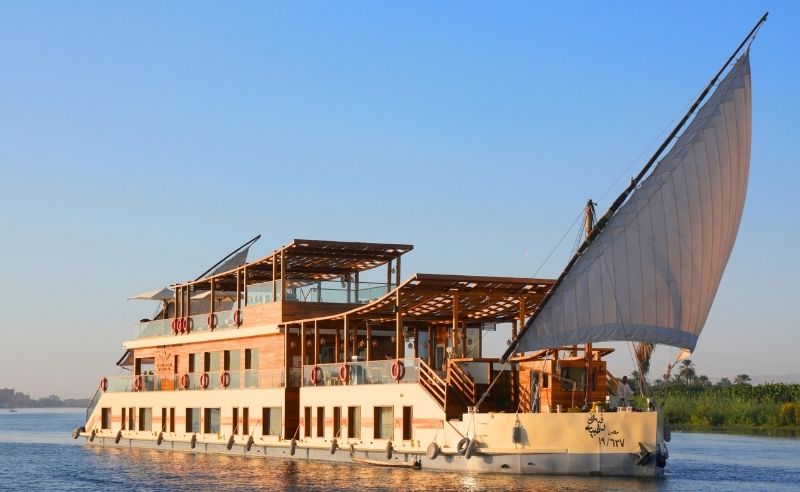
Egypt’s New Dahabiya Is Small & Sails Very, Very Slowly Down the Nile
A window overlooking the Nile, a jacuzzi on the upper deck, seriously good Om Ali and ancient temples just a stop away.
I’m usually at my happiest after dark.
When all the neon-bathed shops call it a night by slamming their metallic gates shut and the ever-raucous cafes usher the last of their patrons out onto streets where the traffic has finally thinned to a trickle. That’s when, gloriously (albeit temporarily) unavailable, the world offers up fewer notifications, fewer people asking what you’re up to, and fewer reasons to be anywhere or anything at all. To me, that’s true serenity.
 So, when I began skipping the dark in favour of waking up far earlier than I had to on Fayrouz Sanctuary, Dhara Hotels’ 20-person luxury dahabiya taking its sweet sailing time between Luxor and Aswan, and giddily reaching for the curtains to let the sun, the seagulls and the slow-moving life of the Nile in, I was genuinely confused.
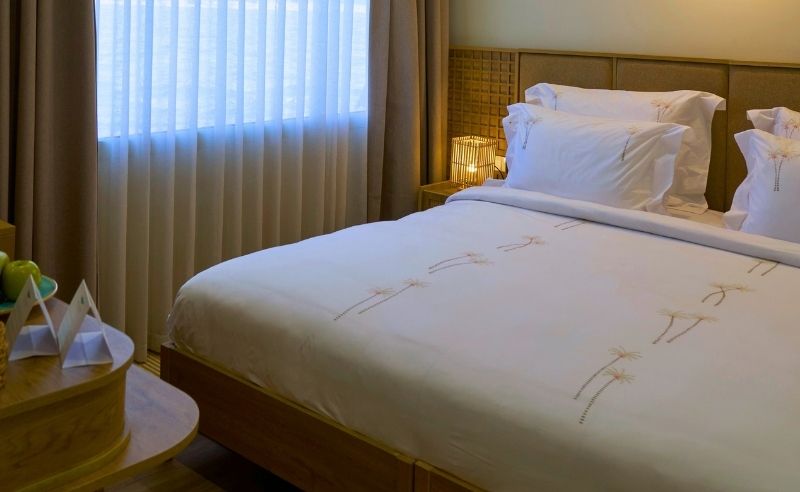
 The main culprit, as far as I could tell, was the boat itself. Its cabins, of which there were ten, two with private terraces and jacuzzis overlooking the ever-moving river, came with sound-insulated walls, beds dressed in buttery-soft linen by Threads of Hope, a foundation that supports widowed and divorced women, and a little triangular glass window in the floor offering a sneak peek at the Siwa salt crystals laid underneath the whole vessel. It was impossible not to fall asleep right after sunset, and even less probable you could resist the temptation of waking up at sunrise, especially with that window.
 Huge, completely unobstructed and positioned right beside the bed, it was practically the length of the mattress, so with every sunrise you could stir awake beside a different view: fishing boats cutting across the water, teens splashing around near the banks, a throng of people heading to prayer at the local mosque, little hands waving as you pass, or even the occasional donkey on its own morning mission. It was like tuning into my favourite show, every morning like clockwork, and the only thing that could convince me to switch it off was breakfast.
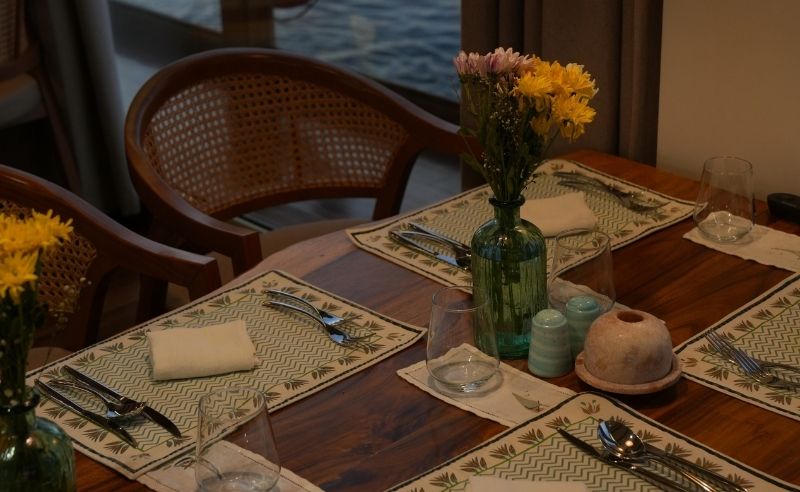
 So, eventually, I would bring myself to part with my private slice of the ancient waters, if only to take the elevator, an almost comically modern detail on a boat that otherwise spends its days drifting past palms trees and temples, to the middle deck, where the indoor-outdoor restaurant let me eat with the Nile practically at my elbow. Here, breakfast might mean falafel so fresh they crumble beneath the tines of your fork, alongside traditional omelettes seasoned with the scent of the land. Later, tea time comes with the freshest hibiscus juice and sugar-dusted biscuits, before lunch and dinner roll out a parade of the juiciest steaks, pasta that begs to be piled onto your plate, seafood good enough to impress even the staunchest Alexandrian, and an Oriental night piled high with mahshi, kofta and some seriously good Om Ali.
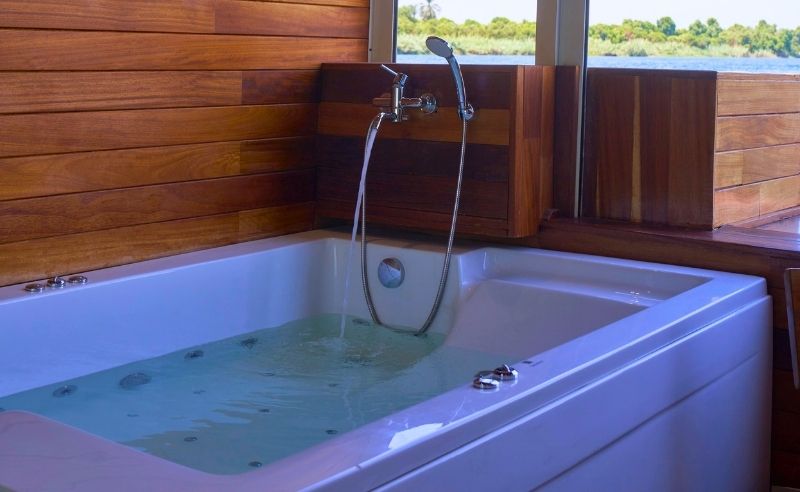
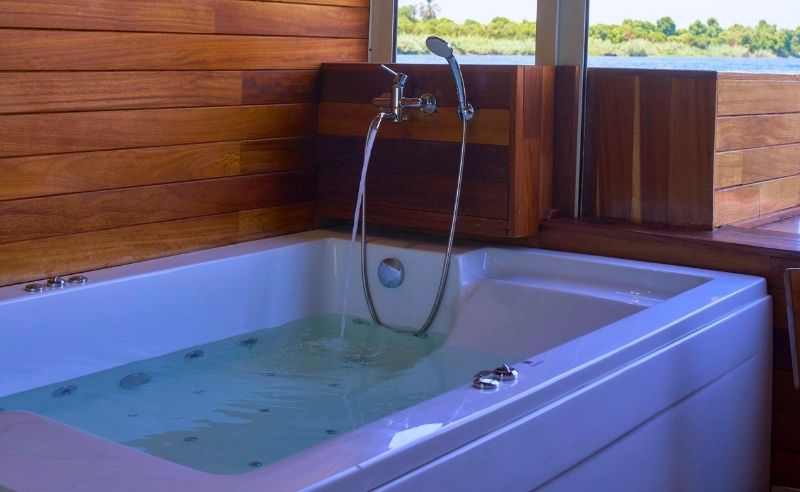
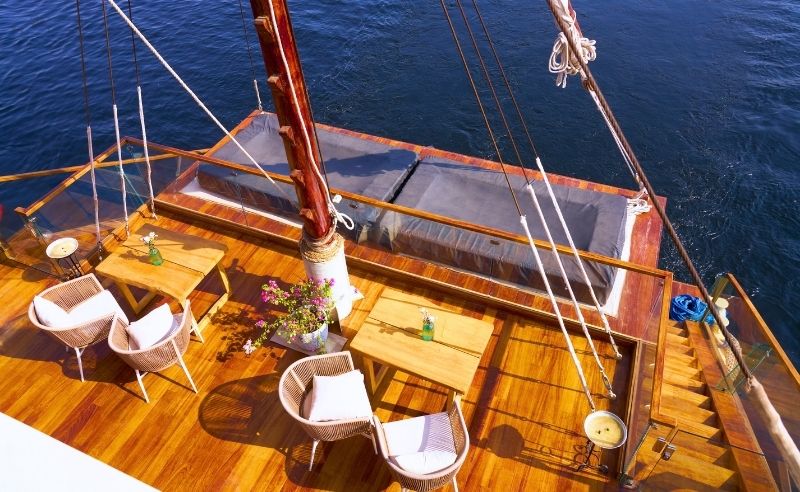
 Of course, there was a lot more to Fayrouz than eating my way through the day and watching the Nile from various horizontal positions. The upper deck had a sun-drenched jacuzzi for post-Edfu soaks, a treadmill and stationary bike facing the water for anyone determined to maintain the illusion of an active holiday, and a massage room for those who had wisely abandoned the pretence altogether. Back downstairs, the reception came with its own little shop of treasures: scarves and bags made by local artisans especially for the boat, alongside a small collection of books about ancient Egypt for anyone suddenly seized by the urge to learn about the civilisation they’re floating past.
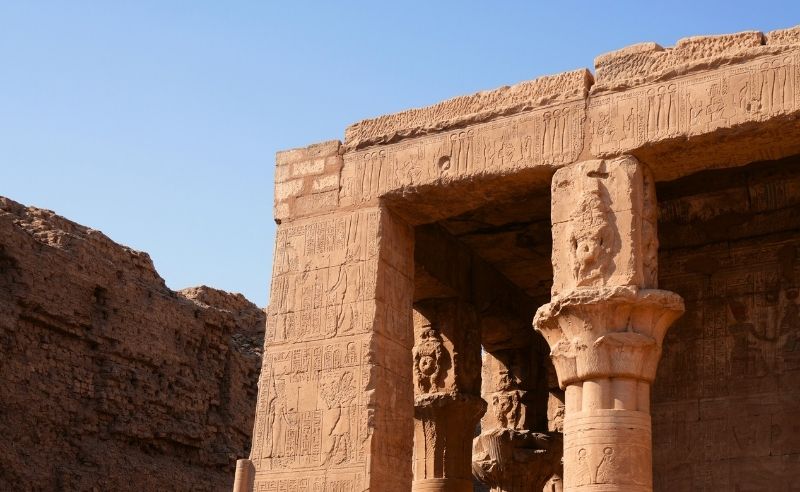
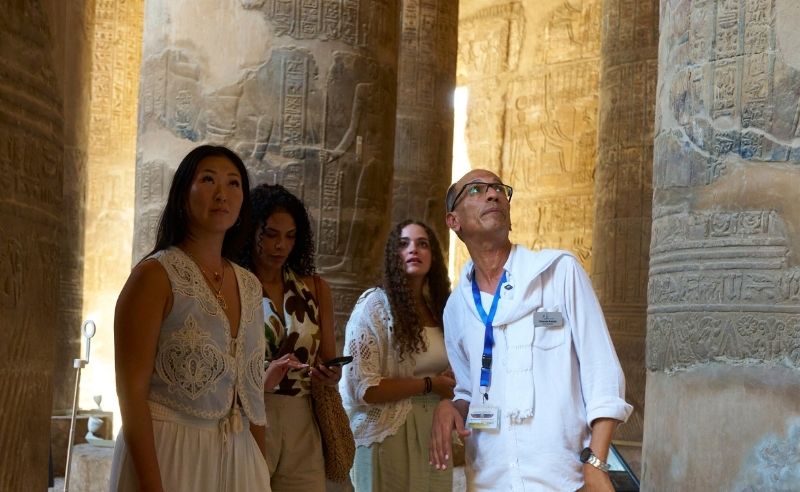
 Still, there are only so many pages you can get through before you start to feel a little ridiculous just sitting there and reading instead of literally walking out and seeing it all for yourself. And Fayrouz not only has a compelling syllabus of sites for you to gape at, but there’s even a private tour guide to bring the footnotes to life. At Edfu’s Temple of Horus, he walks you through the stories carved into its towering walls, depicting gods, kings and battles, while at Esna’s Temple of Khnum, you find yourself craning your neck to take in the astronomical ceiling, crowded with zodiac signs and celestial figures. Later, at El Kab, you duck into tombs carved into the rock, where the walls preserve scenes from the lives their occupants hoped to carry into the afterlife. By sunset, you’ll find yourself scrambling up the dunes at Gebel el-Silsila before exploring burial chambers carved into the sandstone cliffs.
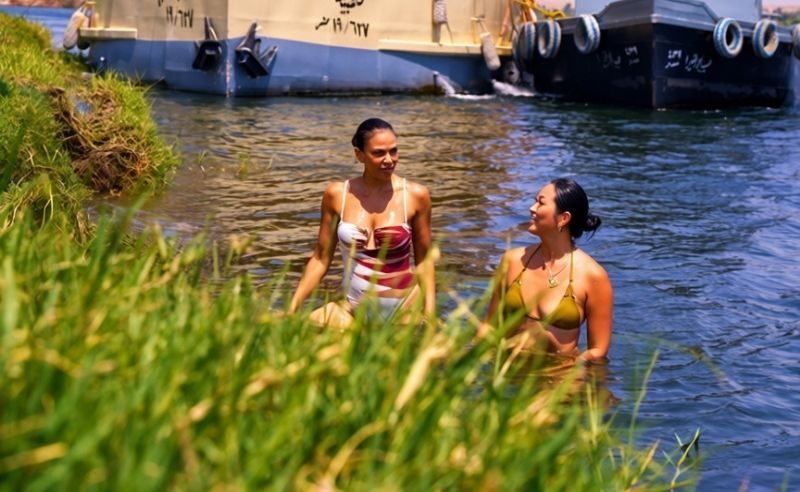 And while the temples and tombs with thrill you and fill your camera roll, the sites are only part of what happens once Fayrouz drops anchor. There’s also the sheer absurdity of jumping into the Nile for a casual swim against the current, or finding yourself on a little island after dark, listening to a band from Luxor play just for you. And then there’s Bisaw Island, home to around 350 people, where our guide Said showed us his home through his eyes: elders smoking shisha in the fields, children breaking into school songs, and a small mosque with a skylight right in the middle. Then, he took us straight to his family’s house, where we made fresh bread, drank mango juice so good I still dream of it, and even came across his water buffalo, prompting three grown women, myself included, to squeal with delight. And there was no grand spectacle to any of it. They were just people going about their lives, and we were fortunate enough to join them for a little while.
 So, all things considered, by the time I left Fayrouz, I’d stopped wondering why I was suddenly so invested in mornings. Somewhere between the sunrise view from my bed, the temples, the swims and the afternoon spent with Said’s family on Bisaw, I’d found a different kind of quiet than the one I’d spent most of my adult life seeking. Not the kind that comes from being unavailable to the world, but the kind that comes from being right there for it. And for that, I have Fayrouz Sanctuary to thank.
- Previous Article Rixos Murjana Opens Adults-Only Overwater Villas on the Red Sea