

The Castle Above Muscat That's Been Holding Its View for Twenty Years
Al Husn, "the castle," sits above a private cove on the Gulf of Oman, adults-only, unhurried, with a Frankincense Sommelier, nesting turtles, and a natural rock arch that turns amber at dusk.

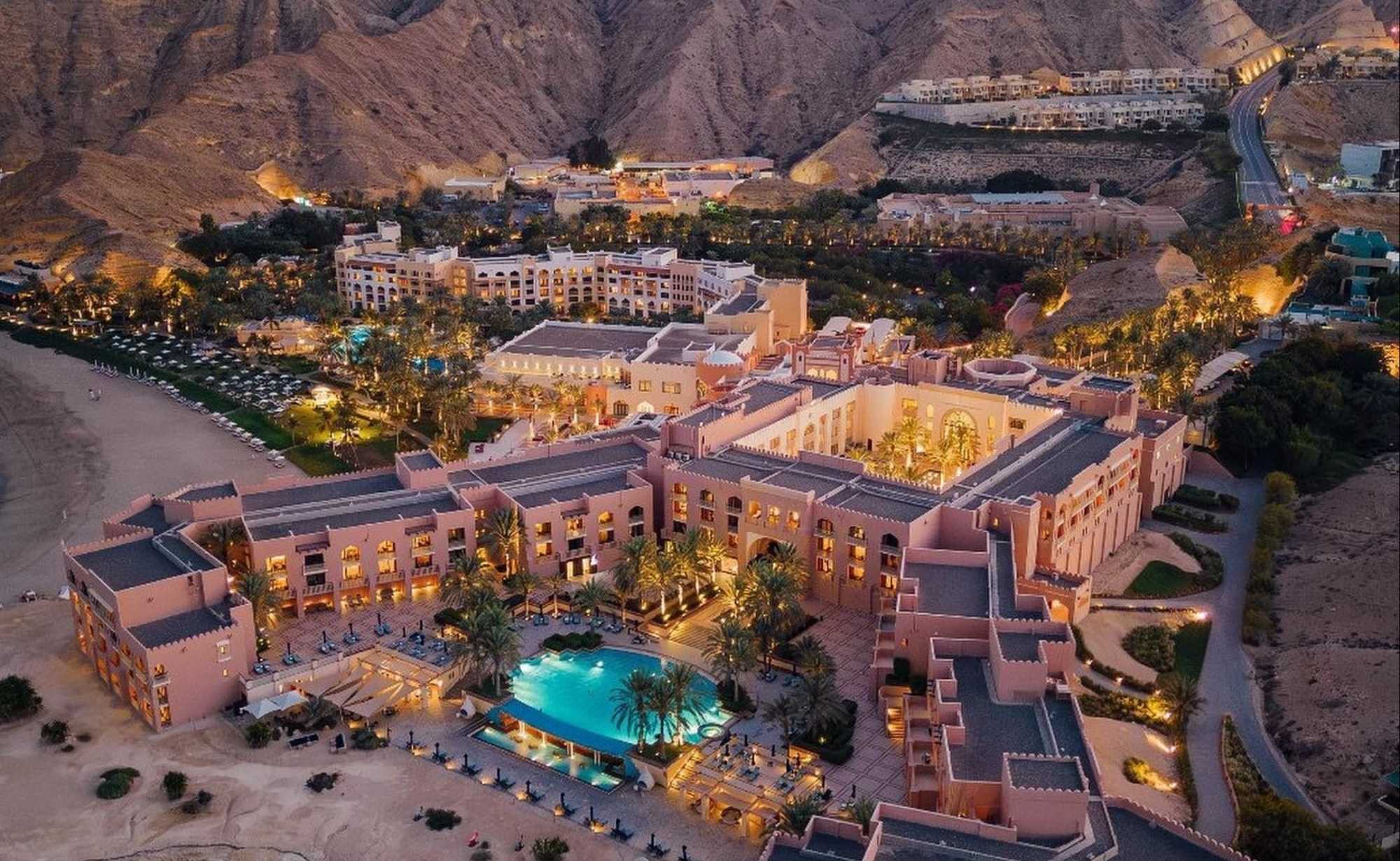
You arrive through mountains. You leave through mountains. The middle is the point.
The drive there prepares you, or tries to. After the dual carriageway softens behind you and the last roundabout disappears in the mirror, the road begins to climb into the Al Hajar mountains, limestone all the way down, the occasional goat reconsidering its choices on a near-vertical face, until Muscat itself evaporates and you are briefly, pleasantly nowhere, suspended between a city you know and a sea you can feel approaching. Then the road curves. It descends. And the Gulf of Oman opens beneath you all at once, an immediate, vast turquoise.
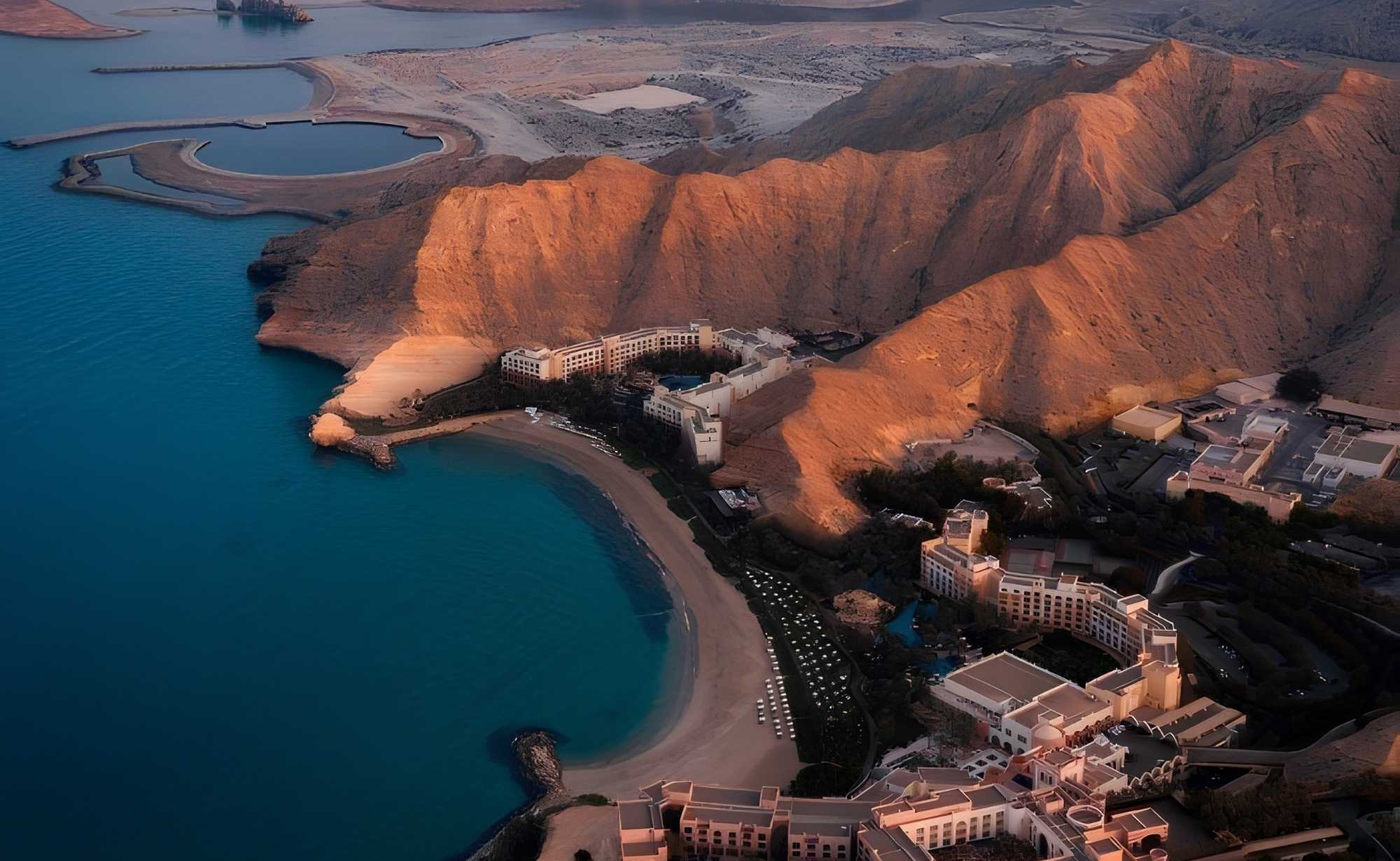 Al Husn sits at the conclusion of this revelation, atop a cliff above a private cove, its Arabesque façade rising from pale rock. The name means "the castle." Worth knowing before you arrive, so it doesn't catch you mid-conversation: the castle has been through some names. For twenty-odd years it was a Shangri-La, accumulating the kind of guest loyalty that comes from decades of being genuinely, persistently good at something. In 2025 it entered the Hilton family as Al Husn Hotel Muscat. In 2027, it will emerge as a Waldorf Astoria. Three names. One cliff. If The White Lotus filmed a season here, the writers would have substantially less work to do on the aspirational backdrop, and considerably more on whatever the turtles are up to.
The turtles are, in fact, up to quite a lot. This stretch of coastline sits among the top five turtle-nesting sites in Oman, a fact the hotel takes seriously enough to employ a resident ranger for. Someone who walks the beach in the small hours of nesting season to make sure the arrivals are left in peace, and who, if you ask the right questions at the right hour, will explain nesting patterns with the unhurried precision of a person who has stopped being surprised by the miracle of it.
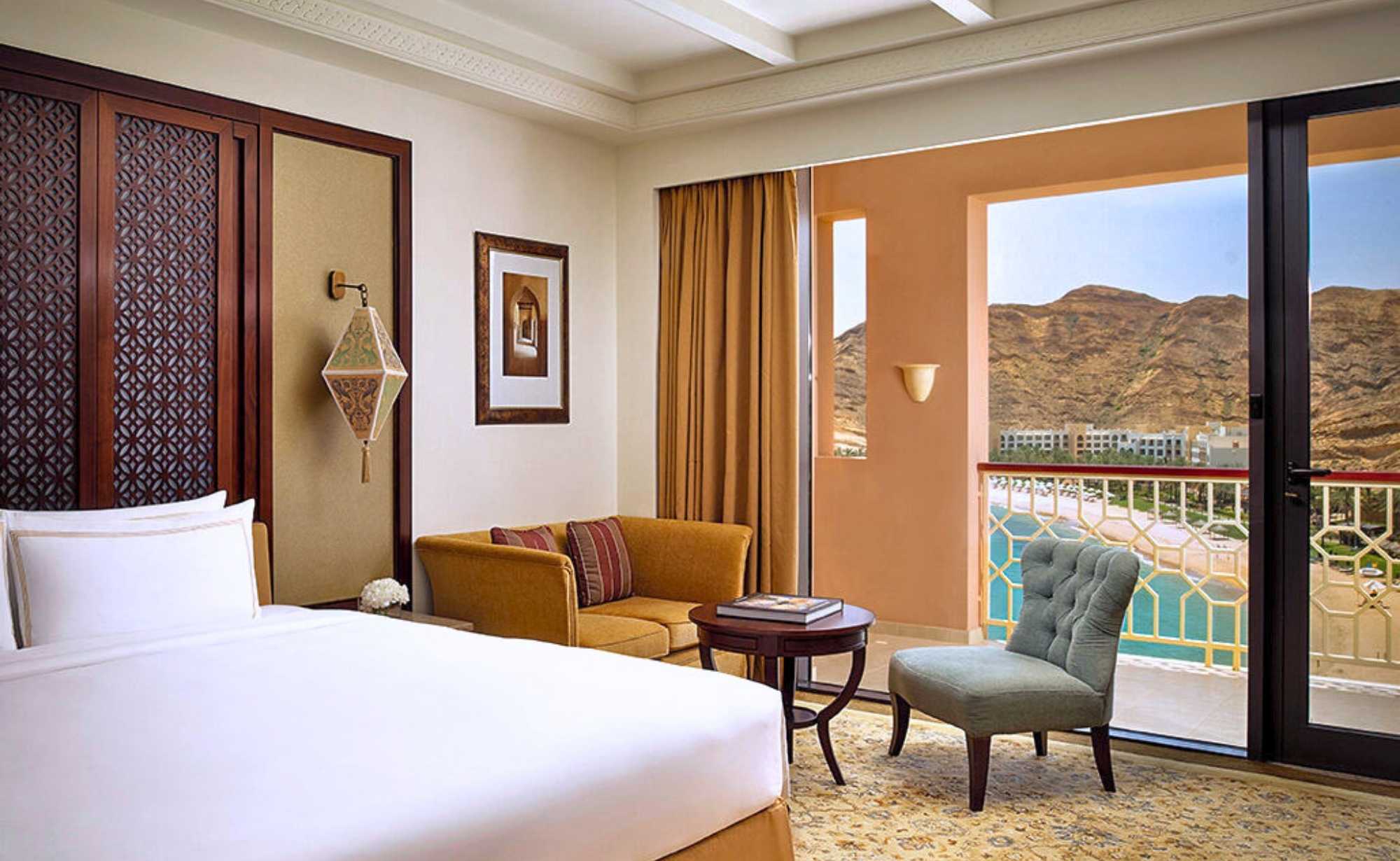
 The property is adults-only, sixteen and above, and this produces a quality of atmosphere that is difficult to describe without sounding insufferable, so: the pool does not have a child's toy bobbing in it. That is what it is. What it also is: a particular silence that settles differently when nobody is performing for their children, a permission to simply be slow. At dawn, the balcony holds the Gulf beneath you and the air arrives sharp and salt-loaded from the sea, and the only decision required of you is what to do with all of this light.
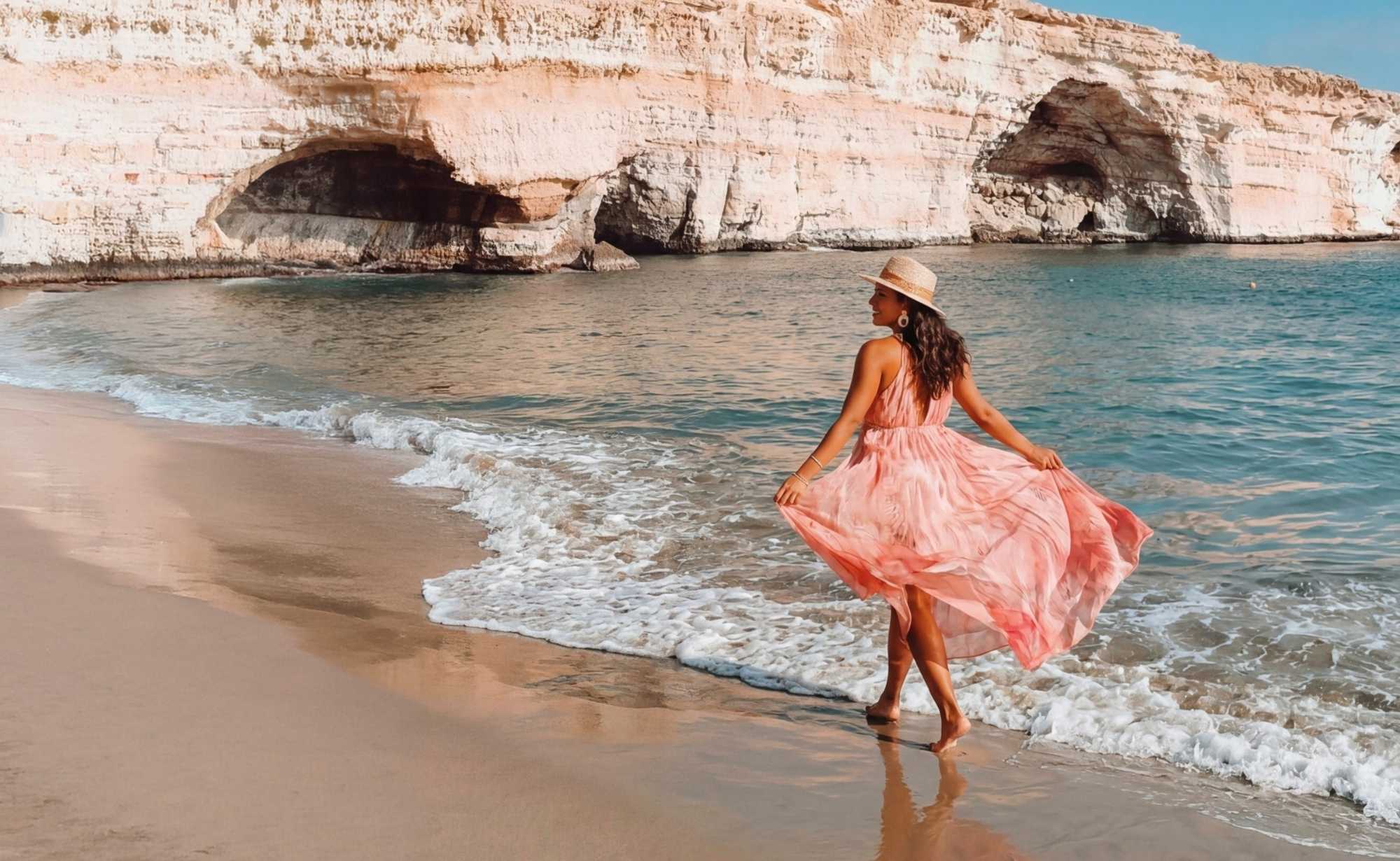
Below the cliff, a natural rock archway, the Barr Al Jissah Arch, frames the private cove, and at the hour when the sun begins its descent in earnest, the whole cove turns amber. The sister properties of the wider Barr Al Jissah complex sit just below, younger, louder, magnificently democratised, offering five hundred metres of private beach, a lazy river, and resident camels who take their role with the professionalism of veterans. Al Husn guests have full access, which means you can be entirely, blissfully adults-only until the mood for a camel arises, and then walk back up. For those who prefer their afternoon more kinetic, water activities run from kayaking and snorkelling to jet-skiing to full sea-diving tours, led by people who know this stretch of coast by feel. Dolphin-watching tours leave from the marina below.
Somewhere between the beach and the evening, there is the matter of the Frankincense Sommelier, distilling the scent-trade history of a sultanate that once commanded the ancient world's nose. The Luban Spa takes that same resin, its treatments rooted in local ritual that predates the concept of wellness tourism by about three thousand years.
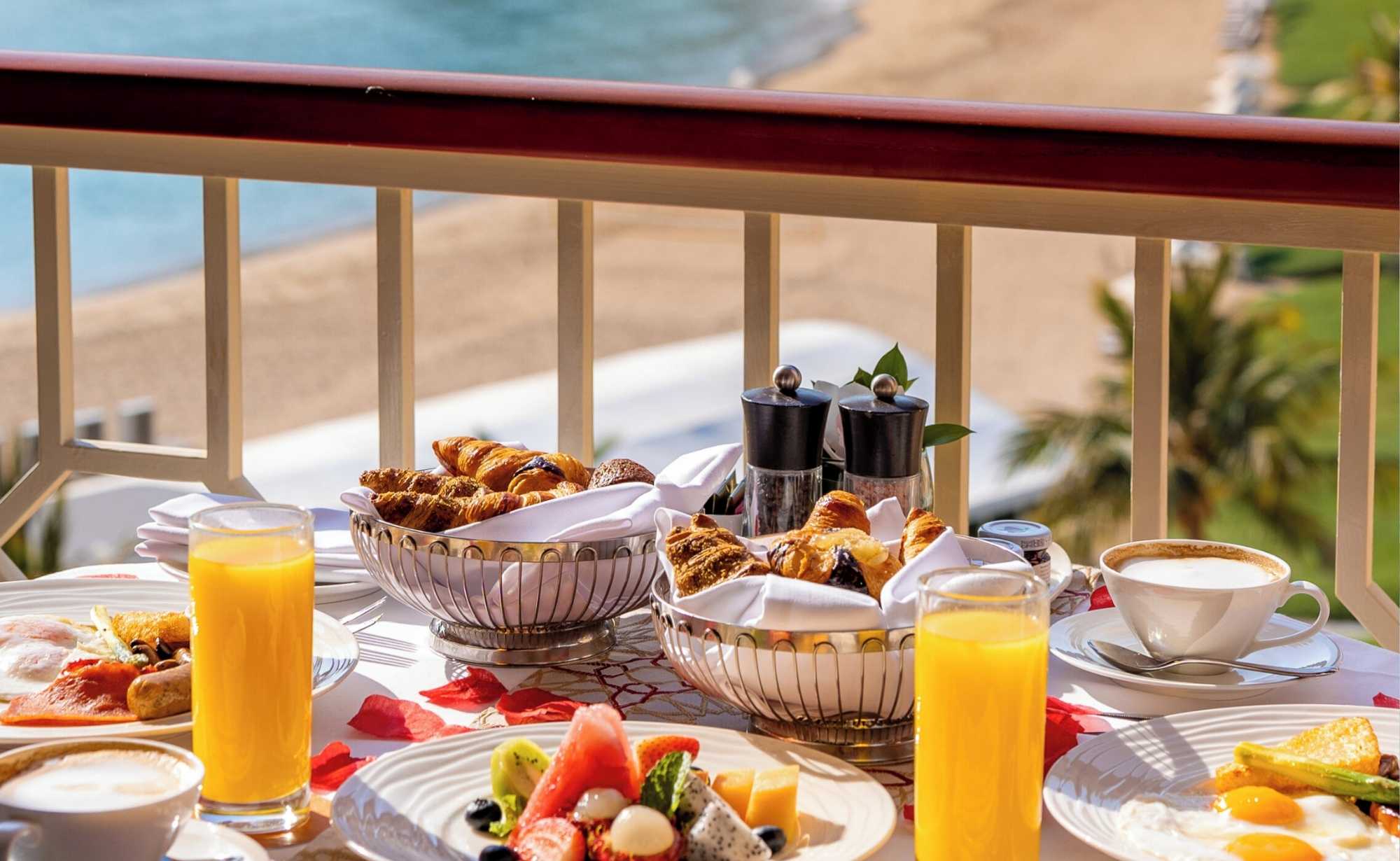 Evenings tend to resolve themselves at Sultanah, the fine-dining flagship, working with Mediterranean cooking to carry a subtle Omani inflection. It is a room designed for slow evenings and sweeping sea views, both of which it delivers without apparent effort. Shahrazad draws from Moroccan tradition, amber-lit and ornately rendered, the kind of room where the architecture performs as reliably as the kitchen. Al Muheet understands its own assignment, which is to sit beside the infinity pool and be good enough that no one wants to leave even when the day has finished. Pool-edge dining that reads casual from the menu and elevated from the view. Then Mahhara Beach Restaurant, set moments from the shoreline, where the menu's freshness is a function of geography and every bite tastes like the sea just outside.
 Twenty minutes from the hotel, Muttrah Souq is doing what it has been doing for centuries, silver, frankincense, spice, with a complete indifference to the concept of closing early. The Sultan Qaboos Grand Mosque is twenty-five minutes. The Amouage perfumery, forty-five minutes north, has been making fragrances from Omani frankincense long enough that the rest of the industry is still adjusting. Muscat, for a decade the quietly undersold city on every Arabian itinerary, is beginning to run out of patience with the oversight.
The Waldorf renovation is coming. What it will bring is still being decided. What it will not bring is the cliff, or the cove, or the evenings when the Gulf holds the last of the light in a way that makes everyone on the terrace briefly agree on something wordlessly.
Go before the rebrand, or go after. The castle will be there either way, sitting above its cove with the composure of a building that has been looking at this water long enough to know the renovation schedule doesn't concern it. The turtles have already confirmed they're returning.
- Previous Article Where the World Is Cheering for Egypt & Morocco
- Next Article This Deserted Village Tells the Story of the UAE's Pearling Past