


The Hilltop Kasbah Built by Hand in Morocco's Atlas Mountains
Forty two rooms are spread across the main building, garden wing, and a private villa, along with an 11-room addition called The Retreat. None have televisions.

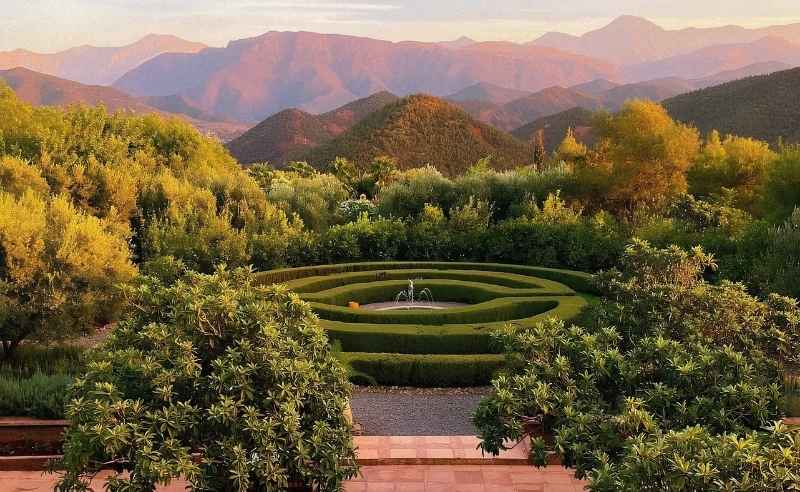
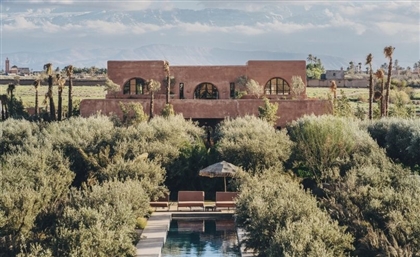
The paved road runs out at Tnine Ourika, a small market town about 40 minutes from Marrakech. After that it's packed earth the rest of the way, up a turnoff that's easy to miss if nobody's told you where to look, narrow enough that most guests skip the rental car and let the hotel send its own 4x4. The last stretch climbs a rise at the head of the Ourika Valley, and the hotel sits at the top of it, walls built from the same reddish clay as the hillside around it.
As the story goes, an English owner, who already had a riad running in the Marrakech medina, found this hilltop in 2004 and started building from nothing. There was no road up at the time, so water and materials came in by donkey, and the access track had to be cut by hand before any of the walls went up. Water gets pumped more than 500 metres uphill from wells sunk into the hillside, a system still in use today. The main building and its gardens took five years to finish, and the property has grown twice since: a wing of garden rooms and a private villa came first, then, during the pandemic, an eleven-room addition called The Retreat, built with weddings and group stays in mind.
The construction method is pisé, rammed earth, and it's the reason none of the rooms have air conditioning. The walls are thick enough to hold the outside temperature at bay on their own, staying cool through the day and warm once the sun goes down. There's a biodigester that turns kitchen waste into electricity, solar panels for hot water and underfloor heating, and a system that recycles the property's own water. It reads less like a sustainability pitch and more like what you'd end up doing anyway, building this far from a power line.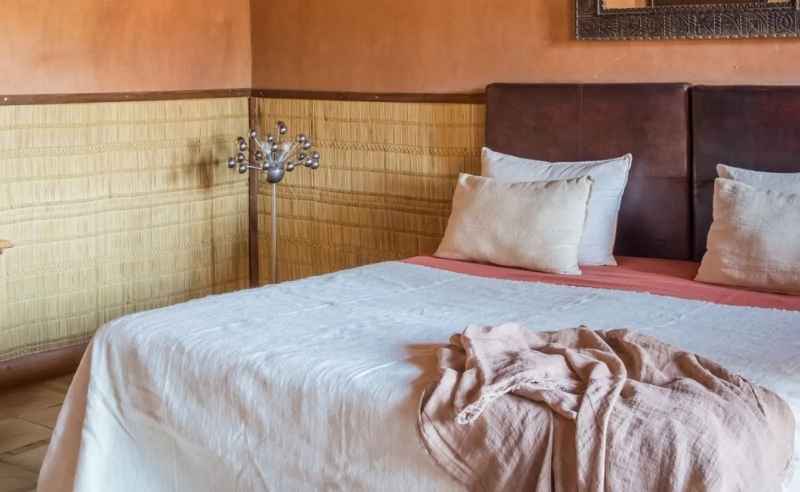 The interiors lean into the same palette as the land outside: terracotta floors, a local clay tile called beijmat, walls in shades of cream and ochre. Fireplaces are built into tadelakt hearths, the same smooth plaster finish used in Moroccan hammams. Nothing in the rooms looks bought as a matching set. Beni Ourain rugs, old Art Deco lamps picked up in the Marrakech souks, leather chairs made locally, the odd vintage radio or clock sitting on a side table. Every room is decorated differently, though they all draw from the same pool of textiles and secondhand finds.
Fifteen rooms are in the main building, set around two courtyards. Sixteen more are spread through the gardens, including a five-bedroom villa with its own infinity pool on the cliff edge, and a handful of pool suites with private terraces looking out over the valley. The villa's sitting room has a glass roof for stargazing, which sounds like a gimmick until you remember there's essentially no light pollution up here.
The Retreat adds 11 more rooms across three floors, aimed at groups but open to anyone. The smallest rooms, in the Superior category, start around 40 square metres. All of them have a king bed that splits into twins, a private bathroom, and a terrace in most cases. There's no television in any room, and no air conditioning, which seems to be a deliberate choice. One of the upstairs rooms has a bathtub positioned to look straight out at the national park.
The kitchen grows a lot of what it serves and brings in the rest from nearby villages, mixing Berber dishes with a European menu. Guests who've been more than once tend to say the Moroccan food holds up better. About 60 people work at the hotel, most of them from the surrounding villages, covering the kitchen, the spa, the grounds, and the guides who take guests out hiking.
The valley does most of the scenery on its own. Below the hotel, the Ourika River runs past groves of olive, orange, and lemon trees, with fields terraced down toward the water. Above it, the High Atlas holds snow well into spring, visible from the terraces on a clear day. Further up the valley is Setti Fatma, a village known for a series of seven waterfalls that climb the hillside behind it, about a two-hour walk if you want to see all of them. The ski slopes at Oukaïmeden are close enough in winter to add on to the same trip.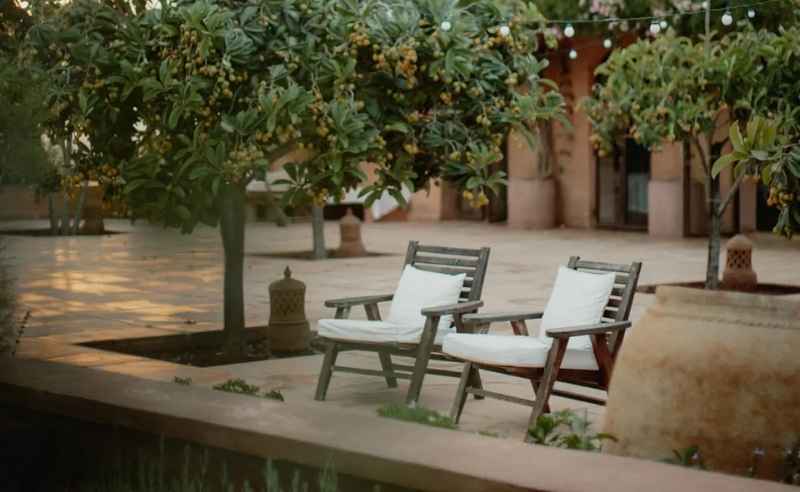 The hotel arranges horses, camels, and local guides for trips out to nearby villages like Timalizen and Tagadirte, so there's no need to head back down to Marrakech for any of it. Longer hikes into the national park go out with a mule named Pepito carrying the picnic, which gives some sense of how remote this actually is.
Related Articles
Trending This Month
-
-
-
-
 Oct 02, 2026